March 18 ~ Today in Music History

today


1842 ~ Stephane Mallarme, French Symbolist poet, born. His “L’Apres-midi d’un Faune” inspired composer Claude Debussy to write an orchestral prelude of the same name.

. 1844 ~ Nicolai Rimsky-Korsakov, Russian composer
More information about Rimsky-Korsakov

. 1882 ~ Gian Francesco Malipiero, Italian composer and musicologist

. 1902 ~ Enrico Caruso recorded 10 arias for the Gramophone Company. The recording session took place in Milan, Italy and Caruso walked away with $500 for his effort.

. 1910 ~ Hold on to your hats! The opera, Pipe of Desire, was first performed this day at the Metropolitan Opera House in New York City. Frederick Sheperd Converse wrote the work that turned out to be the first opera by an American composer to be performed at the Met.

. 1940 ~ Glen Gray and his orchestra recorded No Name Jive on Decca Records.

. 1941 ~ Wilson Pickett, American soul singer and songwriter; the Rock and Roll Hall of Fame

. 1959 ~ Irene Cara, Singer and actress

. 1963 ~ Vanessa Williams, Singer and actress

. 1967 ~ The day The Beatles, Penny Lane went gold

. 1970 ~ Brook Benton received a gold record for the hit single, Rainy Night in Georgia. It was Benton’s first hit since 1963’s Hotel Happiness.

. 1978 ~ The Bee Gees started an eight-week stay at the top of the pop music charts with Night Fever from the Saturday Night Fever soundtrack.

. 2001 ~ John Phillips died at the age of 65. He was the singer-songwriter who founded the 1960s pop act the Mamas the Papas.
March 9 ~ Today in Music History

today


. 1745 ~ The first carillon was shipped from England to Boston, MA.

.1903 ~ “The Master of Charms“. ~ Claude Debussy on fellow composer Gabriel Fauré in the Paris periodical Gil Blas

. 1910 ~ Samuel Barber, Pulitzer Prize-winning American composer
Read quotes by and about Barber
More information about Barber

. 1925 ~ Billy Ford, Singer with Billy & Lillie

. 1927 ~ John Beckwith, Canadian composer and music critic

. 1930 ~ Thomas Schippers, American conductor

. 1932 ~ Keely Smith (Dorothy Keely), Singer, was married to Louis Prima

. 1942 ~ Tommy Dorsey and his orchestra recorded Well, Git It! for Victor Records. Ziggy Elman was featured on the session which was recorded in Hollywood. Sy Oliver arranged the Dorsey classic.

.1950 ~ Howard Gordon Shelley OBE, British pianist and conductor

. 1974 ~ Many new musical faces were on the scene, including Terry Jacks, who was starting week two of a three-week stay at the top of the pop charts with his uplifting ditty, Seasons in the Sun. Other newcomers: Jefferson Starship, Billy Joel, Kiss, Olivia Newton-John, Kool & the Gang and The Steve Miller Band.

. 1985 ~ The most requested movie in history, “Gone With The Wind”, went on sale in video stores across the U.S. for the first time. The tape cost buyers $89.95. The film, starring Clark Gable and Vivien Leigh, cost $4.5 million to produce and has earned over $400 million, making it one of the biggest money-makers in motion picture history. “GWTW” is now the cornerstone of the massive MGM film library owned by Ted Turner.

. 1986 ~ Bill Cosby broke Liberace’s long-standing record and earned the biggest box-office gross in the 54-year history of Radio City Music Hall in New York City.

. 1993 ~ Bob Crosby passed away

. 2001 ~ Richard Stone, whose musical compositions for such popular cartoon shows as “Animaniacs” and “Freakazoid” won him more than a half-dozen Emmys, died Friday at the age of 47. Stone grew up watching Warner Bros. “Looney Tunes” cartoons in the 1950s and ’60s before going on to study cello and music composition in college. He not only emulated the style of Carl Stalling, who composed hundreds of musical scores for classic Warner Bros. cartoons in the 1930s, ’40s and ’50s, but also incorporated elements of jazz, Broadway, country and rock music into his work. Stone also carved out his own style on modern-day shows, winning seven Emmys since 1994 for such cartoons as “Animaniacs,” “Freakazoid” and “Histeria!” He also worked on the cartoons “Pinky & the Brain,” “Taz-Mania,” “Road Rovers” and “The Sylvester & Tweety Mysteries” and scored several movies, including the cult classics “Sundown: The Vampire in Retreat” and “Pumpkinhead.”

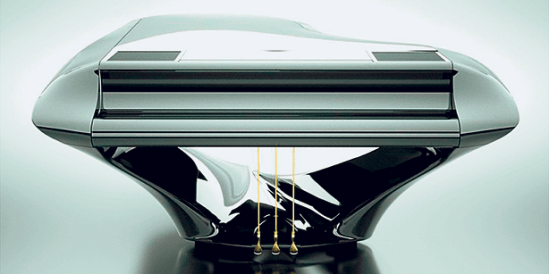
Revolutionary new piano invented in Budapest

A revolutionary new piano created in Budapest by internationally acclaimed pianist Gergely Bogányi and his design team was unveiled at a press event on Jan. 20 at the Budapest Music Center and at a concert on Jan. 21 at Budapest’s historic Franz Liszt Academy.

At the press event, Bogányi performed classical selections by Bach and Debussy to show the piano’s power and lyrical capabilities; the renowned Grammy-nominated jazz pianist Gerald Clayton improvised limpid and soulful variations on Cole Porter’s “You’d Be So Nice to Come Home To,” which showed the new instrument’s vast kaleidoscope of colors and the satisfyingly muscular bass notes.

Does the world need a new piano?

Most emphatically yes, Bogányi says. “The piano was invented 300 years ago,” Bogányi told Today’s Zaman. “Although there have been modifications, there have been no major developments in piano construction in over 100 years. So I spoke to many of my colleagues about the kinds of [mechanical and physical] problems and limitations we all have to deal with, and all agreed that we needed solutions.”

Read more at Revolutionary new piano invented in Budapest.