• 1970 ~ George Harrison received a gold record for his single, My Sweet Lord.
• 1983 ~ The musical biography of Peggy Lee opened at the Lunt-Fontanne Theatre in New York City. The show was titled Peg.
• 1984 ~ The Cotton Club opened around the U.S. There were nine classic songs by Duke Ellington on the soundtrack of the movie.
• 1990 ~ Opera lovers were turned into couch potatoes. For four evenings, starting on this day, they watched and listened to an unabridged telecast of Richard Wagner’s marathon-length opera The Ring.
• 2001 ~ Conte Candoli, a Trumpet player and staple of The Tonight Show band during Johnny Carson’s era, died of cancer. He was 74. Candoli was recognized for developing a musical style based on Dizzy Gillespie’s bebop playing, with a touch of Miles Davis and Clifford Brown. The Indiana-born Candoli, grew up surrounded by musical instruments and influences. His father, a factory worker, played the trumpet and wanted Candoli and his brother Pete to become musicians. At 16, he worked in Woody Herman’s orchestra during summer vacations. While playing in California, Candoli began his association with the then New York-based Tonight Show. In 1972, when Carson moved the show to Burbank, Candoli joined the band. He left when Carson retired in 1992.
• 1843 ~ Charles Dickens published his play “A Christmas Carol”
• 1874 ~ Josef Lhévinne, Russian pianist, teacher. After gaining fame as a soloists in Russia and Europe, he and Rosa came to the U.S.A. in 1919. While they continued to concertize, they both taught at Juilliard; although he had the more prominent concert career, she lived on to become legendary for teaching an endless succession of prominent pianists including Van Cliburn.
• 1925 ~ Dick Van Dyke, American Emmy Award-winning actor and comedian
• 1928 ~ Audiences at Carnegie Hall heard the first performance of George Gershwin’s composition, An American in Paris. The debut was performed by the New York Philharmonic Orchestra under the direction of Walter Damrosch. Advertised as “a tone poem with jazz and sound effects”, it was used as a ballet for Gene Kelly’s 1951 performance in the movie of the same name. Unfortunately, George Gershwin did not live to see his composition being danced to in the Academy Award-winning An American in Paris. It won six Oscars: Best Art Direction/Set Direction [Color], Best Color Cinematography, Best Costume Design [Color], Best Story and Screenplay, Best Picture … and Best Score.
• 1929 ~ Christopher Plummer (Orme), Actor, Sound of Music, Doll’s House
• 1940 ~ The two-sided jump tune, The Anvil Chorus, was recorded by Glenn Miller and his orchestra for Bluebird Records in New York. The 10-inch, 78 rpm record ran six minutes (including flipping).
• 1941 ~ John Davidson, Actor, singer, TV game show host of the Hollywood Squares
• 1948 ~ Jeff ‘Skunk’ Baxter, Guitarist with Steely Dan, The Doobie Brothers
• 1948 ~ Ted Nugent, Guitarist, singer with Amboy Dukes
• 1948 ~ The American Federation of Musicians went back to work after an 11½-month strike. During the strike, there was an 11½-month ban on phonograph records as well.
• 1949 ~ Randy Owen, Guitarist, singer with Alabama
• 1949 ~ Tom Verlaine (Miller), Guitarist, singer with Television
• 1974 ~ Former George Harrison was greeted at the White House. President Gerald R. Ford invited Harrison to lunch. The two exchanged buttons, Ford giving George a WIN (Whip Inflation Now) pin and Harrison gave the President an OM (Hindu mantra word expressing creation) button.
• 2000 ~ Cellist Yo-Yo Ma made a special guest appearance on NBC television’s West Wing. No, he did’t play a partisan leader, but he was featured in some of the music of Bach.
• 2002 ~ Maria Bjornson, a set and costume designer whose work on the hit musical The Phantom of the Opera won critical acclaim, was found dead at her London home. She was 53. Bjornson was born in Paris in 1949 and grew up in London, the daughter of a Romanian woman and a Norwegian father. She went to the French Lycee in London and then studied at the Byam Shaw School of Art and the Central School of Art and Design. Bjornson worked as a theater designer from 1969, and designed 13 productions at the Glasgow Citizens’ Theater. She worked for the Welsh National Opera and its English and Scottish counterparts, and was involved with the Royal Shakespeare Company and the Royal Ballet. Her colorful and grand design for Andrew Lloyd Webber’s musical Phantom of the Opera at Her Majesty’s Theater in London in 1986 won her international acclaim. In 1988, Bjornson’s work on Phantom won two Tony Awards, one for sets and the other for costumes. After Phantom she collaborated with Lloyd Webber again on Aspects of Love, and worked on the Royal Ballet’s production of Sleeping Beauty at Covent Garden in London in 1994 and on Cosi Fan Tutte at Glyndebourne in 1991.
• 2002 ~ Former Lovin’ Spoonful guitarist Zal Yanovsky, who traded in the wild rock star life for a quiet existence as a restaurant owner in Canada, died. The Toronto native died of a heart attack at his home in Kingston, Ontario, six days before his 58th birthday. Famed for such hits as Do You Believe in Magic and Summer in the City, the Lovin’ Spoonful enjoyed a brief reign in the mid 1960s as America’s answer to the Beatles. The quartet, led by singer/guitarist John Sebastian, racked up seven consecutive top 10 singles in 16 months. Yanovsky, a tall Russian Jew who resembled Ringo Starr, joined forces with Sebastian in New York City in 1964. The pair shared a love of folk music, and both had played in the Mugwumps, a short-lived combo that also included future Mamas and Papas members “Mama” Cass Elliot and Denny Doherty. The Lovin’ Spoonful, named after a Mississippi John Hurt song, took shape in 1965 when Yanovsky and Sebastian teamed up with drummer Joe Butler and bass player Steve Boone. The group’s first single, Do You Believe In Magic reached the top 10 that year. Its followup, You Don’t Have To Be So Nice also went top 10 in early 1966. Summer in the City was their sole No. 1. Besides recording five albums, the band also did the soundtracks to Woody Allen’sWhat’s Up, Tiger Lily? and Francis Ford Coppola You’re A Big Boy Now. Yanovsky was the zany member of the group. He was the focal point during live performances, but his biting humor often rubbed his colleagues the wrong way, especially when one of his girlfriends ended up with Sebastian. In 1966, the group’s banner year, Yanovsky was faced with deportation after he and Boone were arrested for marijuana possession in San Francisco. They turned in their dealer, which damaged the band’s hipster credentials. Amid rising tensions, Yanovsky was voted out of the band in 1967, but remained on amicable terms with his colleagues. He recorded a solo album, Alive and Well in Argentina, in 1968. Sebastian, the band’s creative force, left that year, and the band soon broke up. The original members reunited in 1980 to appear in the Paul Simon film One-Trick Pony and then in 2000 when it was inducted into the Rock and Roll Hall of Fame. Yanovsky dabbled in TV before going into the restaurant business. He ran Chez Piggy, an acclaimed eatery in Kingston.
• 2003 ~ Jazz trumpeter Webster Young, who played with greats such as Miles Davis and John Coltrane in the 1950s, died of a brain tumor. He was 71. Young’s career got an early boost when Louis Armstrong took him as a student when he was 10 years old. As a teenager, Young jammed with Dizzy Gillespie, earning the nickname “Little Diz” in Washington D.C.-area clubs for a style that resembled Gillespie’s. Young broke into the modern jazz scene in New York City in the late 1950s, recording several albums. He returned to Washington D.C. in the 1970s to raise his family. He toured in Europe in the 1980s and performed regularly at jazz clubs until eight months before his death. Young’s career peaked in 1957, when he played cornet with John Coltrane for the album “Interplay for Two Trumpets and Two Tenors” for the Prestige record label.
• 1949 ~ Paul Rodgers, Piano, vocals with Free, Bad Company, The Firm
• 1959 ~ Sheila E. (Escovedo), Drummer, singer
• 1959 ~ Paul Rutherford, Singer with Frankie Goes to Hollywood
• 1984 ~ The group known as Band Aid, 38 of Britain’s top rock musicians, recorded Do They Know This is Christmas? for Ethiopian famine victims. Despite the best of intentions, much of the food raised never got to the starving Ethiopians. In fact, much of it was found rotting on docks, not fit for human consumption. More than a Band-Aid was needed to fix that political mess.
• 1989 ~ Lindsay Crosby, son of crooner Bing Crosby, died
• 2002 ~ Actor Brad Dexter, who rode with Yul Brynner as one of the “Magnificent Seven” and became a confidant of both Marilyn Monroe and Frank Sinatra, died. He was 85. Burly and handsome, he was often cast as a tough guy in supporting roles, which included 1958’s “Run Silent, Run Deep,” starring Burt Lancaster and Clark Gable, and 1965’s “None but the Brave,” starring Sinatra. He made his film debut in the “The Asphalt Jungle” in 1950, but his most prominent role came in 1960’s “The Magnificent Seven,” in which he starred with Brynner, Steve McQueen, Charles Bronson and James Coburn. Born Boris Milanovich in Goldfield, Nev., Dexter made guest appearances on the 1950s television shows “Zane Gray Theater,” “Death Valley Days” and “Wagon Train.” In January 1953, he married singer Peggy Lee, but they divorced eight months later. Soon after his divorce, Dexter befriended Monroe. In 1954, he tried unsuccessfully to persuade her to stay with her husband, Joe DiMaggio. His friendship with Sinatra took on legendary proportions during the filming of “None but the Brave” in 1964. On location in Hawaii, Sinatra nearly drowned and Dexter saved his life.
• 2002 ~ Marvin O. Herzog, who traveled the world with his for 58 years, died of pancreatic cancer. He was 70. Herzog was a polka celebrity who regularly booked 170 appearances a year. He and his band would travel more than 75,000 miles a year in a converted Greyhound bus. For years, Herzog was the star and co-sponsor of Frankenmuth’s Summer Music Fest, which drew about 25,000 visitors annually to the town known for its Bavarian events and shopping. Born in Frankenmuth, Herzog lived there his entire life. He quit his job at Star of the West Milling in 1973 to concentrate full-time on polka music. He played a Cordovox – a mix of organ and accordion. Herzog recorded 32 albums, including his Schnitzelbank and Octoberfestrecords in German as well as Polish, Italian and English polkas. He had a radio show and co-hosted a television show. Herzog was inducted into the International Polka Association Hall of Fame in 1979.
• 1910 ~ Tenor Enrico Caruso and conductor Arturo Toscanini were featured at the Metropolitan Opera House in New York City for the world premiere of Puccini’sThe Girl of the Golden West.
• 1913 ~ Morton Gould, American Pulitzer Prize-winning composer, conductor and pianist
• 1924 ~ Ken Albers, Bass singer with The Four Freshmen
• 1927 ~ For the first time, famed radio announcer George Hay introduced the WSM Barn Dance as the Grand Ole Opry. The show’s title may have changed but it remained the home of country music.
• 1930 ~ Duke Ellington and his orchestra recorded the haunting Mood Indigo on Victor Records. It became one of the Duke’s most famous standards.
• 1943 ~ Chad Stuart, Guitarist, lyricist, singer with the duo – Chad & Jeremy
• 1946 ~ Christopher ‘Ace’ Kefford, Bass with The Move
• 1947 ~ Walter ‘Clyde’ Orange, Drummer, singer with The Commodores
• 1948 ~ Jessica Cleaves, Singer with Friends of Distinction
• 1949 ~ Frank Beard, Drummer with ZZ Top
• 1949 ~ Fats Domino recorded his first sides for Imperial Records. The legend from New Orleans recorded The Fat Man, one of the earliest rock and roll records. The title also turned into Domino’s nickname and stayed with him through his years of success.
• 1951 ~ John (Raul) Rodriguez, Singer
• 1953 ~ Harry Belafonte debuted on Broadway in Almanac at the Imperial Theatre. Critics hailed Belafonte’s performance as “electrifyingly sincere.” Also starring in the show: Hermione Gingold, Billy DeWolfe, Polly Bergen and Orson Bean.
• 1966 ~ The Beach Boys made a one-week stop at the top of the Billboard Hot 100 asGood Vibrations made it to #1. It was the third #1 hit the group scored. The others were I Get Around and Help Me, Rhonda.
• 1967 ~ Otis Redding and four members of the Bar-Kays (Otis’ backup group) were killed in the crash of a private plane near Madison, Wisconsin. Redding was 26 years old. His signature song, (Sittin’ On) The Dock of the Bay was recorded three days before his death. It was #1 for four weeks beginning February 10, 1968. Redding was inducted into the Rock and Roll Hall of Fame in 1989. The Bar-Kays biggest hit was in July, 1967: Soul Finger. James Alexander, bass player for the group, was not on the plane. Ben Cauley, trumpet player, survived the crash. The group played for a time with various new members.
• 1987 ~ Jascha Heifetz passed away
Read quotes by and about Heifetz
More information about Heifetz
• 1926 ~ Benny Goodman’s first recording session was this day. He played clarinet with the Ben Pollack Orchestra on a tune titled Downtown Shuffle on Victor Records. Goodman, incidentally, was all of 17 years old.
• 1938 ~ Tatiana Troyanos, American mezzo-soprano
• 1938 ~ David Houston, Grammy Award-winning singer, actor
• 1944 ~ Neil Innes, Keyboard, singer, songwriter with The Bonzo Dog Doo-Dah Band
• 1950 ~ Joan Armatrading, British rock singer and songwriter
• 1953 ~ Frank Sinatra recorded Young At Heart. The song was turned down by Nat ‘King’ Cole and other artists, believe it or not. It became a top hit in the U.S. in March of 1954.
• 1954 ~ Jack Hues, Singer with Wang Chung
• 1956 ~ Sylvia (Sylvia Allen), Singer
• 1956 ~ The Million Dollar Session was held at Sun Records in Memphis, TN. Elvis Presley, Johnny Cash, Carl Perkins and Jerry Lee Lewis gathered for an impromptu jam session. Six songs by the artists were recorded at this session. None of the songs was released for nearly three decades.
• 1957 ~ Donny Osmond, Singer with the Osmond Brothers, TV host of Donny and Marie, actor
• 1973 ~ Keith Moon, Rod Stewart and Roger Daltrey opened the rock opera Tommy in London. The show featuring Tommy, Pinball Wizard and other tunes, was so hot that tickets sold for $50 and up.
• 1984 ~ The Jackson’s Victory Tour came to a close at Dodger Stadium in Los Angeles after 55 performances in 19 cities. The production was reported to be the world’s greatest rock extravaganza and one of the most problematic. The Jackson brothers received about $50 million during the five-month tour of the U.S., with some 2.5 million fans in attendance.
• 2000 ~ Marina Koshetz, who followed her famous Russian diva mother Nina to the opera and concert stage and into the movies, died at the age of 88.
• 2004 ~ Country and Western singer Jerry Scoggins, whose baritone rendition of the theme song of “The Beverly Hillbillies” became one of television’s favorite tunes, died at age 93.
• 1791 ~ Wolfgang Amadeus Mozart, composer, died in Vienna, Austria at the age of 35. Mozart, the precocious child prodigy, composed several pieces that are deemed central to the classical era. Though he ranked as one of the greatest musical genius, he did not live a life of affluence as none of his compositions earned him a decent commission.
• 1901 ~ Walt Disney, Man behind many much-loved animated musicals
• 1922 ~ Don Robertson, Nashville Songwriters Association Hall of Famer, whistler
• 1930 ~ Larry Kert, Actor, singer, dancer in the West Side Story original cast, 1957
• 1932 ~ Little Richard (Pennimann), US rock ‘n roll artist, preacher
• 1936 ~ Chad Mitchell, Singer with Chad Mitchell trio
• 1936 ~ Bing Crosby took over as host of The Kraft Music Hall. Jimmy Dorsey (who would later be host, himself) led the Kraft Orchestra.
• 1945 ~ José Carreras, Spanish tenor with the New York Metropolitan Opera
• 1947 ~ Jim Messina, American rock guitarist and singer, duo of Loggins and Messina and groups: Buffalo Springfield and Poco
• 1960 ~ Les Nemes, Bass with Haircut 100
• 1960 ~ Jack Russell, Singer with Great White
• 1973 ~ Paul McCartney released Band On The Run, his fifth album since his departure from The Beatles. Two hit singles from the album – ‘Jet’ and ‘Band on the Run’ made it McCartney’s most successful album.
• 2003 ~ Avie Parton, mother of country music singer, songwriter and actress Dolly Parton, died after a long illness. She was 80. Parton was responsible for stitching the patchwork rag coat for young Dolly that the singer later recounted in the song, Coat of Many Colors. The song helped propel Dolly Parton to stardom and came to symbolize her climb from rags to riches. She also was the witness at Dolly’s secret marriage to Carl Dean in 1966 in Ringgold, Ga.
2012 ~ Dave Brubeck, American jazz pianist and composer
More information about Brubeck
• 1927 ~ Duke Ellington’s big band opened the famed Cotton Club in Harlem. It was the first appearance of the Duke’s new and larger group. He played the club until 1932.
For part 2:
• 1934 ~ Ethel Merman recorded I Get a Kick Out of You, from Cole Porter’s musical, Anything Goes. She was backed by the Johnny Green Orchestra. The tune was recorded for Brunswick Records.
• 1934 ~ Wink (Winston Conrad) Martindale, TV host, singer
• 1938 ~ Yvonne Minton, Australian mezzo-soprano
• 1940 ~ John Cale, Bass, keyboard, viola, singer with The Velvet Underground
• 1942 ~ Bob Mosley, Bass with Moby Grape
• 1942 ~ Chris Hillman, Guitar, bass, mandolin with The Byrds
• 1944 ~ Dennis Wilson, American rock-and-roll singer and drummer
• 1948 ~ Southside Johnny (Lyon), Singer with Southside Johnny and The Asbury Dukes
• 1965 ~ Composer, lyricist, and singer, Jacques Brel made his American debut in concert at Carnegie Hall in New York City. Brel composed Jackie, You’re Not Alone, If You Go Away and more.
• 1972 ~ Billy Paul from Philadelphia received a gold record for his smash hit, Meand Mrs. Jones.
• 2002 ~ Emmy-nominated pianist George Gaffney, who accompanied such musicians as Peggy Lee, Engelbert Humperdink and Sarah Vaughan, died. He was 62. Born in New York City, Gaffney began studying the piano at age 10 but switched to the trombone. After serving in the U.S. Marine Corps from 1958 to 1961, Gaffney returned to New York, where he played piano and began arranging and accompanying singers. Gaffney moved to the Chicago area in the mid-1960s and was musical director of the Playboy Club in Lake Geneva, Wis., where he first met Vaughan. Gaffney came to California in the early 1970s and found work as a studio musician and accompanist. He worked on a number of television programs, including the TV series “Moonlighting,” and was nominated for an Emmy. From 1980 to 1990, he was Vaughan’s accompanist and musical director. He moved to Las Vegas in 1994 and worked as Humperdink’s musical director. In recent years, he also orchestrated tunes for Rita Moreno.
• 2002 ~ Mary Hansen, guitarist and vocalist with the ’90s alternative band Stereolab died. She was 36. Hansen, from Maryborough in Queensland, Australia, died in a cycling accident in London, The Independent newspaper reported Friday. Details of the accident were not available. Band spokesman Mick Houghton was quoted by The Independent as saying a truck might have backed into her, “but I really don’t know much more than that.” Hansen joined the band in 1992, two years after it was formed by Tim Gane, formerly of the band McCarthy, and his girlfriend Laetitia Sadier. Among hundreds of messages posted on the band Web site, one from a fan who identified himself as Louis called Hansen “the soul” of the band. Hansen, who played several instruments, first appeared on 1992’s LoFi single and all subsequent releases, including 1994’s Mars Audiac Quintet and 1996’s Emperor Tomato Ketchup. Stereolab had been working on a new album, expected to be released next year.
• 2003 ~ Barry Morell, a tenor who played leading roles at the Metropolitan Opera and internationally for more than two decades, died of esophageal cancer. He was 75. Morell began his career as a baritone, until he sought the guidance of former Metropolitan Opera baritone Giuseppe Danise, who told him he should be a tenor. He was best known for performing the operas of Puccini. He made his debut as Pinkerton in “Madame Butterfly” in 1955 with the New York City Center Opera Company. In 1958, he made his Met debut in the same role. He appeared in Berlin, Barcelona, Vienna and other opera houses in Europe, South America and across the United States. Among his more than 20 roles during 257 performances at the Met were Rodolfo in “LaBoheme,” Enzo in “La Gioconda” and the title roles of “Don Carlo”and “Faust”.
• 1596 ~ Nicola Amati, Italian violin maker, teacher of Guarneri and Stradivari
• 1729 ~ Padre Antonio Francisco Javier Jose Soler, Spanish composer whose works span the late Baroque and early Classical music eras. He is best known for his keyboard sonatas, an important contribution to the harpsichord, fortepiano and organ repertoire.
• 1876 ~ Hermann Goetz died. He was a German composer.
1883 ~ Anton Webern, Austrian composer and conductor
Read quotes by and about Webern
More information about Webern
• 1907 ~ Connie (Connee) Boswell, Singer Connie or Connee (a spelling she preferred later in life), who also played several musical instruments, arranged vocals for herself and her two sisters. Although she was stricken with polio and worked from her wheelchair, she never let this get in the way of being part of her jazz-singing trio. The Boswell Sisters’ talent was quickly recognized and by the time Connee was 24 years old, the sisters were doing vaudeville, radio, playing New York’s Paramount Theatre, recording with the Dorsey Brothers: You Oughta Be in Pictures; making films and appearing on the U.S.A.’s first public TV broadcast. One thing led to another and Connie went solo, entertaining World War II troops, making films, appearing on Broadway and recording with big names like Woody Herman’s; even a duet classic with Bing Crosby: Basin Street Blues. Her musical influence spanned many generations and music styles. If you’d have asked Ella Fitzgerald, she would have told you, “They just don’t make ’em like Connee Boswell anymore.”
1923 ~ Maria Callas (Calogeropoulous), American soprano
More information about Callas Read quotes by and about Callas
• 1925 ~ The first jazz concerto for piano and orchestra was presented at Carnegie Hall in NYC. Commissioned by Walter Damrosch, American composer GeorgeGershwin presented Concerto In F, and was also the featured soloist playing a flugelhorn in a slow, bluesy style as one of his numbers.
• 1927 ~ Phyllis Curtin, Singer: soprano with the New York City Opera, MetropolitanOpera, Vienna Staatsoper, La Scala, Teatro Colon; coordinator of Voice Dept and Opera at Yale School of Music, Dean Emerita of Boston Univ School for the Arts
• 1927 ~ Ferlin Husky (aka: Simon Crum, Terry Preston), Singer
• 1930 ~ Andy (Howard Andrew) Williams, American Emmy Award-winning entertainer, singer
• 1931 ~ Jaye P. (Mary Margaret) Morgan, Singer, performer
• 1944 ~ Frank Sinatra was in the Columbia Records studio recording Old Man River.
• 1948 ~ Ozzy (John) Osbourne, Songwriter, singer
• 1949 ~ Mickey Thomas, Singer with Jefferson Starship
• 1953 ~ Kismet opened on Broadway in New York. The show ran for 583 performances.
• 1955 ~ Elvis Presley’s first release on RCA Victor Records was announced. No, it wasn’t Hound Dog or Heartbreak Hotel. The first two sides were actually purchased from Sam Phillips of Sun Records: Mystery Train and I Forgot to Remember to Forget. Elvis was described by his new record company as “The most talked about personality in recorded music in the last 10 years.”
• 1960 ~ Camelot opened at the Majestic Theatre in New York City. Richard Burton and Julie Andrews played the leading roles in the musical written by Lerner and Loewe. Robert Goulet got rave reviews for his songs, If Ever I Would Leave You, Then You May Take Me to the Fair and How to Handle a Woman, among others. Camelot had a run of 873 performances. Broadway went Hollywood in the 1967 film version of Camelot. Its run was not quite as successful.
• 1968 ~ The O’Kaysions received a gold record for Girl Watcher. The song had a promotional reprise in the 1990s as a theme for Merv Griffin’s Wheel of Fortune, with the revamped lyrics, I’m a Wheel Watcher…
• 1977 ~ After 29 weeks in the #1 position on the album charts (a record, literally…), Rumours, by Fleetwood Mac, was replaced at the top spot by the album Simple Dreams, sung by Linda Ronstadt.
• 2000 ~ Kevin Mills, a member of the Christian rock groups Newsboys and White Heart, died after a motorcycle accident in Hollywood. He was 32. Mills, of Louisville, Ky., was a singer and bass player, his family said. He also was a member of the Screen Actors Guild and appeared on TV in “An Inconvenient Woman” in 1991. White Heart started in 1982. Newsboys, an Australian band now based near Nashville, was formed four years later. Newsboys have sold nearly 3 million records and earned three Grammy nominations on the religious rock circuit.
• 2002 ~ Rich Dangel, credited with creating the opening guitar chords of garage band staple Louie Louie, died of an aneurysm at his home. He was 60. Dangel was a member of the seminal Northwest rock band the Wailers, who introduced the nation to the Northwest sound – raw, unpolished and catchy. He may be best known for coming up with the power chords that opened the Wailers’ 1961 regional hit, Louie, Louie, written by rhythm-and-blues singer Richard Berry and taken to the top of the national charts by another Northwest band, the Kingsmen from Portland, Ore. Dangel co-wrote his first chart hit, “Tall Cool One” with fellow Wailer John Greek when he was still in high school. The song resulted in the group’s first album, “The Fabulous Wailers,” a cross-country tour and a 1959 appearance on Dick Clark’s “American Bandstand.”
“Auld Lang Syne” is a Scots poem written by Robert Burns in 1788 and set to the tune of a traditional folk song. It is well known in many countries, especially in the English-speaking world; its traditional use being to celebrate the start of the New Year at the stroke of midnight. By extension, it is also sung at funerals, graduations and as a farewell or ending to other occasions. The international Boy Scout youth movement, in many countries, uses it as a close to jamborees and other functions.
The song’s Scots title may be translated into English literally as “old long since”, or more idiomatically, “long long ago”, “days gone by” or “old times”. Consequently “For auld lang syne”, as it appears in the first line of the chorus, might be loosely translated as “for (the sake of) old times”.
Auld Lang Syne is one of Scotland’s gifts to the world, recalling the love and kindness of days gone by, but in the communion of taking our neighbours’ hands, it also gives us a sense of belonging and fellowship to take into the future.
It is one of the many folk songs from the great Lowland Scots tradition collected and fashioned by the pen of one of the world’s greatest songwriters. Burns devoted the last years of his life to the song tradition, and often a mere fragment from some old ballad was transformed by his alchemy into a memorable love song or Scots poem. With Auld Lang Syne, though, the brilliance was already there; this is the Bard’s first mention of it in a letter to Mrs Dunlop in 1788:
“… Light be the turf on the breast of the heaven inspired Poet who composed this glorious fragment.”
One of the most interesting facts is that the Auld Lang Syne tune which is sung from Times Square to Tokyo, and has conquered the world, is not the one Robert Burns put the original words to. The older tune though is still sung by traditional singers. It has a more douce, gentle, nostalgic feel to it than the popular tune a mood evoked by the subtle use of the traditional air sung by Mairi Campbell in the first Sex and the City movie. However, whichever tune it is sung to, and wherever in the world it is sung, Auld Lang Syne retains the great emotional resonance of the original traditional song of the Scottish people of those days in the distant past. Lets leave the last word to Burns himself:
“… is not the Scots phrase, ‘Auld Lang Syne’, exceedingly expressive – there is an old song and tune which has often thrilled thro’ my soul”.
Fancy singing along yourself? Here are the verses of the words to Auld Lang Syne:
Should auld acquaintance be forgot,
And never brought to mind?
Should auld acquaintance be forgot,
And auld lang syne.
Chorus:
For auld lang syne, my jo,
For auld lang syne,
We’ll tak a cup o’ kindness yet,
For auld lang syne,
And surely ye’ll be your pint-stowp!
And surely I’ll be mine!
And we’ll tak a cup o’ kindness yet,
For auld lang syne.
Chorus
We twa hae run about the braes
And pu’d the gowans fine;
But we’ve wander’d mony a weary foot
Sin auld lang syne.
Chorus
We twa hae paidl’d i’ the burn,
Frae mornin’ sun till dine;
But seas between us braid hae roar’d
Sin auld lang syne.
Chorus
And there’s a hand, my trusty fiere!
And gie’s a hand o’ thine!
And we’ll tak a right guid willy waught,
For auld lang syne.
Chorus
Should old acquaintance be forgot,
And never brought to mind?
Should old acquaintance be forgot,
And long, long ago.
Chorus
And for long, long ago, my dear
For long, long ago,
We’ll take a cup of kindness yet,
For long, long ago
And surely youll buy your pint-jug!
And surely I’ll buy mine!
And we’ll take a cup of kindness yet,
For long, long ago.
Chorus
We two have run about the hills
And pulled the daisies fine;
But we’ve wandered manys the weary foot
Since long, long ago.
Chorus
We two have paddled in the stream,
From morning sun till dine;
But seas between us broad have roared
Since long, long ago.
Chorus
And there’s a hand, my trusty friend!
And give us a hand of yours!
And we’ll take a deep draught of good-will
For long, long ago.
Chorus
Here is an old kinescope from over 50 years ago!! For 100 years, the slow drop of a lighted glass ball on New Year’s Eve from atop One Times Square in New York City has become an American tradition. A huge crowd gathers every year to welcome in the New Year.
Beginning in 1956, Guy Lombardo & His Royal Canadians entertained the US on New Year’s Eve with a combination of music and the live “ball drop” at Midnight. Guy continued this tradition until his death in 1977. His band still played on at CBS Television on New Years for an additional 2 years. (Dick Clark’s Rockin New Years Eve began in 1972 on ABC and still broadcasts annually.) This broadcast began right after the 15-minute news and ran for an hour. Guy plays the music and newsman Robert Trout announces the beginning of the New Year.
If you look closely, you’ll see acerbic television personality Henry Morgan in the crowd. TV was very primitive 50 years ago. Harsh lighting, a cheap office clock and a World War II searchlight scans the crowd below.
I hope you’ll enjoy ringing in the New Year – 1958! Recorded: December 31, 1957
Auld Lang Syne played on bagpipes (as it should be)
• 1912 ~ Tony Martin (Alvin Morris), Singer, actor, married to dancer Cyd Charisse
• 1915 ~ Pete Rugolo, Bandleader, arranger, scored TV’s The Fugitive
• 1931 ~ Lawrence Tibbett was the featured vocalist as radio came to the Metropolitan Opera House in New York City. The first opera was Hansel und Gretel by Humperdinck, heard on the NBC network of stations. In between acts of the opera, moderator Olin Downes would conduct an opera quiz, asking celebrity guests opera-related questions. The program’s host and announcer was Milton Cross. He worked out of the Met’s Box 44.
• 1932 ~ Little Richard, American rock-and-roll singer, pianist and songwriter
• 1937 ~ O’Kelly Isley, Singer with the Grammy Award-winning group, The Isley Brothers
• 1937 ~ Arturo Toscanini conducted the first broadcast of Symphony of the Air over NBC radio.
• 1939 ~ The Charles Dickens classic, A Christmas Carol, was read by LionelBarrymore on The Campbell Playhouse on CBS radio. The reading of the tale became an annual radio event for years to come.


 1908 ~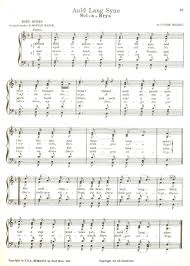



 MaryO'Studio