
Keep practicing!

Keep practicing!

• 1682 ~ Johann Heinrich Kittel, Composer, died at the age of 29
• 1702 ~ Johann Schneider, Composer
• 1775 ~ August Harder, Composer
• 1817 ~ Ignace Xavier Joseph Leybach, Composer
• 1832 ~ Johan August Soderman, Composer
• 1839 ~ Friedrich Gernsheim, Composer
• 1853 ~ Francesco Fanciulli, Composer
• 1871 ~ Karl Tausig, Polish pianist, died at the age of 29
• 1873 ~ Antonina Neshdanova, Russian soprano
• 1875 ~ Donald Francis Tovey, English, musicologist and composer
• 1876 ~ Vittorio Gnecchi, Composer
• 1878 ~ Henri Zagwijn, Composer
• 1885 ~ Benjamin James Dale, Composer
• 1904 ~ Jef Alpaerts, Flemish pianist and conductor
• 1908 ~ Rudolf Petzold, Composer
• 1913 ~ Everett Helm, Composer
• 1915 ~ Esther Williamson Ballou, Composer
• 1916 ~ Eleanor Steber, American soprano. She was an internationally acclaimed Metropolitan Opera diva, appeared in 50 different leading operatic roles, heard in more premiers at the Met than any other artist.
• 1928 ~ Vince Guaraldi, Pianist on the Charlie Brown TV specials
• 1933 ~ Mimi Hines, Pop singer in Ford & Hines (with husband, Phil Ford) and Broadway singer
• 1935 ~  Peter Schickele , American composer, creator of P.D.Q. Bach. Recommended Books and CD’s by Schickele and P.D.Q. Bach
More information about Schickele and P.D.Q. Bach
 Grammy winner
And Part 2
• 1935 ~ Diahann Carroll, Pop Singer
• 1939 ~ Spencer Davis, Musician with Spencer Davis Group
• 1939 ~ Charlie Barnet and his orchestra recorded Cherokee for Bluebird Records. Listen carefully and you’ll hear the horn of Billy May on the piece.
• 1952 ~ Phoebe Snow, American singer of popular music
• 1952 ~ Nicolette Larson, Singer
• 1954 ~ The first Newport Jazz Festival was held on the grass tennis courts of the Newport Casino in Newport RI. Eddie Condon and his band played Muskrat Ramble as the opening number of the world’s first jazz fest.
• 1959 ~ Billie Holiday (Eleanora Fagan) passed away
• 1961 ~ Rocker Bobby Lewis was starting week #2 of a seven-week stay at number one (one, one, one) on the pop-music charts with his smash, Tossin’ and Turnin’. Lewis, who grew up in an orphanage, learned to play the piano at age 5. He became popular in the Detroit, MI area before moving on to fame and fortune with Beltone Records.
• 1967 ~ John (William) Coltrane passed away
• 1967 ~ Monkees performed at Forest Hills NY as Jimi Hendrix’s opening act
• 1968 ~ The Beatles’ feature-length cartoon, Yellow Submarine, premiered at the London Pavilion. The song, Yellow Submarine, had been a #2 hit for the supergroup (9/17/66) and was the inspiration for the movie.
• 1987 ~ “Les Miserables” opened at Imperial Theatre in Tokyo
• 1989 ~ Paul McCartney released “This One”
• 1993 ~ Scott Salmon, American choreographer, died at the age of 51
• 1994 ~ Sebastian Piana, Argentine pianist and tango composer, died at the age of 91
• 2000 ~ Thea Dispeker, who molded operatic talent from Lauritz Melchior to Richard Leech, died at the age of 97.
More information about Dispeker
• 2002 ~ Lee Maye, a singer who played in the Milwaukee Braves outfield with Hank Aaron in the 1960s, died. He was 67. Maye began his 13-year major league career in 1959 and played with the Braves from 1959 to 1965. He later played for the Houston Astros, Cleveland Indians, Washington Senators and Chicago White Sox before retiring in 1971. Maye had a lifetime average of .274 and was admired for his ability to juggle his baseball and music careers. He performed with two doo-wop groups – Arthur Lee Maye and the Crowns, and Country Boys & City Girls – and sometimes sang with The Platters. He produced several popular singles during his 1960s recording career, including Gloria, Cool Loving and I Wanna Love.
 On July 4, 1776 the Continental Congress adopted the Declaration of Independence. This declaration announced to the world that the 13 colonies would no longer be held by British rule. Today Americans celebrate by the flying of a flag, cooking at home (usually a cookout, also known as a barbecue), and watching a brilliant fireworks display.
• 1826 ~ Stephen Foster, American composer of songs
More information about Foster
• 1832 ~ It was on this day that America was sung in public for the first time — at the Park Street Church in Boston, MA. Dr. Samuel Francis Smith wrote the words, borrowing the tune from a German songbook. Ironically, and unknown to Dr. Smith at the time, the melody is the same as the British national anthem.
• 1895 ~ America the Beautiful, the famous song often touted as the true U.S. national anthem, was originally a poem written by Katherine Lee Bates. The Wellesley College professor’s poem was first published this day in the Congregationalist, a church newspaper.
• 1898 ~ Michael Aaron, Piano Educator
• 1900 ~ Louis “Satchmo” Armstrong, American jazz trumpeter, singer and bandleader Read quotes by and about Armstrong
More information about Armstrong
• 1909 ~ Alec Templeton, Pianist
• 1911 ~ Mitch Miller, American conductor, oboist, record company executive, producer, arranger for the Sing Along with Mitch LPs and TV show
• 1937 ~ Ray Pillow, Singer
• 1938 ~ Bill Withers, Grammy Award-winning songwriter, singer
• 1942 ~ The Irving Berlin musical, This is the Army, opened at New York’s Broadway Theatre. Net profits of the show were $780,000.
• 1943 ~ Al ‘Blind Owl’ Wilson, Musician, guitarist, harmonica, singer with Canned Heat
• 1943 ~ The Rhythm Boys, Bing Crosby, Al Rinker and Harry Barris, were reunited for the first time since the 1930s on Paul Whiteman Presents on NBC radio.
• 1948 ~ Jeremy Spencer, Musician, guitarist with Fleetwood Mac
• 1955 ~ John Waite, Singer
• 1958 ~ Kirk Pengily, Rock Musician
• 1985 ~ A crowd, estimated at one million, gathered in Philadelphia to celebrate the 209th anniversary of America’s independence. The Beach Boys were joined by Mr. T. on drums to really add some fireworks to the festivities. The Oak Ridge Boys, Joan Jett and Jimmy Page joined in the celebration.
• 1999 ~ Ronny Graham passed away
• 2001 ~ Maceo Anderson, a tap dancer and founding member of the Four Step Brothers, died in Los Angeles at the age of 90. The group tap danced all over the world, performing for the queen of England and the emperor of Japan. The Four Step Brothers also performed at Radio City Music Hall. The group started as a trio. In the mid-1920s, the group performed at the Cotton Club with Duke Ellington, who wrote The Mystery Song for them. Anderson began dancing as a child in the South. When he was six, he and his mother moved to a basement apartment in Harlem. He taught tap dance at his own school in Las Vegas and across the country until 1999.


Independence Day, commonly known as the Fourth of July, is a federal holiday in the United States commemorating the adoption of the Declaration of Independence on July 4, 1776, declaring independence from Great Britain.
Independence Day fireworks are often accompanied by patriotic songs such as the national anthem “The Star-Spangled Banner”, “God Bless America”, “America the Beautiful”, “My Country, ‘Tis of Thee”, “This Land Is Your Land”, “Stars and Stripes Forever”, and, regionally, “Yankee Doodle” in northeastern states and “Dixie” in southern states. Some of the lyrics recall images of the Revolutionary War or the War of 1812.
A bit of audio for your listening pleasure, as played by Vladimir Horowitz…

• 1666 ~ Adam Krieger, German Composer, died at the age of 32
• 1669 ~ Mauritius Vogt, Composer
• 1722 ~ Jiri Antonin Benda, Composer
• 1723 ~ Christian Ernst Graf, Composer
• 1743 ~ Niels Schiorring, Composer
• 1792 ~ Francesco Antonio Rosetti, Composer, died
• 1818 ~ Edward John Hopkins, Composer
• 1819 ~ Ernst Ludwig Gerber, Composer, died at the age of 72
• 1846 ~ Ricardo Drigo, Composer
• 1889 ~ Eugenio Terziani, Composer, died at the age of 64
• 1890 ~ Samuel Parkman Tuckerman, Composer, died at the age of 71
• 1896 ~ Wilfred Pelletier, Canadian conductor for Voice of Firestone
• 1908 ~ Lucino Tinio Sacramento, Composer
• 1914 ~ Natko Devcic, Composer
• 1917 ~ Lena Horne, American singer of popular music
• 1917 ~ “Buddy” Rich, American jazz drummer and bandleader
• 1918 ~ Stuart Foster, American singer
• 1921 ~ Gordon Reynolds, Musician
• 1923 ~ Claude Antoine Terrasse, Composer, died at the age of 56
• 1925 ~ Will Gay Bottje, Composer
• 1929 ~ Alexander Kelly, Pianist and teacher
• 1930 ~ June Valli, American singer on Your Hit Parade
• 1931 ~ James Loughran, British conductor
• 1932 ~ Martin Mailman, American composer
• 1936 ~ Pauls Dambis, Composer
• 1939 ~ Chris Hinze, Dutch flutist
• 1939 ~ Lindembergue Cardoso, Composer
• 1939 ~ Frank Sinatra made his first appearance with Harry James’ band. Sinatra was center stage at the Hippodrome Theatre in Baltimore, MD, where he sang My Love for You
• 1941 ~ Micki Grant, Composer
• 1941 ~ Mike Leander Farr, Record producer
• 1943 ~ Florence Ballard, Singer with the Supremes
• 1944 ~ Glenn Shorrock, Australian singer with Little River Band
• 1946 ~ Billy Brown, singer with Ray, Goodman, Brown
• 1946 ~ Michael Zadora, Composer, died at the age of 64
• 1947 ~ Jasper van’t Hof, Dutch jazz pianist (Live in Montreux)
• 1951 ~ Andrew Scott, Welch rock guitarist
• 1951 ~ “Victor Borge Show,” last aired on NBC-TV
More information about Borge
• 1953 ~ Gote Carlid, Composer, died at the age of 32
• 1956 ~ “Pipe Dream” closed at Shubert Theater New York City after 245 performances
• 1956 ~ “Shangri-La” closed at Winter Garden Theater New York City after 21 performances
• 1959 ~ Lazare Saminsky, Composer, died at the age of 76
• 1960 ~ Clarence Cameron White, Composer, died at the age of 79
• 1969 ~ Jan Evangelista Zelinka, Composer, died at the age of 76
• 1982 ~ “Lena Horne: Lady, Music” closed at Nederlander New York City after 333 performances
• 1983 ~ Bo Gentry, Songwriter and producer, died
• 1985 ~ Yul Brynner left his role as the King of Siam after 4,600 performances in The King and I at the Broadway Theatre in New York City. The show had run, on and off, for over 34 years and 191 performances.
• 1987 ~ Federico Mompou, Composer, died at the age of 94
• 1993 ~ “Les Miserables” opened at Point Theatre, Dublin
• 1995 ~ Phyllis Hyman, Rhythm and Blues Jazz singer, died at 45
• 1996 ~ “State Fair,” closed at Music Box Theater New York City after 118 performances
• 2001 ~ Chet Atkins, whose guitar style influenced a generation of rock musicians even as he helped develop an easygoing country style to compete with it, died at the age of 77.
Atkins recorded more than 75 albums of guitar instrumentals and sold more than 75 million albums. He played on hundreds of hit records, including those of Elvis Presley (Heartbreak Hotel), Hank Williams Sr. (Your Cheatin’ Heart, Jambalaya) and The Everly Brothers (Wake Up Little Susie). As an executive with RCA Records for nearly two decades beginning in 1957, Atkins played a part in the careers of Roy Orbison, Jim Reeves, Charley Pride, Dolly Parton Jerry Reed, Waylon Jennings, Eddy Arnold and many others. “It’s impossible to capsulize his life – due to the profound impact he’s had as a wonderful human being and incredible member of our industry,” said Joe Galante, chairman of the RCA Label Group in Nashville. “His artistry and his influence as an industry leader have impacted so many. “There is no way to replace him nor what he has meant to music and our Nashville community.” Atkins helped craft the lush Nashville Sound, using string sections and lots of echo to make records that appealed to older listeners not interested in rock music. Among his notable productions are The End of the World by Skeeter Davis and He’ll Have to Go by Reeves. “I realized that what I liked, the public would like, too,” Atkins said in a 1996 interview with The Associated Press. ‘”Cause I’m kind of square.”
Chester Burton Atkins was born June 20, 1924, on a farm near Luttrell, Tenn., about 20 miles northeast of Knoxville. His elder brother Jim Atkins also played guitar, and went on to perform with Les Paul. Chet Atkins’ first professional job was as a fiddler on WNOX in Knoxville, where his boss was singer Bill Carlisle. “He was horrible,” Carlisle said at a tribute concert to Atkins in 1997. “But I heard him during a break playing guitar and decided to feature him on that.” Atkins’ unusual fingerpicking style, a pseudoclassical variation influenced by such diverse talents as Merle Travis and Django Reinhardt, got him hired and fired from jobs at radio stations all over the country. Atkins sometimes joked that early on his playing sounded “like two guitarists playing badly.” During the 1940s he toured with many acts, including Red Foley, The Carter Family and Kitty Wells. RCA executive Steve Sholes took Atkins on as a protege in the 1950s, using him as the house guitarist on recording sessions. RCA began issuing instrumental albums by Atkins in 1953. George Harrison, whose guitar work on early Beatles records is heavily influenced by Atkins, wrote the liner notes for “Chet Atkins Picks on the Beatles.” Sholes put Atkins in charge of RCA Nashville when he was promoted in 1957. There, he helped Nashville survive the challenge of rock ‘n’ roll with the Nashville Sound. The lavish sound has been criticized by purists who prefer their country music raw and unadorned. Atkins was unrepentant, saying that at the time his goal was simply “to keep my job.” “And the way you do that is you make a hit record once in a while,” he said in 1993. “And the way you do that is you give the audience something different.” Atkins quit his job as an executive in the 1970s and concentrated on playing his guitar. He’s collaborated with a wide range of artists on solo albums, including Mark Knopfler, Paul McCartney, Eric Johnson, George Benson, Susie Bogguss and Earl Klugh. At the time he became ill, Atkins had just released a CD, “The Day Finger Pickers took over the World.” He also had begun regular Monday night performances at a Nashville club. “If I know I’ve got to go do a show, I practice quite a bit, because you can’t get out there and embarrass yourself.” Atkins said in 1996. “So I thought, if I play every week I won’t be so rusty and I’ll play a lot better.”
Chet Atkins official site: http://www.misterguitar.com/

• 1585 ~ Lazaro Valvasensi, Composer
• 1743 ~ Anna L Barbauld, Composer of hymns
• 1756 ~ Joseph Martin Kraus, Composer
• 1819 ~ Jacques Offenbach, German-born French conductor, cellist and composer of operettas
Read quotes by and about Offenbach
More information about Offenbach
• 1833 ~ Philip Knapton, Composer, died at the age of 44
• 1837 ~ Giovanni Furno, Composer, died at the age of 89
• 1842 ~ Michael Umlauf, Composer, died at the age of 60
• 1861 ~ Arthur Battelle Whiting, Composer
• 1883 ~ Giannotto Bastianelli, Composer
• 1888 ~ Cesare Dominiceti, Composer, died at the age of 66
• 1899 ~ Anthon van der Horst, Dutch organist and composer
• 1900 ~ Ernest White, Composer
• 1906 ~ Bob Howard, American singer and pianist
• 1910 ~ Fanny Brice, born Fannie Borach, debuted in the New York production of the Ziegfeld Follies
• 1914 ~ Friedrich Zipp, Composer
• 1922 ~ Vittorio Monti, Composer, died at the age of 54
• 1923 ~ Joseph Leopold Rockel, Composer, died at the age of 85
• 1924 ~ Chet Atkins (Chester Burton), Grammy Award-winning guitarist, made over 100 albums and elected to Country Music Hall of Fame in 1973.
More about Chet Atkins
• 1925 ~ Wilhelm Posse, Composer, died at the age of 72
• 1927 ~ John M Dengler, Jazz bass sax, trumpet, trombone
• 1928 ~ Robert Satanowski, Composer
• 1929 ~ Ingrid Haebler, Austrian pianist
• 1931 ~ Arne Nordheim, Norwegian conductor and composer
• 1934 ~ Cornel Taranu, Composer
• 1938 ~ Nikolay Avksentevich Martinov, Composer
• 1939 ~ first TV broadcast of an operetta, “The Pirates of Penzance” by Gilbert and Sullivan W2XBS (later WCBS-TV) in New York City televised Pirates of Penzance. It was presented to a very small viewing audience since television was a new, experimental medium at the time.
• 1936 ~ Billy Guy, Singer with The Coasters
• 1937 ~ Jerry Keller, Singer
• 1940 ~ Jehan Alain, French organist and composer, died in battle at 29
• 1942 ~ Brian Wilson, Bass player, singer with the The Beach Boys, inducted into Rock and Roll Hall of Fame in 1988
• 1945 ~ (Morna) Anne Murray, Grammy Award-winning singer
• 1946 ~ André Watts, American pianist, Chicago Symphony Orchestra
• 1948 ~ George Frederick Boyle, Composer, died at the age of 61
• 1949 ~ Lionel Richie, Tenor sax, songwriter, singer with the Commodores
• 1951 ~ Peter Gordon, Composer
• 1953 ~ Cyndi Lauper, Singer
• 1953 ~ Alan Longmuir, Musician, bass with Bay City Rollers
• 1955 ~ Michael Anthony, Musician, bass with Van Halen
• 1955 ~ “Almost Crazy” opened at Longacre Theater New York City for 16 performances
• 1960 ~ John Taylor, Musician: guitar, bass with Duran Duran
• 1963 ~ The Beatles formed “Beatles Ltd” to handle their income
• 1969 ~ Guitarist Jimi Hendrix earned the biggest paycheck ever paid (to that time) for a single concert appearance. Hendrix was paid $125,000 to appear for a single set at the Newport Jazz Festival.
• 1970 ~ The Long and Winding Road, by The Beatles, started a second week in the number one spot on the pop music charts. The tune was the last one to be released by The Beatles.
• 1975 ~ Daniel Ayala Perez, Composer, died at the age of 68
• 1980 ~ Gustaf Allan Pettersson, Composer, died at the age of 68
• 1987 ~ Whitney Houston’s album, Whitney, debuted on Billboard magazine’s album chart at number one. Houston became the first female to have an LP debut at the top. The singer, daughter of Cissy Houston and cousin of Dionne Warwick, began her singing career at age 11 with the New Hope Baptist Junior Choir in New Jersey. Houston first worked as a backup vocalist for Chaka Khan and Lou Rawls; entered modeling in 1981, appearing in Glamour magazine and on the cover of Seventeen. Whitney married soul singer, Bobby Brown, in the late 1980s.
• 1997 ~ Lawrence Payton, singer with the Four Tops, died at the age of 59
• 1618 ~ Christian de Placker, Composer
• 1708 ~ Johann Gottlieb Janitsch, Composer
• 1717 ~ Johann Wenzel Anton Stamitz, Bohemian violist, conductor and composer
• 1730 ~ Jean-Baptiste Loeillet, Composer, died at the age of 49
• 1747 ~ Alessandro Marcello, Composer, died at the age of 77
• 1759 ~ Charles-Joseph-Balthazar Sohier, Composer, died at the age of 31
• 1762 ~ Johann Ernst Eberlin, Composer, died at the age of 60
• 1766 ~ Edmund Weber, Composer
• 1782 ~ John Bray, Composer
• 1825 ~ Ferdinand David (1810) Violist and composer
• 1815 ~ John William Glover, Composer
• 1822 ~ John Bray, Composer, died on his 40th birthday
• 1825 ~ Gioacchino Rossini’s “Il viaggio a Reims,” premiered
• 1842 ~ Carl Johann Adam Zeller, Composer
• 1843 ~ Charles Edouard Lefebvre, Composer
• 1854 ~ Alfredo Catalani, Italian composer
• 1885 ~ Stevan Hristic, Composer
• 1886 ~ Robert Herberigs, Flemish Composer and writer
• 1898 ~ Paul Muller-Zurich, Composer
• 1902 ~ Guy (Gaetano) Lombardo, Canadian-born American bandleader with The Royal Canadians: “The most beautiful music this side of heaven.”
• 1904 ~ Balis Dvarionas, Composer
• 1905 ~ Taneli Kuusisto, Composer
• 1910 ~ Edwin Gerschefski, Composer
• 1910 ~ Father’s Day was observed for the first time at Spokane, Wash., at the request of the the local YMCA and the Spokane Ministerial Association to earmark a Sunday to “honor thy father.” The idea originated in the mind of a Ms. John Bruce Dodd, a local housewife who was inspired by her admiration for the great job her father, William Smart, had done in raising his 6 children after his wife’s untimely and early death.
• 1912 ~ Jerry Jerome, American saxophonist
• 1913 ~ Sergey Ivanovich Taneyev, Russian Composer, died at the age of 58
• 1926 ~ DeFord Bailey was the first black to perform on Nashville’s Grand Ole Opry
• 1927 ~ Karel Kupka, Composer
• 1930 ~ Jul Levi, Composer
• 1932 ~ First concert performed in San Francisco’s Stern Grove
• 1936 ~ Tommy DeVito, Singer with The Four Seasons
• 1939 ~ Al Wilson, Musician, drummer, singer with Show and Tell
• 1940 ~ Maurice Jaubert, Composer, died at the age of 40
• 1942 ~ Spanky (Elaine) McFarlane, Singer with Spanky and Our Gang
• 1943 ~ Shiek Of Araby by Spike Jones & City Slickers peaked at #19
• 1951 ~ Ann Wilson, Singer with Heart
• 1953 ~ Larry Dunn, Musician, keyboards with Earth, Wind & Fire
• 1956 ~ Doug Stone, Singer
• 1960 ~ Loretta Lynn recorded Honky Tonk Girl
• 1961 ~ Little Egypt (Ying-Yang) by Coasters peaked at #23
• 1962 ~ Paula Abdul, Singer
• 1965 ~ I Can’t Help Myself, by The Four Tops, topped the pop and R&B charts. The Tops, who had no personnel changes in their more than 35 years together were inducted into the Rock and Roll Hall of Fame in 1990.
• 1966 ~ Marjan Kozina, Composer, died at the age of 59
• 1984 ~ Wladimir Rudolfovich Vogel, Composer, died at the age of 88
• 1988 ~ Zdenek Blazek, Composer, died at the age of 83
• 1994 ~ “She Loves Me” closed at Atkinson Theater New York City after 294 performances
• 1994 ~ “Twilight – Los Angeles 1992” closed at Cort New York City after 72 perfomances
• 1995 ~ Murray Dickie, Opera singer/director, died at the age of 71
• 1996 ~ Alan Ande Anderson, Opera director, died at the age of 78
• 1996 ~ Vivian Ellis, Composer, died at the age of 91
• 1997 ~ Bobby Helms, singer (Jingle Bell Rock), died at the age of 63
• 1997 ~ “Forever Tango!” opened at Walter Kerr Theater New York City
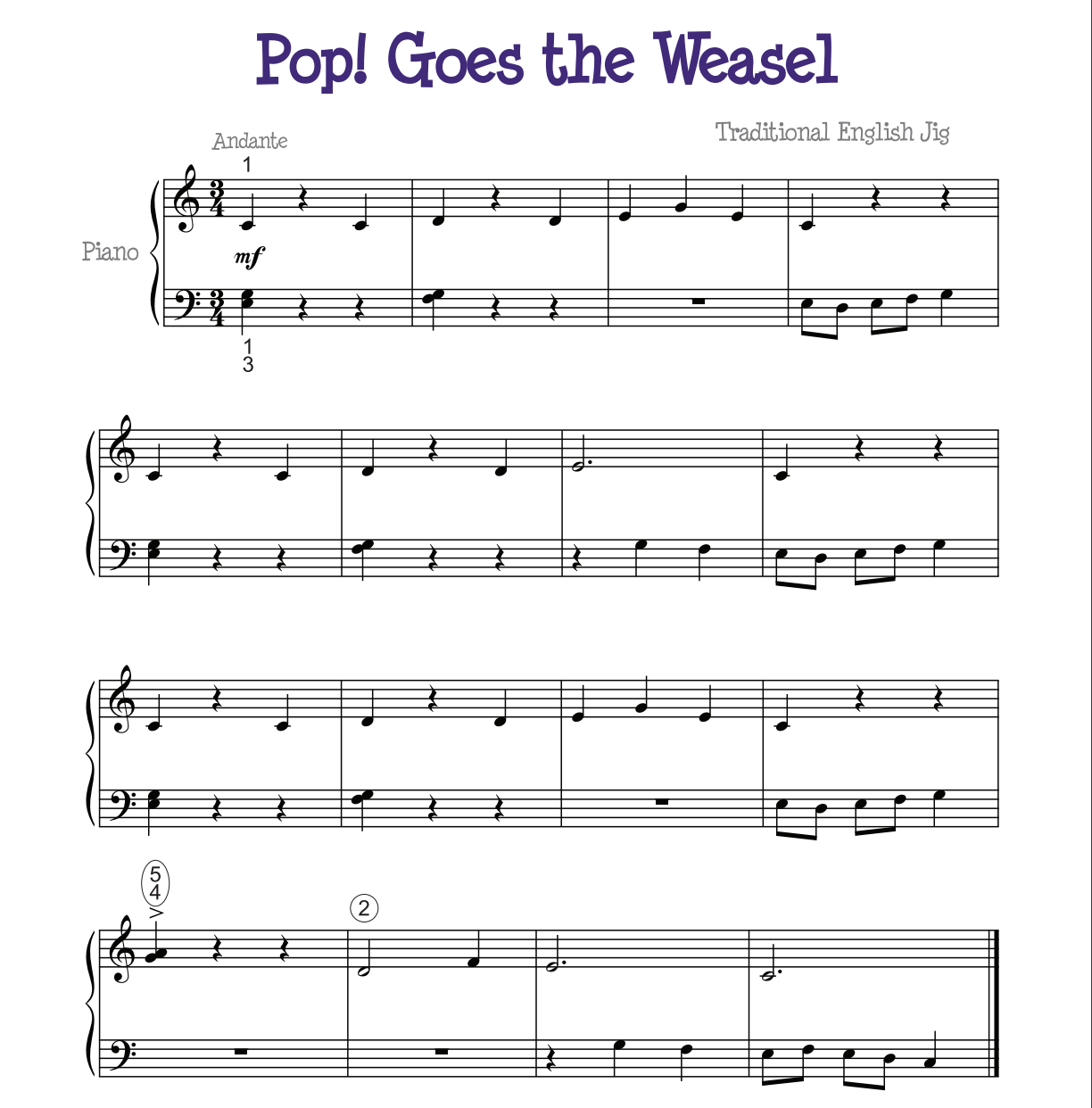
June 14 is set aside to observe National Pop Goes the Weasel Day. On this day people dig back into their memories to the nursery rhymes they learned as children and celebrate the day singing “Pop Goes the Weasel”.
The origins of this nursery rhyme are believed to date back to the 1700′s.
The following lyric was printed in Boston in 1858:
All around the cobbler’s house,
The monkey chased the people.
And after them in double haste,
Pop! goes the weasel.
In 1901 in New York the opening lines were:
All around the chicken coop,
The possum chased the weasel.
The most common recent version was not recorded until 1914. In addition to the three verses above, American versions often include some of the following:
All around the mulberry bush,
The monkey chased the weasel.
The monkey stopped to pull up his sock, (or The monkey stopped to scratch his nose)
Pop! goes the weasel.
Half a pound of tuppenny rice,
Half a pound of treacle.
Mix it up and make it nice,
Pop! goes the weasel.
A Piano Version:
‘Pop Goes the Weasel’ is played by the oboe while Elgar’s ‘Enigma’ Theme is performed on piano. This test of Dennis Whitten’s alleged solution demonstrates it is not a credible counterpoint to the ‘Enigma’ Theme, finishing five measures too soon while producing an unacceptably high number of dissonant note intervals.
 Flag Day
• 1594 ~ Orlandus Lassus, Composer (Prophet sybillarum), died at about 61
• 1671 ~ Thomoso Albinoni, Italian composer and violinist
More information about Albinoni
• 1691 ~ Jan Francisci, Composer
• 1709 ~ Gottfried Wegner, Composer, died at the age of 65
• 1744 ~ André Campra, Composer, died at the age of 83
• 1750 ~ Franz Anton Maichelbeck, Composer, died at the age of 47
• 1760 ~ Candido Jose Ruano, Composer
• 1763 ~ Johannes Simon Mayr, Composer
• 1769 ~ Dominique Della-Maria, Composer
• 1789 ~ Johann Wilhelm Hertel, Composer, died at the age of 61
• 1835 ~ Nikolay Rubinstein, Composer
• 1854 ~ Frederik Rung, Composer
• 1891 ~ Auguste Jean Maria Charles Serieyx (1865) Composer
• 1881 ~ The player piano was patented by John McTammany, Jr. of Cambridge, MA.
• 1882 ~ Michael Zadora, Composer
• 1884 ~ John McCormack, Irish/American singer of Irish folksongs
• 1891 ~ Nicolo Gabrielli, Composer, died at the age of 77
• 1895 ~ Cliff Edwards “Ukulele Ike”, Singer of When You Wish Upon a Star
• 1904 ~ Benno Ammann, Composer
• 1909 ~ Burl Ives, American folk singer, banjo player, guitarist and Oscar-winning actor. His gentle voice helped popularise American folk music. He played powerful dramatic roles in movies including “The Big Country,” for which he won an Acadamy Award for best supporting actor, and “Cat on a Hot Tin Roof.” anniversary of his death
• 1910 ~ Nappy (Hilton Napoleon) Lamare, Musician with Bob Cats
• 1911 ~ Johan Severin Svendsen, Composer, died at the age of 70
• 1916 ~ Karl-Rudi Griesbach, Composer
• 1916 ~ MIT and the American Telephone and Telegraph Company attempted the largest transcontinental telephone circuit of the time at Symphony Hall!
• 1918 ~ Carter Harman, Composer
• 1920 ~ Helmer-Rayner Sinisalo, Composer
• 1923 ~ Theodore Bloomfield, Composer
• 1923 ~ It was the beginning of the country music recording industry. Ralph Peer of Okeh Records recorded Fiddlin’ John Carson doing The Little Old Log Cabin in the Lane— and the first country music recording was in the can.
• 1929 ~ Cy Coleman (Seymour Kaufman), American composer of popular music and pianist
More information about Cy Coleman
• 1932 ~ Coleridge-Taylor Perkinson, Composer
• 1933 ~ Albert Ross Parsons, Composer, died at the age of 85
• 1940 ~ John Mizelle, Composer
• 1943 ~ Muff (Mervyn) Winwood, Singer, songwriter, bass with The Spencer Davis Group
• 1945 ~ Rod Argent, Keyboard
• 1948 ~ Ernst Henrik Ellberg, Composer, died at the age of 79
• 1948 ~ John Blackwood McEwen, Composer, died at the age of 80
• 1953 ~ Elvis Presley graduated from L.C. Humes High School in Memphis, TN. Within three years, the truck driver-turned-singer had his first number-one record with Heartbreak Hotel.
• 1960 ~ Vladimir Nikolayevich Kryukov, Composer, died at the age of 57
• 1962 ~ Boy George, Singer
• 1965 ~ Guido Guerrini, Composer, died at the age of 74
• 1965 ~ The Beatles released album “Beatles VI”
• 1965 ~ John Lennon’s second book “A Spaniard in the Works” was published
• 1968 ~ Karl-Birger Blomdahl, Swedish opera composer, died at the age of 51
• 1969 ~ John & Yoko appeared on David Frost’s British TV Show
• 1974 ~ Knud Christian Jeppesen, Composer, died at the age of 81
• 1975 ~ America reached the top spot on the Billboard pop music chart with SisterGolden Hair. The group had previously (March, 1972) taken A Horse With No Name to the number one spot. The trio of Dan Peek, Gerry Beckley and Dewey Bunnell had received the Best New Artist Grammy in 1972. America recorded a dozen hits that made it to the popular music charts in the 1970s and 1980s. Though number one, Sister Golden Hair did not qualify for gold record (million-seller) status.
• 1975 ~ Janis Ian released At 17
• 1976 ~ The Beatles were awarded a gold record for the compilation album of past hits titled, Rock ’n’ Roll Music.
• 1978 ~ Theodore Karyotakis, Composer, died at the age of 74
• 1980 ~ Theme From New York, New York by Frank Sinatra hit #32
• 1986 ~ Alan Jay Lerner, Broadway librettist, died in NY at 67
More information about Lerner
• 1989 ~ Carole King got a star in Hollywood’s walk of fame
• 1994 ~ Henry Mancini passed away at the age of 70
More information about Mancini
• 1994 ~ Lionel Grigson, Professor of jazz, died at the age of 52
• 1994 ~ Harry “Little” Caesar, blues singer/actor (City Heat), died at the age of 66
• 1996 ~ Thomas Edward Montgomery, drummer, died at the age of 73
• 2002 ~ Marvin Paymer, Pianist, composer, musicologist and author, died of cancer. He was 81. His son, actor David Paymer, told the Los Angeles Times that Paymer died in San Diego. In 1977, he co-founded and, until his retirement in 1993, served as associate director of the Pergolesi Research Center at City University of New York Graduate Center. Pergolesi was 18th century Italian composer Giovanni Battista Pergolesi. Paymer authenticated 13 Pergolesi compositions among hundreds of fakes attributed to the posthumously famous composer, who died at 26.
 MaryO'Studio