• 1701 ~ Johann Joachim Agrell, Composer
More information about Agrell
• 1735 ~ Paul Revere, American patriot and music engraver
• 1764 ~ In a stunning demonstration of prodigious talent, the Royal Family at Versailles in France was treated to a brilliant recital by an eight year old musician. His name was Wolfgang Amadeus Mozart.
• 1878 ~ Edwin Franko Goldman, Composer
1900 ~ Xavier Cugat (Francisco de Asís Javier Cugat Mingall de Brue y Deulofeo). Spanish violinist, composer and band leader, married to Abbe Lane and Charo
More information about Cugat
• 1925 ~ Lucrezia Bori and John McCormack of the famous Metropolitan Opera in New York City made their singing debuts on radio this day. The broadcast over what was WEAF Radio (now WABC) encouraged others to sing on radio. Some of those were Hootie and the Blowfish, and Barry Manilow.
• 1928 ~ Frank Pourcel, Composer, violinist
• 1942 ~ Country Joe McDonald, Singer with Country Joe & the Fish
• 1953 ~ A sad day in country music, as the legendary Hank Williams died at the young age of 29. Undisputedly, the biggest star in the history of country music, Hank Williams’ legacy is being carried on by his son, Hank Williams, Jr.
• 1955 ~ Elvis Presley appeared at The Eagles Hall in Houston Texas. Presley went on to play over 250 shows in 1955.
• 1968 ~ A group known as The Blue Velvets decided to change its name this day and it’s a good thing they did. The new name soon became a national pop music favorite as Creedence Clearwater Revival climbed to stardom.
• 1972 ~ Maurice Chevalier passed away. Chevalier was a French actor, Cabaret singer and entertainer.
• 1984 ~ Alexis Korner passed away. Korner was a British blues musician and radio broadcaster, who has sometimes been referred to as “a founding father of British blues”.
• 2000 ~ Ray Walston, who found commercial success playing a comical devil in the play “Damn Yankees” and an extraterrestrial on the sitcom “My Favorite Martian,” of natural causes at the age of 86. Walston caught the biggest break of his career when he won a Tony in 1955 for his performance in Broadway’s “Damn Yankees.” The smash musical told the story of a frustrated baseball fan who sells his soul. His screen debut came in the 1957 movie “Kiss Them For Me” with Cary Grant, and the next year he played the devil again in the film version of “Damn Yankees.” Walston snagged the role that would stick with him for a lifetime – that of a lovable alien on the TV show “My Favorite Martian” in 1963. The show was immensely popular, but Walston felt so typecast that he tried to highlight his dramatic abilities by returning to the stage when the TV comedy went off the air in 1966. He stayed in theater for several years before re-emerging with a succession of solid supporting roles in movies and television. Nearly 30 years after the end of the lighthearted “My Favorite Martian,” Walston’s role on “Picket Fences” as acerbic Judge Henry Bone earned Walston successive Emmys in 1995-96.
• 2016 ~ Chart-topping R&B singer Natalie Cole, who followed her famous father in the music business with hits like “This Will Be (An Everlasting Love) and “Unforgettable,” died at age 65.
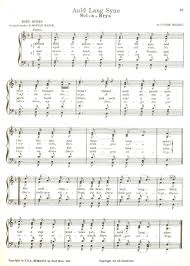
“Auld Lang Syne” is a Scots poem written by Robert Burns in 1788 and set to the tune of a traditional folk song. It is well known in many countries, especially in the English-speaking world; its traditional use being to celebrate the start of the New Year at the stroke of midnight. By extension, it is also sung at funerals, graduations and as a farewell or ending to other occasions. The international Boy Scout youth movement, in many countries, uses it as a close to jamborees and other functions.
The song’s Scots title may be translated into English literally as “old long since”, or more idiomatically, “long long ago”, “days gone by” or “old times”. Consequently “For auld lang syne”, as it appears in the first line of the chorus, might be loosely translated as “for (the sake of) old times”.
Auld Lang Syne is one of Scotland’s gifts to the world, recalling the love and kindness of days gone by, but in the communion of taking our neighbors’ hands, it also gives us a sense of belonging and fellowship to take into the future.
It is one of the many folk songs from the great Lowland Scots tradition collected and fashioned by the pen of one of the world’s greatest songwriters. Burns devoted the last years of his life to the song tradition, and often a mere fragment from some old ballad was transformed by his alchemy into a memorable love song or Scots poem. With Auld Lang Syne, though, the brilliance was already there; this is the Bard’s first mention of it in a letter to Mrs Dunlop in 1788:
“… Light be the turf on the breast of the heaven inspired Poet who composed this glorious fragment.”
One of the most interesting facts is that the Auld Lang Syne tune which is sung from Times Square to Tokyo, and has conquered the world, is not the one Robert Burns put the original words to. The older tune though is still sung by traditional singers. It has a more douce, gentle, nostalgic feel to it than the popular tune a mood evoked by the subtle use of the traditional air sung by Mairi Campbell in the first Sex and the City movie. However, whichever tune it is sung to, and wherever in the world it is sung, Auld Lang Syne retains the great emotional resonance of the original traditional song of the Scottish people of those days in the distant past. Let’s leave the last word to Burns himself:
“… is not the Scots phrase, ‘Auld Lang Syne’, exceedingly expressive – there is an old song and tune which has often thrilled thro’ my soul”.
Fancy singing along yourself? Here are the verses of the words to Auld Lang Syne:
Should auld acquaintance be forgot,
And never brought to mind?
Should auld acquaintance be forgot,
And auld lang syne.
Chorus:
For auld lang syne, my jo,
For auld lang syne,
We’ll tak a cup o’ kindness yet,
For auld lang syne,
And surely ye’ll be your pint-stowp!
And surely I’ll be mine!
And we’ll tak a cup o’ kindness yet,
For auld lang syne.
Chorus
We twa hae run about the braes
And pu’d the gowans fine;
But we’ve wander’d mony a weary foot
Sin auld lang syne.
Chorus
We twa hae paidl’d i’ the burn,
Frae mornin’ sun till dine;
But seas between us braid hae roar’d
Sin auld lang syne.
Chorus
And there’s a hand, my trusty fiere!
And gie’s a hand o’ thine!
And we’ll tak a right guid willy waught,
For auld lang syne.
Chorus
Should old acquaintance be forgot,
And never brought to mind?
Should old acquaintance be forgot,
And long, long ago.
Chorus
And for long, long ago, my dear
For long, long ago,
We’ll take a cup of kindness yet,
For long, long ago
And surely youll buy your pint-jug!
And surely I’ll buy mine!
And we’ll take a cup of kindness yet,
For long, long ago.
Chorus
We two have run about the hills
And pulled the daisies fine;
But we’ve wandered manys the weary foot
Since long, long ago.
Chorus
We two have paddled in the stream,
From morning sun till dine;
But seas between us broad have roared
Since long, long ago.
Chorus
And there’s a hand, my trusty friend!
And give us a hand of yours!
And we’ll take a deep draught of good-will
For long, long ago.
Chorus
Here is an old kinescope from over 50 years ago!! For 100 years, the slow drop of a lighted glass ball on New Year’s Eve from atop One Times Square in New York City has become an American tradition. A huge crowd gathers every year to welcome in the New Year.
Beginning in 1956, Guy Lombardo & His Royal Canadians entertained the US on New Year’s Eve with a combination of music and the live “ball drop” at Midnight. Guy continued this tradition until his death in 1977. His band still played on at CBS Television on New Years for an additional 2 years. (Dick Clark’s Rockin New Years Eve began in 1972 on ABC and still broadcasts annually.) This broadcast began right after the 15-minute news and ran for an hour. Guy plays the music and newsman Robert Trout announces the beginning of the New Year.
If you look closely, you’ll see acerbic television personality Henry Morgan in the crowd. TV was very primitive 50 years ago. Harsh lighting, a cheap office clock and a World War II searchlight scans the crowd below.
I hope you’ll enjoy ringing in the New Year – 1958! Recorded: December 31, 1957
Auld Lang Syne played on bagpipes (as it should be)
• 1922 ~ Rex Allen, ‘The Arizona Cowboy’, entertainer, rodeo star, singer, songwriter who published over 300 songs
• 1923 ~ Singer Eddie Cantor opened in the lead role of Kid Boots. Broadway critics called the production, “A smash musical hit!” Eddie made several of the songs from that show into smash hits also, like Alabamy Bound and If You Knew Susie. Three years later, If You Knew Susie became the title song for a movie starring Cantor.
• 1928 ~ Ross Barbour, Singer with The Four Freshmen
• 1929 ~ Guy Lombardo and his Royal Canadians played Auld Lang Syne as a New Year’s Eve song for the first time. Auld Lang Syne had been the band’s theme song long before 1929. However, this night was the start of a New Year’s Eve tradition as Lombardo’s famed orchestra played at the Hotel Roosevelt Grill in New York City to usher in the new year. Where did it Auld begin? Scottish poet Robert Burns said he heard an old man singing the words, and wrote them down; but Burns is considered the original author. The literal translation means “old long since”; less literal means “days gone by”. Auld Lang Syne and Happy New Year!
• 1930 ~ Odetta (Holmes Felious Gordon), American folk-blues singer, guitarist, songwriter and actress
• 1940 ~ As a result of a dispute between the radio networks and ASCAP (the American Society of Composers and Publishers), the radio industry was prevented from playing any ASCAP-licensed music. The ban lasted for ten months. An ASCAP competitor, BMI (Broadcast Music Incorporated) made giant strides, expanding to include 36,000 copyrights. Many radio stations had to resort to playing public domain songs, such as marches and operas, to keep their stations on the air. Even kids songs were played over and over again until the ban was lifted. One of the most popular songs to be played was Happy Birthday to You, which was performed in many different languages just to get past the ban. The original song is now, in fact, a copyrighted piece of music, though it wasn’t at the time.
• 1942 ~ Andy Summers (Somers), Guitarist, singer with The Police
• 1947 ~ Burton Cummings, Jr., Singer with The Guess Who
• 1947 ~ Roy Rogers, ‘the King of the Cowboys’, and Dale Evans were hitched in marriage. They rode off into that sunset together for over fifty years. (Roy died July 6, 1998.)
• 1948 ~ Donna Summer (LaDonna Gaines), Grammy Award-winning singer
• 1951 ~ Tom Hamilton, Bass with Aerosmith
• 1960 ~ After playing California nightclubs as The Pendletones, Kenny and the Cadets, and Carl and the Passions, a new group emerged this day: The Beach Boys. The group’s first national hit, Surfin’ Safari, was soon to be. They recorded for local (Los Angeles) Colpix Records and at the height of their popularity, Capitol Records. The Beach Boys also recorded under the Reprise Records banner. The revitalized group still tours and Capitol continues to reissue various greatest hits packages. The Beach Boys were inducted into The Rock and Roll Hall of Fame in 1988.
• 1972 ~ Joe McIntyre, Singer with New Kids on the Block
• 1975 ~ Elvis Presley performed before 60,000 fans at the Silverdome in Pontiac, MI. He earned $800,000 for the concert, a world record for a single concert by a single artist.
• 1985 ~ Over 54,500 people played kazoos in downtown Rochester, New York. The assembled multitude played A Bicycle Built for Two. Any idea why? Well, they felt it was appropriate for the last day of the year and it got the crowd listed in the Guiness Book of World Records for ‘Most Kazoo-ers’.
• 2000 ~ Tanaquil Le Clercq, the ballerina who dazzled the world in the 1940s and ’50s before her career was cut short by paralytic polio, died of pneumonia at the age of 71. Le Clercq contracted the disease, which left her paralyzed below the waist, in 1956. At the time, she was the fourth wife of George Balanchine and had attracted an adoring public because of her long-legged elegance. She later became a teacher at Dance Theater of Harlem, wrote two books and regularly attended dance performances. The New York City Ballet, of which Le Clercq was a charter member, paid tribute to her in 1988, when it opened its 50th-anniversary season. She acknowledged a thunderous New York State Theater ovation from her wheelchair. Le Clercq was blessed with an elongated physique that she used with refinement or humor. She epitomized the modernized look in classical dancing, which enthralled Balanchine, who once cast her as a dragonfly. As the first City Ballet ballerina trained since childhood by Balanchine, she was naturally identified with the roles he created for her in his major works, such as the ballets “Symphonie Concertante,” “Symphony in C” and “La Valse,” in which her doomed heroine danced herself to death. She was equally unforgettable in the ballets of Jerome Robbins and as the white-faced allegorical figure of Sacred Love in “Illuminations” in 1950.
• 2000 ~ José Greco, the famed flamenco dancer and choreographer who founded the José Greco Spanish Dance Company, of heart failure at the age of 82. Born in Montorio nei Frentani, Italy, of Spanish-Italian parents, he moved to Seville, Spain, at the age of 3, then was raised in Brooklyn from the age of 10. He began his career in 1937 and became known as the greatest Spanish dancer in the world. In 1941, the already famous Argentine-born dancer La Argentinita (known off the stage as Encarnacion Lopez) was preparing for an American tour when she saw Greco dance and asked him to perform as her partner and the featured male performer in her company until she died in 1945. After that, Greco danced with her sister Pilar Lopez. In 1951, Greco shared with Carol Channing the title of “New Broadway Personality of the Year.” The José Greco Dance Company, which helped integrate flamenco with mainstream ballet, toured extensively in North America, and six times worldwide, over the following two decades. In 1962, he Greco was knighted by the Spanish government. In 1971, Greco formed the Foundation for Hispanic Dance. His autobiography, “Gypsy in My Soul: The Autobiography of Jose Greco,” was published in 1977.
• 2000 ~ Eddy Shaver, a guitarist who performed with his father Billy Joe Shaver and Dwight Yoakam, died at the age of 38. Eddy Shaver grew up around music because of his father, a celebrated songwriter whose songs include I’m Just an Old Chuck of Coal (But I’m GonnaBe a Diamond Someday) and Georgia on a Fast Train. Dickie Betts of The Allman Brothers Band helped teach Eddy Shaver to play and gave him his two favorite guitars, one formerly owned by the late guitarist Duane Allman. Eddy Shaver began playing guitar with his father at 13, and gradually became Billy Joe Shaver’s musical partner and sometime co-writer. Billy Joe Shaver merged from country to a more rock-influenced sound because of his son. Albums by the band Shaver include “Tramp on Your Street,” the live “Shaver: Unshaven,” and “Electric Shaver.” A new album, “The Earth Rolls On,” was released on March 20, 2001.
• 2001 ~ Marie Hartford, a well-known businesswoman on Music Row and widow of the late songwriter and performer John Hartford, died of lung cancer. She was 67. Marie Hartford worked at Glaser Publishing, booking the studios at the Glaser Brothers’ Music Row operation, where country music’s Outlaw movement was bred. John Hartford, who wrote the standardGentle on My Mind, died June 4 after a decade-long battle with cancer. The song was recorded more than 300 times, most prominently by Glen Campbell in 1967 but also by Dean Martin, Elvis Presley and Aretha Franklin.
• 2003 ~ Renata Babak, an internationally known mezzo-soprano with the Bolshoi Opera who defected from the Soviet Union in 1973, died of pancreatic cancer. She was 69. Babak gave recitals until last year, singing in a sweet but powerful and well-controlled voice described by critics as among the best in the world. Her last opera was in 1997, when she performed in Tchaikovsky’sIolanta with Opera Camerata of Washington. Babak was an international star with 10 years’ experience at the Bolshoi when she defected while the opera company was playing at La Scala in Milan, slipping out of a hotel lobby wearing a wig and dark glasses. She immigrated to Canada and went into hiding for two years. Babak’s U.S. debut at Carnegie Hall in 1975 was met with enthusiastic reviews. She moved to New York and then to Washington in the hopes of working with George London, then general director of the Washington Opera. Babak joined the faculty of the Washington Conservatory of Music when London was disabled by a stroke.
Happy Boxing Day! Boxing Day is a holiday traditionally celebrated the day following Christmas Day, when servants and tradesmen would receive gifts, known as a “Christmas box”, from their masters, employers or customers, in the United Kingdom,The Bahamas, Barbados, Canada, Hong Kong, Australia, Bermuda, New Zealand, Kenya, South Africa, Guyana, Trinidad and Tobago, Jamaica and other former British colonies. Today, Boxing Day is a public holiday usually falling on 26 December.
• 1921 ~ Steve Allen, Comedian, author, musician, composer, TV host of The Tonight Show, The Steve Allen Show; films: The Benny Goodman Story, married to JayneMeadows
• 1926 ~ Earle Brown, American avant-garde composer
More about Brown
• 1931 ~ George Gershwin’s musical, Of Thee I Sing, opened at the Music Box Theatre in New York City. The show became the first American musical to be awarded a Pulitzer Prize.
• 1935 ~ Abdul ‘Duke’ Fakir, Singer with The Four Tops
• 1939 ~ W.C. Handy of Memphis, TN one of the legendary blues composers of all time, recorded the classic St. Louis Blues. W.C. and his band recorded in New York for Varsity Records. Handy was one of the first to use the flat third and seventh notes in his compositions, known in the music world as ‘blue’ notes. The music awards for blues artists’ are called the W.C. Handy National Blues Awards.
• 1940 ~ Phil Spector, ‘Tycoon of Teen’, record company executive, originator of Wall of Sound, sang with The Teddy Bears, songwriter
• 1942 ~ Adriana Maliponte, Italian soprano
• 1952 ~ André-Michel Schub, French-born American pianist
• 1963 ~ Capitol Records rushed to release its first single by the Fab Four, otherwise known as The Beatles. I Want to Hold Your Hand, backed with I Saw Her Standing There, reached #1 on February 1, 1964. The flood of music by John, Paul, George and Ringo had started the British Invasion; changing contemporary music forever.
• 1964 ~ More Beatles news: The Fab Four got their sixth #1 hit song since February
• 1, as I Feel Fine became the top tune this day. The first five #1 hits by The Beatles were: I Want to Hold Your Hand, She Loves You, Can’t Buy Me Love, Love Me Do and A Hard Day’s Night.
• 1967 ~ A sad day for jazz fans, as the Dave Brubeck Quartet formally disbanded after sax man Paul Desmond left the group. Desmond was a fixture with the quartet for 16 years and can be heard on all the immortal Brubeck standards, including Take Five.
• 2001 ~ Edward Downes, a professor best known as host of the “Texaco Opera Quiz” heard during live Metropolitan Opera radio broadcasts, died at the age of 90. Opera experts answered questions from listeners in the opera quiz, held during opera intermissions from 1958 to 1996. Known for his wit and mellow baritone voice, Downes put his panelists at ease and offered teasing hints to the answers when experts were stumped. Born in Boston, Downes began attending operas at a young age with his father, Olin Downes, who later became chief music critic at The New York Times. Edward Downes, who never completed an undergraduate degree, received a Ph.D. in musicology from Harvard University at the age of 47. He later taught at Wellesley College, the Longy School of Music, the University of Minnesota and Queens College.
• 1912 ~ Tony Martin (Alvin Morris), Singer, actor, married to dancer Cyd Charisse
• 1915 ~ Pete Rugolo, Bandleader, arranger, scored TV’s The Fugitive
• 1931 ~ Lawrence Tibbett was the featured vocalist as radio came to the Metropolitan Opera House in New York City. The first opera was Hansel und Gretel by Humperdinck, heard on the NBC network of stations. In between acts of the opera, moderator Olin Downes would conduct an opera quiz, asking celebrity guests opera-related questions. The program’s host and announcer was Milton Cross. He worked out of the Met’s Box 44.
• 1932 ~ Little Richard, American rock-and-roll singer, pianist and songwriter
• 1937 ~ O’Kelly Isley, Singer with the Grammy Award-winning group, The Isley Brothers
• 1937 ~ Arturo Toscanini conducted the first broadcast of Symphony of the Air over NBC radio.
• 1939 ~ The Charles Dickens classic, A Christmas Carol, was read by LionelBarrymore on The Campbell Playhouse on CBS radio. The reading of the tale became an annual radio event for years to come.
• 1719 ~ Johann Christoph Altnikol, German organist, bass singer, and composer. He was a son-in-law and copyist of Johann Sebastian Bach
• 1818 ~ Franz Gruber of Oberndorf, Germany, composed the music for “Silent Night” to words written by Josef Mohr. The traditional song was sung for the first time during Midnight Mass on this night.
• 1824 ~ Peter Cornelius, German composer and writer
• 1871 ~ Opera-goers in Cairo, Egypt were treated to Verdi’sAida in its world premiere. The composer was commissioned to write the opera for festivities celebrating the opening of the Suez Canal
• 1906 ~ Professor Reginald A. Fessenden sent his first radio broadcast from Brant Rock, MA. The program included a little verse, some violin and a speech.
• 1918 ~ Zara Nelsova, Canadian-born American cellist
• 1924 ~ Carol Haney, Dancer, member of Jack Cole dance company, worked with Bob Fosse, in films
• 1928 ~ The first broadcast of The Voice of Firestone was heard. The program aired each Monday evening at 8:00. The Voice of Firestone became a hallmark in radio broadcasting. It kept its same night, time (in 1931 the start time changed to 8:30) and sponsor for its entire run. Beginning on September 5, 1949, the program of classical and semiclassical music was also seen on television.
• 1930 ~ Robert Joffrey (Khan), Choreographer with The Joffrey Ballet; died in 1988
• 1931 ~ Ray Bryant, Pianist, composer
• 1944 ~ Mike Curb, Music executive, producer, Oscar-winner
• 1944 ~ The Andrews Sisters starred in the debut of The Andrews Sisters’ Eight-To- The-Bar-Ranch on ABC radio. Patti, Maxine and LaVerne ran a fictional dude ranch. George ‘Gabby’ Hayes was a regular guest along with Vic Schoen’s orchestra. The ranch stayed in operation until 1946.
• 1945 ~ Lemmy (Ian Kilmister), Bass, singer with Motorhead
• 1946 ~ Jan Akkerman, Guitar, lute with bands: Friendship Sextet, Johnny and the Cellar Rockers
• 1951 ~ Menotti’s “Amahl and the Night Visitors”, the first opera composed for television, made its debut on NBC-TV. Amal and the Night Visitors became a Christmas classic.
• 1955 ~ The lovely Lennon Sisters debuted as featured vocalists on The Lawrence Welk Show on ABC-TV. They became regulars with Welk within a month and stayed on the show until 1968.
• 1957 ~ Ian Burden, Keyboards with Human League
• 1977 ~ The Bee Gees spent Christmas and New Year’s Eve at the top of the music charts. How Deep is Your Love became #1 this day and stayed that way for three weeks.
• 2000 ~ Felix Popper, a conductor and music administrator at the New York City Opera, died at the age of 92. Popper joined the New York City Opera in 1949 as an assistant conductor and vocal coach. By 1958 he was named music administrator, and he played an important role in guiding the opera through a period in which the house truly established itself. During this time, the company is credited with discovering important American singers such as Johanna Meier, Tatiana Troyanos, Gianna Rolandi, Faith Esham and Jane Shaulis. Popper retired from the opera in 1980 but continued to work as a consultant and vocal coach.
• 2000 ~ Longtime Detroit blues radio personality and promoter Famous Coachman died of an apparent heart attack. He was 75. Coachman was host of the weekend blues and gospel show on Detroit’s WDET for 21 years until 1997 and remained busy in the city’s music world until his death. “Everybody knew Coachman,” said JoAnn Korczynska, blues music director for WHFR at Henry Ford Community College in Dearborn. “He really did know B.B. King and John Lee Hooker. When I met John Lee Hooker, one of the first things he said to me was `How is Coachman doing?'” Coachman said he was named “Famous” because “my mother knew I would be.”
• 2000 ~ Nick Massi, an original member of the Four Seasons who handled bass vocals and vocal arrangements throughout the band’s glory days, died of cancer at the age of 73. Massi was born in Newark as Nicholas Macioci. The longtime West Orange resident performed with several bands before joining Frankie Valli in a group called the Four Lovers. By 1961, the group had evolved into the Four Seasons. Massi remained with the group until 1965, when he grew tired of touring, Valli said. Massi performed on hits such as Sherry, Big Girls Don’t Cry,Walk Like a Man and Rag Doll, which friends said was his favorite. During his tenure, the group made the Billboard Top 40 chart 17 times and toured throughout the United States and overseas, melding doo-wop vocals with a contemporary beat. They were inducted into the Rock and Roll Hall of Fame in 1990. Valli’s falsetto was the band’s trademark, but he said Massi was his musical mentor. “He could do four-part modern harmonies that would amaze musicians who had studied for years. And he did it all in his head without writing it down,” Valli said.
• 1939 ~ Johnny Kidd (Frederick Heath), Singer, songwriter with Johnny Kidd & The Pirates
• 1940 ~ Tim Hardin, Singer, composer
• 1940 ~ Jorma Kaukonen, Guitarist with Jefferson Airplane and also Hot Tuna
• 1940 ~ Eugene Record, Singer with Chi-Lites
• 1942 ~ Bob Hope agreed to entertain U.S. airmen in Alaska. It was the first of his many famous Christmas shows for American armed forces around the world. The tradition continued for more than three decades.
• 1943 ~ The first complete opera to be televised was aired on WRBG in Schenectady, NY. (WRGB was named after GE engineer Dr. W.R.G. Baker. It was not named, as many have thought over the years, for red, blue and green, the three primary colors of a TV picture tube.) Humperdinck’s “Hansel and Gretel” was the opera presented.
• 1945 ~ Ron Bushy, Drummer with Iron Butterfly
• 1951 ~ Johnny Contardo, Singer with Sha-Na-Na, formerly Eddie and The Evergreens
• 1964 ~ Eddie Vedder (Mueller), Songwriter, singer with Pearl Jam
• 1964 ~ Rock ’n’ roll radio,in the guise of Pirate Radio, went to the U.K. Radio London began its regular broadcasts. It was joined, at sea, by other pirates like Radio Caroline and Radio Luxembourg. It was a gallant effort to broadcast commercial radio, which was illegal in Great Britain. On England’s mainland, one had to listen to ‘Auntie Beeb’ (the BBC) or nothing at all. It was generally like a battle. Government agents would attempt to board a floating radio station, take it over, and shut it down. Many times the ships would broadcast from different locales to foil the governmental crackdown on the high seas. Later, the BBC split into four different radio networks, Radio 1, 2, 3 and 4, to stem the tide of the pirates who gained huge audiences by playing popular music. Eventually, limited commercial broadcasting came to Great Britain.
• 1969 ~ B.J. Thomas received a gold record for the single, Raindrops Keep Fallin’ on My Head from the motion picture, Butch Cassidy and the Sundance Kid. Raindrops hit number one on the pop charts on January 3, 1970 and stayed there for 4 weeks.
• 1969 ~ Elton John met with arranger Paul Buckmaster, writer Bernie Taupin and producer Gus Dudgeon. The collaboration marked the start of one of the most successful milestones of music in the 1970s. Together, they created Your Song, Friends, Levon, Tiny Dancer, Rocket Man and many more.
• 2001 ~ Anthony Charles Chavis, Zydeco musician and son of the late Zydeco pioneer Boozoo Chavis, died after suffering a heart attack He was 45. His death came just eight months after his father’s. Charles Chavis, in addition to playing the washboard, was lead vocalist on numerous recordings with Boozoo, including his 1996 hit What You Gonna Do? After Boozoo Chavis’ death, his sons had agreed to continue the Magic Sounds Band. It was not clear how Charles Chavis’s death would affect the group. In addition to his music, Charles Chavis had worked with his father as a jockey and trainer at Chavis stables.
• 1723 ~ Carl Friedrich Abel, German composer of the Classical era. He was a renowned player of the viola da gamba, and composed important music for that instrument.
• 1821 ~ Giovanni Bottesini, Italian Romantic composer, conductor, and a double bass virtuoso
• 1853 ~ Maria Teresa Carreno, Venezuelan pianist, singer, composer, and conductor.
1858 ~ Giacomo Puccini, Italian opera composer
More information about Puccini
1883 ~ Edgard Varèse, French-born American avant-garde composer
More information about Varèse
• 1874 ~ Franz Schmidt, Austrian composer, cellist and pianist.
• 1885 ~ (Joseph) Deems Taylor, American opera composer and writer, music critic for New York World from 1921 until 1925, New York American from 1931 to 1932, intermission commentator for Sunday radio broadcasts of NY Philharmonic (1936 to 1943), president of ASCAP, married to poet and playwright Mary Kennedy
• 1901 ~ André Kostelanetz, Russian-born American conductor and arranger of Broadway show tunes
• 1941 ~ Jimmy Lunceford and his orchestra recorded Blues in the Night on Decca. The song became one of Lunceford’s biggest hits. Between 1934 and 1946 Jimmy Lunceford had more hits (22) than any other black jazz band (except Duke Ellington and Cab Calloway).
• 1944 ~ Barry Jenkins, Drummer with Nashville Teens and also the Animals
• 1946 ~ Rick Nielsen, Guitarist, singer with Cheap Trick
• 1958 ~ The Chipmunks were at the #1 position on the music charts on this day in 1958 as Alvin, Simon, and Theodore sang with David Seville. The Chipmunk Song, the novelty tune that topped the charts for a month, is still a Christmas favorite today…
Christmas, Christmas time is near
Time for toys and time for cheer
We’ve been good, but we can’t last
Hurry Christmas, hurry fast
Want a plane that loops the loop
Me, I want a hula hoop
We can hardly stand the wait
Please Christmas, don’t be late.
• 1972 ~ Folk singer Joni Mitchell received a gold record for the album, For the Roses. The album included the song, You Turn Me on, I’m a Radio.
• 1981 ~ London was the scene of a rock ’n’ roll auction where buyers paid $2,000 for a letter of introduction from Buddy Holly to Decca Records. Cynthia and John Lennon’s marriage certificate was worth $850 and an autographed program from the world premiere of the Beatles film Help! brought $2,100.
• 1984 ~ CBS Records announced plans for the release of Mick Jagger’s first solo album, set for February,
• 1985 ~ The Rolling Stones went solo after a 20-year career with the self- proclaimed “greatest rock ’n’ roll band in the world.” The album: She’s the Boss.
• 2002 ~ Joe Strummer (John Mellors), who brought punk attitude and politics to one of the most significant bands in rock ‘n’ roll history, the Clash, died of a heart attack at his home in Somerset, England. He was 50. Strummer, a singer, guitarist, songwriter, activist and actor, had been touring with his band the Mescaleros since the release of their second album “Global a- Go-Go” in July 2001; the latest leg of the tour ended in November in Liverpool. The Clash, which formed in 1976, released its first album in ’77 and broke up for good in 1986, will be inducted into the Rock and Roll Hall of Fame in March. The original lineup of Strummer, Mick Jones, Terry Chimes and Paul Simonon was expected to re-form for the induction ceremony and play the band’s first single, “White Riot,” at the ceremony. Although it was written as an advertising tagline, the Clash successfully lived up to its slogan as “the only band that matters.” The son of a diplomat, Strummer was born John Graham Mellor on Aug. 21, 1952, in Ankara, Turkey. He attended boarding schools in London, and as a teenager grew infatuated with reggae, R&B and rock ‘n’ roll. He formed a pub band, the 101ers, in 1974, which he gave up to form the Clash with Jones, Chimes and Keith Levene. The band was playing standard rock ‘n’ roll prior to Strummer’s arrival. He added reggae to the mix and upped the ante in politics and intensity. He took a Jones tune, for example, that was a complaint about a girlfriend and turned it into one of the band’s early anthems, “I’m So Bored With the U.S.A.” “Within the Clash, Joe was the political engine of the band,” British troubadour Billy Bragg said. “Without Joe there’s no political Clash, and without the Clash the whole political edge of punk would have been severely dulled.” Jones and Strummer penned all of the tunes on their debut and often worked as a team, though later albums would have songs attributed solely to Strummer and, for their final two efforts, have all songs attributed to the band.
• 1810 ~ Ludwig Schuncke, German pianist and composer, and close friend of Robert Schumann.
• 1850 ~ Zdenek Fibich, Czech composer of classical music
• 1913 ~ Andor Foldes, Pianist who played with Budapest Philharmonic at eight years of age
• 1921 ~ Alicia Alonso (Martinez Hoyo), Dancer
• 1933 ~ Freddie Hart, Country singer
• 1940 ~ Frank Zappa, American rock guitarist, composer, arranger and songwriter, with Mothers of Invention, father of Dweezil and Moon Unit Zappa
1944 ~ Michael Tilson Thomas, American conductor and pianist, jazz band conductor, led the London Symphony Orchestra and Los AngelesPhilharmonic
More information about Tilson Thomas
• 1946 ~ Carl Wilson, Guitarist with The Beach Boys, brother of Brian and Dennis, his original group was Carl and the Passions
• 1953 ~ Andras Schiff, Hungarian pianist
• 1966 ~ The Beach Boys received a gold record for the single, Good Vibrations.
• 1985 ~ Springsteen’s album, Born in the USA, passed Michael Jackson’s Thriller to become the second longest-lasting LP in the top 10. It stayed there for 79 weeks. Only The Sound of Music, with Julie Andrews, lasted longer at 109 weeks.





 1583 ~ Orlando Gibbons Read quotes by and about


 Hanukkah
  MaryO'Studio