The PUMC Sanctuary Choir (including MrsO!) and Orchestra provided a Christmas Cantata during traditional worship service on December 18 at 9:00.
The music included: Bethlehem Christmas Sanctus Joy Has Dawned Tell Out My Soul (Soprano—Laura Connors; Baritone-Brian Stevenson) I Saw Three Ships And selections by the Orchestra.
The Cantata was live-streamed and individual pieces will be posted soon..
1803 ~ Louis-Hector Berlioz, French composer, conductor, music critic and major force in the development of musical form during the Romantic Era
More information about Berlioz
• 1876 ~ Mieczyslaw Karlowicz, Polish composer and conductor
• 1882 ~ The Bijou Theatre in Boston, MA became the first theatre to be lighted by electricity.
• 1908 ~ Elliot Cook Carter, Jr., American composer
• 1915 ~ Frank Sinatra, American singer songwriter
• 1916 ~ (Damaso) Perez Prado, Piano, organ
• 1926 ~ Willie Mae ‘Big Mama’ Thornton, Blues singer
• 1931 ~ Rita Moreno (Rosita Alverio), Dancer, Academy and Emmy Award-winning actress
• 1934 ~ Curtis Williams, Singer with The Penguins
• 1935 ~ Tom Brumley, Steel guitar with Buck Owens and the Buckaroos, Stone Canyon Band
• 1939 ~ Marlene Dietrich recorded Falling In Love Again on the Decca label.
• 1940 ~ David Gates, Guitarist, keyboard, singer with Bread
• 1944 ~ Brenda Lee (Tarpley), American singer of popular music
• 1944 ~ “The Chesterfield Supper Club” debuted on NBC radio. Perry Como, Jo Stafford and many other stars of the day shared the spotlight on the 15-minute show that aired five nights a week. The show was sponsored by Chesterfield cigarettes.
• 1952 ~ An audience of 70,000 people watched from 31 theatres as Richard Tucker starred in Carmen. The event was the first pay-TV production of an opera. Ticket prices ranged from $1.20 to $7.20.
• 1954 ~ Jermaine Jackson, Singer with The Jackson Five, brother of Michael, Janet, La Toya, Tito, Randy, Marlon and Jackie
• 1964 ~ Musician Sam Cooke died under suspicious circumstances.
• 1973 ~ Karen and Richard Carpenter received a gold record for their single, Top of the World.
• 1982 ~ Toni Basil reached the #1 one position on the pop music charts for the first time, with her single, Mickey.
• 2000 ~ Ruth Martin, a writer whose translations of both popular and obscure operas were widely used in American opera houses, died at the age of 86. Martin collaborated with her husband Thomas Martin in translating the librettos of some of the world’s most famous operas, including Mozart’sDon Giovanni and The Marriage of Figaro, as well as Puccini’sBoheme, and Bizet’sCarmen. Martin and her husband also translated some of the rarest operas, such as Offenbach’sGrand Duchess of Gerolstein, and Dvorák’sRusalka. The Martins’ translations were marked by their clarity and singability, and despite the increasing use of closed-captioning systems in major opera houses, their translations are still used widely. Martin contributed articles on opera for Opera News, Aria, and Theater Arts. She also served on the boards of the New York Federation of Music Clubs, the Liederkranz Foundation and the National Opera Foundation.
• 2001 ~ Erik Johns, who wrote the libretto for Aaron Copland’s only full-length opera, The Tender Land, died in a fire at his home in Fishkill, N.Y. He was 74. Born Horace Eugene Johnston in Los Angeles, Johns began his career in music as a dancer. He met Copland when he was 19 at a New Year’s Eve party in New York. In 1952 the two began collaborating on an opera based on Let Us Now PraiseFamous Men, a book by writer James Agee and photographer Walker Evans that describes the lives of several Southern sharecropper families during the Depression. Copland composed the music and Johns wrote the libretto, or the words. The work was originally commissioned as a television opera by NBC but was subsequently rejected by the network. The New York City Opera performed it at its premiere at City Center in April 1954 in a short two-act version. The two later added a third act.
• 2001 ~ Jose Fajardo, a Cuban flutist who was one of the most influential bandleaders in Latin music, died an aneurysm. He was 82. The Cuban native had emigrated from Cuba in 1961, when he refused a request from the Cuban government to continue a musical tour to other communist countries. During his lengthy career, Fajardo recorded more than 40 albums and performed around the world. He was credited with expanding the audience for charanga, a Cuban musical style that backs a singer with flute, violins, piano, bass and percussion. Fajardo started his first group, Fajardo y sus Estrellas, in the 1940s. He later led three bands by the same name. After moving to the United States, he founded bands in New York and Miami and began performing in new style called pachanga, featuring a slightly more assertive rhythm. Fajardo was featured on “Cuban Masters: Los Originales,” an album of performances by leading Cuban musicians that was released November 2001.
• 2002 ~ Kay Rose, the first woman to win an Academy Award for sound editing, died. She was 80. Rose won the statuette for her work on the 1984 film The River. A native of New York, Rose was recognized in March with a career achievement award from the Cinema Audio Society. The Motion Picture Sound Editors gave her a similar lifetime achievement award in 1993. In October 2002, directors George Lucas and Steven Spielberg endowed the Kay Rose Chair in the Art of Sound and Dialogue Editing at the University of Southern California’s School of Cinema-Television. The chair is the first of its kind in the country. After studying film at Hunter College, she became a civilian film apprentice for the Army Signal Corps during World War II. There, she helped create such training films as How to Erect a Double Apron Barbed Wire Fence and the John Huston documentary Report from the Aleutians. She moved to Hollywood in 1944 and found a job as an assistant to an editor at Universal studios. In 1951, she married film editor Sherman Rose. Together, they produced the 1954 sci-fi cult classic, Target Earth. They later divorced. During her five-decade career, Rose received sound editing credits on such films as The Rose,Ordinary People,On Golden Pond,The Milagro Beanfield War, The Prince of Tides,For the Boys and Speed.
Kids will have the opportunity to walk along with Joseph and Mary from Nazareth to Bethlehem. They’ll complete a census with the Roman guard before they meet Mary and Elizabeth to grind some grain and sew a quilt square, help Joseph in his carpentry shop, and visit the manger scene to take a photo with Mary, Joseph, baby Jesus, and the animals in the stable.
Children can also create their own ornament and draw a picture to remember the Nativity scene. This is an excellent way for preschool and elementary age children to develop memories of Christmas. Moms and Dads will want to tag along, rather than dropping kids off, as children walk through the journey at their own pace.
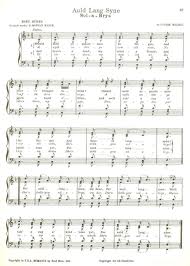
“Auld Lang Syne” is a Scots poem written by Robert Burns in 1788 and set to the tune of a traditional folk song. It is well known in many countries, especially in the English-speaking world; its traditional use being to celebrate the start of the New Year at the stroke of midnight. By extension, it is also sung at funerals, graduations and as a farewell or ending to other occasions. The international Boy Scout youth movement, in many countries, uses it as a close to jamborees and other functions.
The song’s Scots title may be translated into English literally as “old long since”, or more idiomatically, “long long ago”, “days gone by” or “old times”. Consequently “For auld lang syne”, as it appears in the first line of the chorus, might be loosely translated as “for (the sake of) old times”.
Auld Lang Syne is one of Scotland’s gifts to the world, recalling the love and kindness of days gone by, but in the communion of taking our neighbours’ hands, it also gives us a sense of belonging and fellowship to take into the future.
It is one of the many folk songs from the great Lowland Scots tradition collected and fashioned by the pen of one of the world’s greatest songwriters. Burns devoted the last years of his life to the song tradition, and often a mere fragment from some old ballad was transformed by his alchemy into a memorable love song or Scots poem. With Auld Lang Syne, though, the brilliance was already there; this is the Bard’s first mention of it in a letter to Mrs Dunlop in 1788:
“… Light be the turf on the breast of the heaven inspired Poet who composed this glorious fragment.”
One of the most interesting facts is that the Auld Lang Syne tune which is sung from Times Square to Tokyo, and has conquered the world, is not the one Robert Burns put the original words to. The older tune though is still sung by traditional singers. It has a more douce, gentle, nostalgic feel to it than the popular tune a mood evoked by the subtle use of the traditional air sung by Mairi Campbell in the first Sex and the City movie. However, whichever tune it is sung to, and wherever in the world it is sung, Auld Lang Syne retains the great emotional resonance of the original traditional song of the Scottish people of those days in the distant past. Lets leave the last word to Burns himself:
“… is not the Scots phrase, ‘Auld Lang Syne’, exceedingly expressive – there is an old song and tune which has often thrilled thro’ my soul”.
Fancy singing along yourself? Here are the verses of the words to Auld Lang Syne:
Should auld acquaintance be forgot,
And never brought to mind?
Should auld acquaintance be forgot,
And auld lang syne.
Chorus:
For auld lang syne, my jo,
For auld lang syne,
We’ll tak a cup o’ kindness yet,
For auld lang syne,
And surely ye’ll be your pint-stowp!
And surely I’ll be mine!
And we’ll tak a cup o’ kindness yet,
For auld lang syne.
Chorus
We twa hae run about the braes
And pu’d the gowans fine;
But we’ve wander’d mony a weary foot
Sin auld lang syne.
Chorus
We twa hae paidl’d i’ the burn,
Frae mornin’ sun till dine;
But seas between us braid hae roar’d
Sin auld lang syne.
Chorus
And there’s a hand, my trusty fiere!
And gie’s a hand o’ thine!
And we’ll tak a right guid willy waught,
For auld lang syne.
Chorus
Should old acquaintance be forgot,
And never brought to mind?
Should old acquaintance be forgot,
And long, long ago.
Chorus
And for long, long ago, my dear
For long, long ago,
We’ll take a cup of kindness yet,
For long, long ago
And surely youll buy your pint-jug!
And surely I’ll buy mine!
And we’ll take a cup of kindness yet,
For long, long ago.
Chorus
We two have run about the hills
And pulled the daisies fine;
But we’ve wandered manys the weary foot
Since long, long ago.
Chorus
We two have paddled in the stream,
From morning sun till dine;
But seas between us broad have roared
Since long, long ago.
Chorus
And there’s a hand, my trusty friend!
And give us a hand of yours!
And we’ll take a deep draught of good-will
For long, long ago.
Chorus
Here is an old kinescope from over 50 years ago!! For 100 years, the slow drop of a lighted glass ball on New Year’s Eve from atop One Times Square in New York City has become an American tradition. A huge crowd gathers every year to welcome in the New Year.
Beginning in 1956, Guy Lombardo & His Royal Canadians entertained the US on New Year’s Eve with a combination of music and the live “ball drop” at Midnight. Guy continued this tradition until his death in 1977. His band still played on at CBS Television on New Years for an additional 2 years. (Dick Clark’s Rockin New Years Eve began in 1972 on ABC and still broadcasts annually.) This broadcast began right after the 15-minute news and ran for an hour. Guy plays the music and newsman Robert Trout announces the beginning of the New Year.
If you look closely, you’ll see acerbic television personality Henry Morgan in the crowd. TV was very primitive 50 years ago. Harsh lighting, a cheap office clock and a World War II searchlight scans the crowd below.
I hope you’ll enjoy ringing in the New Year – 1958! Recorded: December 31, 1957
Auld Lang Syne played on bagpipes (as it should be)
• 1912 ~ Tony Martin (Alvin Morris), Singer, actor, married to dancer Cyd Charisse
• 1915 ~ Pete Rugolo, Bandleader, arranger, scored TV’s The Fugitive
• 1931 ~ Lawrence Tibbett was the featured vocalist as radio came to the Metropolitan Opera House in New York City. The first opera was Hansel und Gretel by Humperdinck, heard on the NBC network of stations. In between acts of the opera, moderator Olin Downes would conduct an opera quiz, asking celebrity guests opera-related questions. The program’s host and announcer was Milton Cross. He worked out of the Met’s Box 44.
• 1932 ~ Little Richard, American rock-and-roll singer, pianist and songwriter
• 1937 ~ O’Kelly Isley, Singer with the Grammy Award-winning group, The Isley Brothers
• 1937 ~ Arturo Toscanini conducted the first broadcast of Symphony of the Air over NBC radio.
• 1939 ~ The Charles Dickens classic, A Christmas Carol, was read by LionelBarrymore on The Campbell Playhouse on CBS radio. The reading of the tale became an annual radio event for years to come.
• 1941 ~ Don Pullen, pianist/composer
• 1944 ~ Henry Vestine, Guitarist with Canned Heat, sideman for Frank Zappa
• 1945 ~ Noel Redding, Bass with Noel Redding Band and also The Jimi Hendrix Experience
• 1946 ~ Jimmy Buffett, Songwriter, singer
• 1948 ~ Barbara Mandrell, CMA Entertainer of the Year (1980, 1981), Female Vocalist of the Year in 1979
• 1954 ~ Robin Campbell, Guitar, singer with UB40
• 1954 ~ Annie Lennox, Singer with Eurythmics
• 1957 ~ Shane MacGowan, Songwriter, musician: guitar, singer with The Pogues
Messiah (HWV 56) is an English-language oratorio composed in 1741 by George Frideric Handel, with a scriptural text compiled by Charles Jennens from the King James Bible, and from the Psalms. It was first performed in Dublin on 13 April 1742, and received its London premiere nearly a year later. After an initially modest public reception, the oratorio gained in popularity, eventually becoming one of the best-known and most frequently performed choral works in Western music.
Part II of the Messiah covers the Passion, death, resurrection, ascension, and the later spreading of the Gospel, concluded by the “Hallelujah Chorus”.
The Mormon Tabernacle Choir sings the classical and beloved Hallelujah Chorus from Handel’s Messiah.
And also on Nov.13 2010 unsuspecting shoppers got a big surprise while enjoying their lunch. Over 100 participants in this awesome Christmas Flash Mob.


 1803 ~ Louis-Hector Berlioz, French composer, conductor, music critic and major force in the development of musical form during the Romantic Era






 MaryO'Studio