April 20: Today’s Music History

today

. 1881 ~ Nicolai Miaskovsky, Russian composer

. 1925 ~ Tito (Ernest) Puente, Jazz musician, bandleader

. 1925 ~ Henri Renaud, French pianist

. 1931 ~ Louis Armstrong recorded the classic, When It’s Sleepy Time Down South, for Okeh Records. Satchmo would use the tune as his theme song for decades. The song was waxed in Chicago, IL.

. 1934 ~ One of America’s most beloved child stars made her debut. Shirley Temple debuted in Stand Up and Cheer, which opened in New York City. Moviegoers would rave about her song and dance routine, Baby, Take a Bow, for many years.

. 1935 ~ Your Hit Parade, starring Kay Thompson, Charles Carlyle, Gogo DeLys and Johnny Hanser, was first broadcast on radio in 1935. A youngster named Frank Sinatra would later be part of the program as a featured vocalist. Your Hit Parade stayed on the radio airwaves for 24 years. Snooky Lanson would later host the program when it made the transition from radio to TV. Other long-time regulars on the TV version were: Russell Arms, Gisele MacKenzie and Dorothy Collins. They were the lucky ones who got to present the top seven songs each week. Since many songs stayed on the list for weeks on end, these vocalists had to invent new ways to present the hit parade. On April 24, 1959, Your Hit Parade died. The regulars just didn’t fit with the new rock ‘n’ roll hits. Imagine, if you can, Snooky Lanson singing Hound Dog. The original title of the radio show was, Lucky Strike Hit Parade, sponsored by, you guessed it, Lucky Strike cigarettes. The cigarette company continued to sponsor the TV show (those were the days when cigarette companies sponsored lots of TV shows), and the opening theme song was Be Happy, Go Lucky.

. 1943 ~ John Eliot Gardiner, British conductor

. 1945 ~ For the first time on radio, the show “Your Lucky Hit Parade” is broadcast in homes all over the country. It last for nearly 25 years before television led to its downfall in popularity.

https://youtu.be/NFmmLFTDPys

. 1950 ~ Peter Frampton, British rock singer and guitarist

. 1951 ~ Luther Vandross, soul singer, (1989 UK No.13 single ‘Never Too Much’, first released 1983, US N0.10 and UK No.2 single with Janet Jackson ‘The Best Things In Life Are Free’).  Also worked with David Bowie, Mariah Carey. Vandross died on 1st July 2005 aged 54 two years after suffering a major stroke.

. 1968 ~ Hair opened on Broadway

. 1985 ~ The British pop music group Wham!, featuring George Michael, became the first to release cassettes in the People’s Republic of China. Selections from two of the group’s albums were packaged and sold on the tape.

. 1986 ~ Pianist Vladimir Horowitz gave his first concert in the Soviet Union in 61 years. He had emigrated in 1925.

. 1987 ~ Starlight Express posted the largest week’s gross in Broadway history. The roller-skating musical earned $606,081 at the box office. The revival of The King and I starring Yul Brynner had been the previous leader (1985).

. 2000 ~ Canadian composer Louis Applebaum, long associated with the prestigious classical repertory company the Stratford Festival, died of cancer. He was 82.

. 2001 ~ Giuseppe Sinopoli, Italian conductor, collapsed at the podium while conducting a performance of Verdi’s Aida in Berlin. He was rushed to the hospital, but doctors could not revive him. Sinopoli, 54, was the music director of the Dresden Staatskapelle and was a controversial figure in classical music. An avid scholar, Sinopoli had a medical degree and was also studying archaeology.

. 2003 ~ Nina Simone, whose deep, raspy, forceful voice made her a unique figure in jazz and later helped define the civil rights movement, died. She was 70. Born Eunice Kathleen Waymon in 1933 in North Carolina, Simone was the sixth of seven children in a poor family. She began playing the piano at age 4. In the late 1950s Simone recorded her first tracks, including Plain Gold Ring and Don’t Smoke In Bed. But she gained fame in 1959 with her recording of I Loves You Porgy, from the opera “Porgy & Bess.” But she later wove the turbulent times of the 1960s into her music. In 1963, after the church bombing that killed four young black girls in Birmingham, Ala., and the slaying of Medgar Evers, she wrote Mississippi Goddam, and after the killing of Dr. Martin Luther King, Jr., she recorded Why? The King of Love is Dead. One of her most famous songs was the black pride anthem, To Be Young, Gifted and Black.

Simone enjoyed perhaps her greatest success in the 1960s and 70s, with songs like I Want A Little Sugar in My Bowl, and Four Women, the song with the famous line “they call me PEACHES.” She recorded songs from artists as diverse as Bob Dylan, Leonard Cohen and Bee Gees and made them her own. Perhaps one of her more popular covers was her version of House of the Rising Sun. While she had a regal presence onstage, she could often be temperamental. She had a reputation for chewing out audience members who interrupted her performances in clubs with conversation or loud drinking or talking. In 1999 she received a lifetime achievement award in Dublin and an award for excellence in music from the Association of African American Music in Philadelphia.

. 2017 ~ Cuba Gooding Sr., American singer (Everybody Plays the Fool), died at the age of 72
Easter Hymn: Thine Be the Glory

Global virtual choir sings Easter hymn
More than 400 United Methodists from around the world have joined in singing the favorite Easter hymn “Thine Be the Glory.” Even in the midst of the pandemic, church members can celebrate Christ’s resurrection together.

This was an amazing experience bringing together over 400 singers from different countries, congregations, and communities – proving that even in the midst of a pandemic we are still united.

This project would not have been possible without the help of some amazing folks lending a hand:

  • The arrangement used of “Thine Be the Glory” was written and performed by Rev. Jared Wilson, Senior Associate Pastor and Director of The Music & Arts Academy at Madison Street UMC in Clarksville, Tennessee.
  • The Worship Team at Discipleship Ministries for coordinating the project and providing the vision for the Easter choir.
  • And of course, all 400 singers who submitted wonderful videos for us to use.

Thank you all and Happy Easter!

“Thine Be the Glory” is #308 in The United Methodist Hymnal.

Thine be the glory,
Risen, conquering Son;
Endless is the victory
Thou o’er death hast won.

Angels in bright raiment
Rolled the stone away,
Kept the folded grave clothes
Where the body lay.

Edmond L. Budry (1854-1932) wrote this hymn, originally in French as “A Toi la gloire, ô Ressuscité.” He was the pastor of the Free Evangelical Church of the Canton of Vevey, Switzerland, having studied theology at Lausanne.

The hymn was written in 1884 and appeared first in Chants Evangeliques (1885). A translation by Richard Birch Hoyle (1875-1939) gave the hymn increased visibility, especially when it appeared in the first edition of the hymnal for the World Student Christian Federation, Cantate Domino (1924). The Methodist Hymn Book (1933) was the first European hymnal to include the hymn.

Methodist hymnologist Fred Gaely notes that, “Budry was often asked to make translations of favorite German or English hymns, but he preferred to rewrite the texts, often improving on the original, and often freely adapting old Latin hymns.”

The inspiration for this hymn, according to Budry’s friend Paul Laufer, came from the words of Friedrich-Heinrich Ranke (1798-1876), published to the tune, MACCABAEUS, by George Fredrick Handel (1685-1759). The tune was adapted from a processional song in Handel’s oratorio Joshua (1747), as well as later versions of the more famous oratorio Judas Maccabaeus (1746).

Budry freely adapted Ranke’s Advent text and transformed it as an Easter hymn. As Gaely recognized, the Easter text “emphasized still more the triumphal nature of Handel’s music.” John Wesley, a contemporary of Handel, enjoyed this tune very much and cites it as one of his favorites in journal entries for March 29, 1774, and March 30, 1787.

According to English hymnologist J. Richard Watson, the hymn “is based on the Gospel accounts of the Resurrection (with a brief allusion to St. Thomas and doubt in verse 3), together with St. Paul’s commentary on it in I Corinthians 15.” This is especially evident in the use of the word “victory” in the refrain, reminiscent of I Corinthians 15:57: “But thanks be to God, which giveth us the victory through our Lord Jesus Christ.”

Stanza two almost quotes directly I Corinthians 15:55. The Scripture says, “O death, where is thy sting? O grave, where is thy victory?” Hoyle’s translation of the second stanza concludes, “death hath lost its sting.”

This hymn took on new life for me in August 2008 when I joined a group of United Methodist musicians in a teaching mission to Côte d’Ivoire, the newest (admitted formally to the denomination at the 2008 General Conference) and largest (nearly 700,000 members) of the denomination’s conference regions. Sponsored by the Global Praise Project of the General Board of Global Ministries, our group was charged to train a new generation of church musicians in Côte d’Ivoire.

As we concluded our time in this West African country, we realized that we were taught as much—if not more—by the African Christian musicians than we were teaching. One of the hymns that these United Methodists sang with great vigor was “A Toi la gloire, ô Ressuscité.” We heard it in two versions: the first was the classic Western hymn style; the second was a West African version complete with drums, electronic keyboards and guitars. Both were delightful.

It was a joy to see how this hymn has transcended not only time and cultures, but also continents to resonate with a vibrant Easter joy.

Dr. Hawn is professor of sacred music at Perkins School of Theology, SMU.

From https://www.umcdiscipleship.org/resources/history-of-hymns-easter-celebration-hymn-transcends-time-cultures-1Eas

In Memory of Ben Dobey, OrganMaster

I’ve recently started playing the organ a bit at my church again. I started playing piano-organ duets with a friend and people were so glad to hear the organ again that the Director of Music asked me to play for final hymns and such.

So, I dusted off my old Organmaster shoes and started practicing again. I was thinking back to how I got my start with organ – we have 2 now in the O’Connor Music Studio. One was my aunt’s Yamaha organ that I had shipped here from Maine when she died and the other is a Hammond that my mom brought with her when she moved in with us. That organ traveled a bit, too from Springfield, MA to Barre, MA to Wilmington, DE, to an apartment in Fairfax, VA, then to our home.

My mom learned to play piano by sitting in on my lessons with Miss Pashley and actually practicing. When my dad became pastor of the Barre (MA) Congregational Church, my mom was off at the local Catholic Church playing organ for their masses. Interesting division of religion!

Years later, my DH and I moved to Alexandria, Virginia, about a block away from a branch of Northern Virginia Community College (NOVA). At that time, their music department featured organ classes and I jumped on the opportunity.

Ben Dobey actually taught on the organ at St. Albans Church in Annandale. The organ was in a small balcony, accessed by a narrow spiral staircase in what seemed to be a small closet. How they got the organ up there was a mystery to me unless they built the church around it.

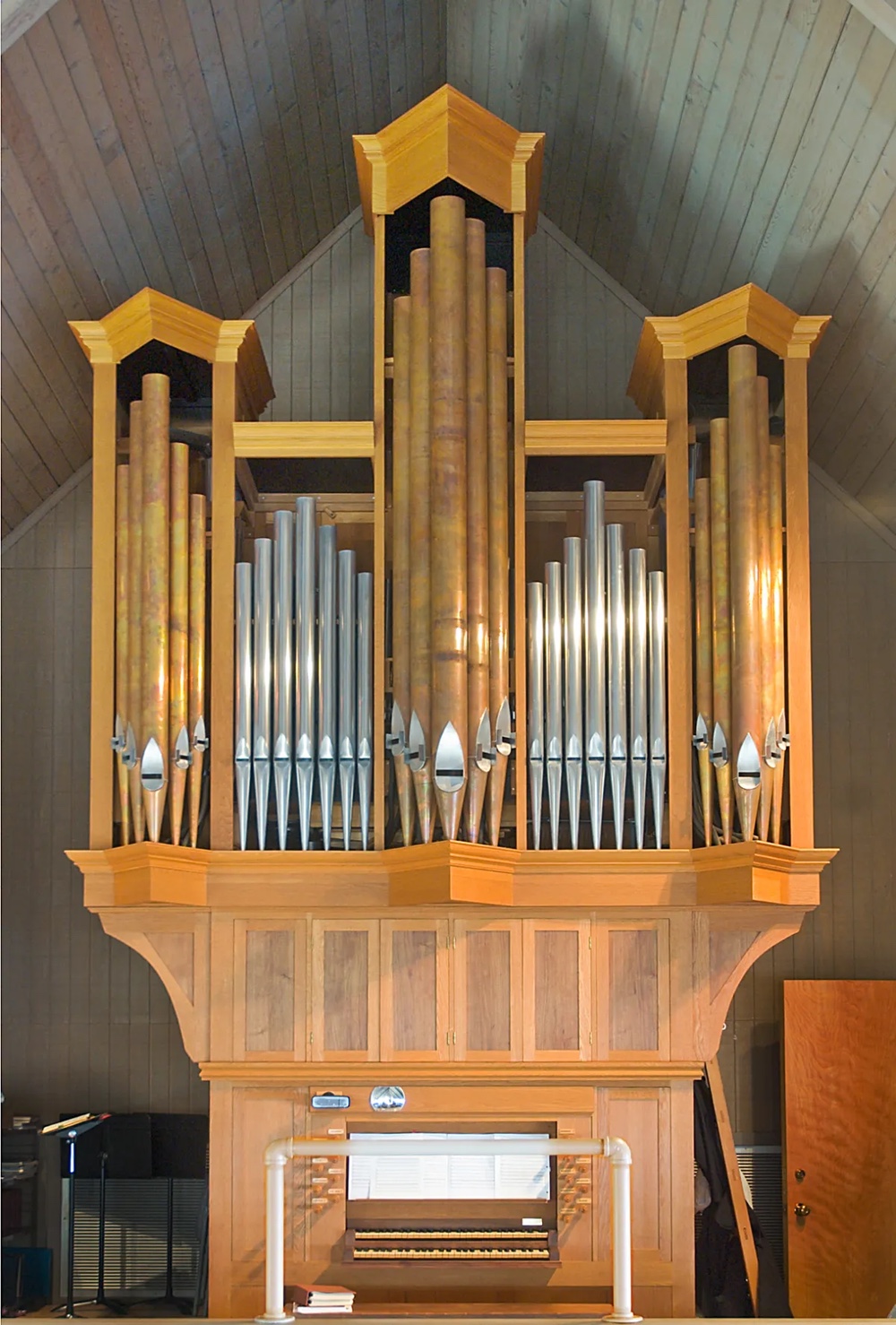
Looking at their website, I got this picture of the organ and information about how it was updated in 2023. How workers accomplished the update I have no idea.

Our organ was manufactured by the John Leek Organ Company (Oberlin, Ohio) in 1982. It has two manuals, three divisions, 13 stops, 16 ranks, tracker action, mechanical couplers, no combination action, in the North German style.

In the fall of 2023 the organ was refurbished by Taylor and Boody Organbuilders of Staunton, VA, one of the finest firms specializing in mechanical action instruments. The organ was thoroughly cleaned, degraded leather was replaced, the action was reregulated and made even, and damaged pipes were repaired and fortified against future harm. The instrument was also tuned to a slightly unequal temperament, lending a special authenticity to the Baroque and Renaissance music so suited to this organ.

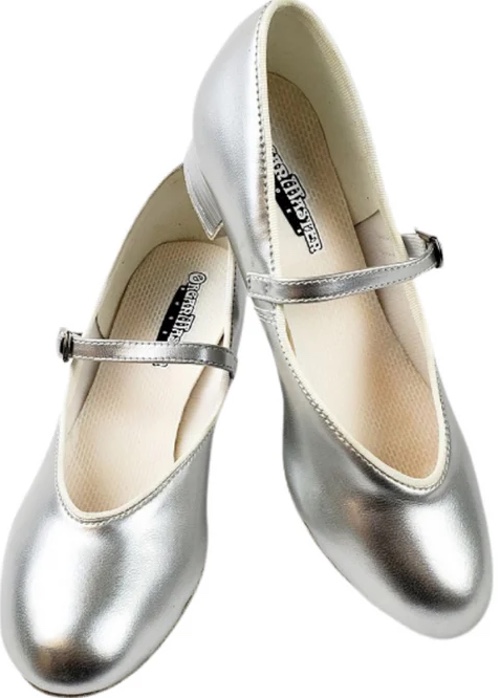
Ben was a stickler for Organmaster shoes.  These days, I prefer to practice in socks – or barefoot – but I always wear the Organmasters to play.  I even recently invested in a silver pair!


I always think of Ben when I’m wearing these shoes.  I thought of him on Easter Sunday (4/20/2025) when my friend and I played a medley of Easter hymns for the postlude.

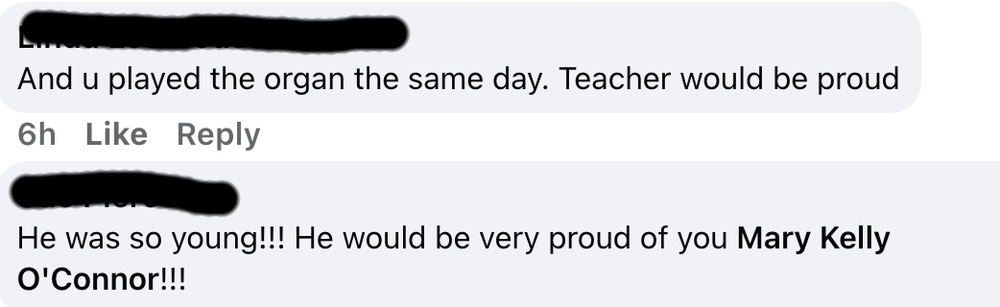
As it turned out, the 20th was the anniversary of his death.  From this obituary, I assumed that he died on Easter of this year and shared on Facebook.

A couple friends posted:

Robert Benjamin Dobey, 72, died April 20. Born August 14, 1950, he was raised in Arlington, Virginia. He progressed from playing piano to organ by the age of 13. Dobey graduated from Oberlin Conservatory of Music, Oberlin, Ohio, in 1972, studying organ with Garth Peacock, before earning his Doctor of Musical Arts degree in organ performance and literature from Eastman School of Music, Rochester, New York, studying with David Craighead. Dobey studied music with Michael Schneider in Cologne, Germany, on a Fulbright scholarship and resided in England for two years as a member of the Wells Cathedral choir. His musical activities ranged from playing organ and harpsichord to singing, composing, and conducting. After years of building his career in Washington, D.C., as keyboard artist with the Washington Bach Consort, assistant director of the Cathedral Choral Society at the National Cathedral, as a singer in the Woodley Ensemble, and various parishes, Dobey moved to Sheboygan, Wisconsin, where he served as organist and choir director at Grace Episcopal Church.

Dobey recorded several discs for the Pro Organo label, among which are Herbert Howells & the Organ: The 30s & 40s, recorded on the Roosevelt-Schantz organ in the Cathedral of the Immaculate Conception, Syracuse, New York; The Wanderer, recorded on the Ernest M. Skinner/Aeolian-Skinner organ at Girard College, Philadelphia, Pennsylvania; Magnificat: Organ music and chant in honor of the Blessed Virgin Mary, recorded on the Schoenstein organ of the Shrine of Our Lady of Walsingham, Sheboygan, Wisconsin; The Intimate Reger and In Sweetest Joy: Christmas Carols for the Organ, both recorded on the Schoenstein organ at Grace Episcopal Church, Sheboygan.

Robert Benjamin Dobey is survived by his sister, Mary Carol Coleman, and brother-in-law, Cameron Coleman, as well as nieces and nephews. A Mass of Christian Burial May 6 at Holy Name of Jesus Catholic Church, Sheboygan.

Memorials in Dobey’s name may be made to the Sharon S. Richardson Community Hospice (ssrhospicehome.org), the music fund at Grace Episcopal Church (gracesheboygan.com), or St. Luke’s Community Cafe (sheboygancountyfoodbank.com/community-cafe).

I later read another obituary that said Ben died April 20, 2023.

Dr. Robert Benjamin Dobey passed away on Thursday, April 20, 2023, at the age of 72, following a determined and hard-fought battle with cancer. Born on August 14, 1950, Dr. Dobey was raised in Arlington, Virginia. Ben, to his many friends and colleagues, and Benjy, to his family, Dr. Dobey lived a full life steeped in his love of music, gardening, and deep friendships. In a family otherwise bereft of musical ability, Dr. Dobey’s extraordinary talent can only be considered providential. He progressed from the piano to the organ by the age of 13 and continued to develop as a musician of great talent until his passing. Dr. Dobey attended the Oberlin Conservatory before earning his doctorate at the Eastman School of Music. Among his travels and pursuits, Dr. Dobey studied music in Cologne, Germany on a Fulbright Scholarship and resided in England as a member of the Wells Cathedral choir. The breadth of his musical talent extended from organ and harpsichord to singing, composing, and conducting. His mastery of the organ spanned virtually every school and composer and resulted in multiple recorded works. After many years of building his career in Washington, DC with the Washington Bach Consort, the Cathedral Choral Society at the National Cathedral, the Woodley Ensemble, and prominent parishes, Dr. Dobey opted to devote himself to community, family, and friends in Sheboygan, Wisconsin, where he served as a beloved organist and choir director at Grace Episcopal. Dr. Dobey’s lifelong passion for gardening left a legacy of spectacular beauty in his wake. He cultivated floral gardens wherever he lived, attended church, and made friends. Responding to news that his niece had planted bulbs that he provided, Dr. Dobey’s proclamation that “you have so much to look forward to” was among his final words. That desire to cultivate and share beauty animated his life, work in the garden, and vocational devotion to music. Notwithstanding his accomplishments, Dr. Dobey’s compassion, generosity, and open acceptance of all were his defining traits. His penetrating sense of humor produced satire and wit that brought real joy to family, friends, and colleagues. True to these characteristics to the end, Dr. Dobey’s final performance was “The Teddy Bears’ Picnic” sang to his two-year-old great nephew shortly before his passing. Dr. Dobey will be missed by many and is survived by his beloved sister, Mary Carol Coleman, and brother-in-law, Cameron Coleman, as well as the nieces and nephews on whom he doted. A Mass of Christian Burial will be celebrated at 11:00 a.m. on Saturday, May 6, 2023 at Holy Name of Jesus Church, 8th & Huron Avenue, Sheboygan. In lieu of flowers, memorials in Ben’s name made be made to the Sharon S. Richardson Community Hospice, the music fund at Grace Episcopal Church or the St. Luke’s Community Cafe. The family would like to thank the nurses and staff of the Sharon S. Richardson Community Hospice for all of their loving care and support. The Olson Funeral Home & Cremation Service has been entrusted with Dr. Dobey’s arrangements.

Rest in peace, Ben!