The video below was recorded by my friend (Rev. Kevin Havens aka RevKev) and his band, JC Reigns. A tribute to moms for Mothers Day, for all moms in Heaven and on earth.
• 1919 ~ Eva (Evita) Peron, Argentina’s spiritual leader and wife of Argentina’s President, Juan Peron; actress on stage, film and radio; subject of the Broadway musical and film Evita
• 1927 ~ Elisabeth Söderström, Swedish soprano
• 1931 ~ Teresa Brewer (Breuer), Singer
• 1941 ~ Glenn Miller and his Orchestra recorded one of the great American music standards, Chattanooga Choo Choo
More information about Chattanooga Choo Choo
• 1942 ~ Felix Weingartner, Austrian conductor and composer, died; best known for his interpretations of Wagner and Beethoven.
• 1958 ~ Pianist Van Cliburn signed an artist’s contract with RCA Victor Records.
• 1966 ~ The Mamas & The Papas made the climb to the top of the Billboard pop music chart with Monday, Monday.
• 1977 ~ The Eagles went to No.1 on the US singles chart with ‘Hotel California’, the group’s fourth US No.1, a No.8 hit in the UK. The Eagles also won the 1977 Grammy Award for Record of the Year for ‘Hotel California’ at the 20th Annual Grammy Awards in 1978. The song’s guitar solo is ranked 8th on Guitar Magazine’s Top 100 Guitar Solos and was voted the best solo of all time by readers of Guitarist magazine.
• 1995 ~ Ray McKinley passed away. He was an American jazz drummer, singer, and bandleader.
• 2002 ~ Buster Brown, a tap star and choreographer who danced on stage, in films and on television, died. He was 88. Brown was one of the last surviving members of the Copasetics, a legendary group of veteran dancers who performed together. Known for his quick rhythms and charm, Brown was a mentor and teacher for a younger generation of dancers. Brown, who was born James Brown in Baltimore, began his dancing career with a trio called the Three Aces and Speed Kings. He eventually began a solo career, appearing in the Hollywood musical “Something to Shout About” in 1943. Brown toured with the bands of Count Basie, Dizzy Gillespie and Duke Ellington, and was a featured dancer in Ellington’s concerts in the 1960s. He danced in the films “The Cotton Club” and “Tap” and on two public television specials. He also performed with the original casts of the Broadway musicals “Bubbling Brown Sugar” and “Black and Blue.” Brown toured South America with the Cab Calloway Orchestra and was commissioned by the State Department to perform in several African countries. He also taught master classes throughout Europe. Beginning in 1997, Brown was master of ceremonies at a weekly Sunday tap jam at the Manhattan club Swing 46, where young and old dancers stopped by to perform. He recently received an honorary doctorate from Oklahoma City University.
• 1919 ~ Eva (Evita) Peron, Argentina’s spiritual leader and wife of Argentina’s President, Juan Peron; actress on stage, film and radio; subject of the Broadway musical and film Evita
• 1927 ~ Elisabeth Söderström, Swedish soprano
• 1931 ~ Teresa Brewer (Breuer), Singer
• 1941 ~ Glenn Miller and his Orchestra recorded one of the great American music standards, Chattanooga Choo Choo
More information about Chattanooga Choo Choo
• 1942 ~ Felix Weingartner, Austrian conductor and composer, died; best known for his interpretations of Wagner and Beethoven.
• 1958 ~ Pianist Van Cliburn signed an artist’s contract with RCA Victor Records.
• 1966 ~ The Mamas & The Papas made the climb to the top of the Billboard pop music chart with Monday, Monday.
• 1995 ~ Ray McKinley passed away. He was an American jazz drummer, singer, and bandleader.
• 2002 ~ Buster Brown, a tap star and choreographer who danced on stage, in films and on television, died. He was 88. Brown was one of the last surviving members of the Copasetics, a legendary group of veteran dancers who performed together. Known for his quick rhythms and charm, Brown was a mentor and teacher for a younger generation of dancers. Brown, who was born James Brown in Baltimore, began his dancing career with a trio called the Three Aces and Speed Kings. He eventually began a solo career, appearing in the Hollywood musical “Something to Shout About” in 1943. Brown toured with the bands of Count Basie, Dizzy Gillespie and Duke Ellington, and was a featured dancer in Ellington’s concerts in the 1960s. He danced in the films “The Cotton Club” and “Tap” and on two public television specials. He also performed with the original casts of the Broadway musicals “Bubbling Brown Sugar” and “Black and Blue.” Brown toured South America with the Cab Calloway Orchestra and was commissioned by the State Department to perform in several African counties. He also taught master classes throughout Europe. Beginning in 1997, Brown was master of ceremonies at a weekly Sunday tap jam at the Manhattan club Swing 46, where young and old dancers stopped by to perform. He recently received an honorary doctorate from Oklahoma City University.
The quest to serenade the Seven Wonders continues…
A few years back we set what seemed at the time an impossible goal: to film music videos on all Seven Wonders of the World. Now we are nearly half-way there. We started by scaling the Great Wall of China, performing in feng shui fashion “Kung Fu Panda” in harmony with Chopin:
Next we paid homage to the Christ Redeemer Statue in Rio, Brazil, dedicating “Gabriel’s Oboe” (from “The Mission” soundtrack) coupled with the beloved hymn “How Great Thou Art:”
And now we present the third Wonder, Chichén Itzá.
Thus far our tradition has been to mix timeless classical music with contemporary film scores. We also love infusing local and historical culture in our arrangements. For this Wonder we wanted to stay true to this tradition while simultaneously nailing “jungle harmony,” as a famous cartoon bear once coined in…Disney’s Jungle Book! But in this decision we were confronted with an entangling challenge — to effectively blend the cacophony of Disney Jazz, classical music, Mayan heritage, all while making it epic enough to be filmed in front of a massively-historic, world-renowned stone temple!
First, it was vital that we carefully, thoughtfully pay proper respect to the “wonder” of “El Castillo,” its surrounding artifacts, and the Mayan spirit that pervades Chichén Itzá. The Mayans were an incredible people — adept astronomers, unprecedented builders, and incomparable artisans. Their ability to use architecture in an acoustic way especially impresses us. For instance, you can stand upon a step at one end of the plaza and be heard clearly on a step at the opposite end. The Mayans also used instrumental music in…read more here: http://thepianoguys.com/portfolio/jun…
Filming it in just the right vein was just as challenging. We wish to sincerely express our deepest gratitude to the National Archeology and History Institute (http://www.inah.gob.mx) and Cultur Yucatan (http://www.culturyucatan.com) for allowing us the profound privilege of filming at Chichén Itzá. Were it not for them and their warm hospitality this video shoot would not have been possible.
Steve is playing the most recent addition to his cello family, “Maya,” hand painted in Mayan hieroglyphic style by Juleez (Julie Borden) just for this video. Her uniquely creative masterpieces are only matched by her equally vibrant spirit and enthusiasm for musically influenced art. See more of her instrument artwork here: http://www.juleez.com. Thank you, Julie!
• 1891 ~ New York City was the site of the dedication of a building called the Music Hall. It was quite a celebration. A festival was held for five days, featuring guest conductor Peter Ilich Tchaikovsky. The structure is not called the Music Hall anymore. It’s called Carnegie Hall, named in honor of Andrew Carnegie.
• 1900 ~ The Billboard, a magazine for the music and entertainment industries, began weekly publication after six years as a monthly. The name was later shortened to Billboard.
• 1910 ~ Giulietta Simionato, Italian contralto
• 1927 ~ Charles Rosen, American pianist, musicologist, and writer
• 1934 ~ Ace Cannon, Saxophonist
• 1935 ~ The radio program, Rhythm at Eight, made its debut. The star of the show was 24-year-old Ethel Merman. Though Merman would become a legend years later, she didn’t fare so well on radio. Her show was taken off the air after 13 weeks and Miss Merman returned to her first love, Broadway. Tammy Wynette (1942) (Pugh) Grammy Award-winning country singer and songwriter
• 1948 ~ Bill Ward, Musician, drummer
• 1955 ~ The musical, Damn Yankees, opened in New York City for a successful run of 1,019 performances. The show at the 42nd Street Theatre mixed both baseball and ballet. It is an adaptation of the book, The Year the Yankees Lost the Pennant. Gwen Verdon starred in the role of Lola. Whatever Lola wants Lola gets including the Tony for Best Actress in a musical for her performance.
• 1973 ~ 56,800 fans paid $309,000 to see Led Zeppelin at Tampa Stadium. This was the largest, paid crowd ever assembled in the U.S. to see a single musical act. The concert topped The Beatles 55,000-person audience at Shea Stadium in New York ($301,000) on August 15, 1965.
• 2000 ~ Hugh N. Pruett, the wardrobe director for the Lyric Opera of Chicago, died at 68. Pruett worked with countless international opera singers, directors and designers on 329 productions in his more than 40 years with the Lyric Opera.
• 2002 ~ Veteran movie director George Sidney, famed for such musicals as “Anchors Aweigh,” “Kiss Me Kate” and “Annie Get Your Gun,” died at his Las Vegas home. Born into a show business family, the Long Island, New York, native shot 28 features in 27 years, and worked with such stars as Frank Sinatra, Gene Kelly, Tony Curtis, Lana Turner, Dick Van Dyke, Elvis Presley and Ann-Margret. He once defined a star as “someone who attracts your attention even when he or she isn’t doing anything.” After making his mark in short films, Sidney moved to features in 1941 with “Thousands Cheer,” a hit musical starring Kathryn Grayson and Gene Kelly. “Anchors Aweigh” (1945), which starred Sinatra and Gene Kelly as sailors on liberty, received five Oscar nominations including best picture. In 1950, Sidney took over the troubled production of “Annie Get Your Gun,” which was a major success — as was his 1951 remake of “Show Boat” and his 1953 film version of Cole Porter’s musical “Kiss Me Kate.” In 1963, he directed Presley and Ann-Margret in “Viva Las Vegas,” considered one of the better entries in the rock legend’s woeful Hollywood career. Sidney’s last film was the 1968 British musical “Half a Sixpence,” starring Tommy Steele. Sidney served two stints as president of the Directors Guild of America, and helped animators William Hanna and Joseph Barbera set up what would become a cartoon powerhouse.
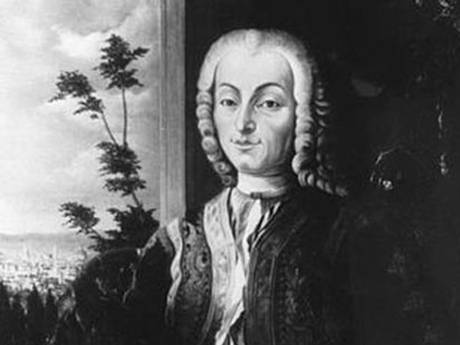
The inventor of the piano, Bartolomeo Cristofori, is celebrated in last year’s Google Doodle.
Born on 4 May, 1655 in Padua, northern Italy, Cristofori initially worked making harpsichords and clavichords and was employed by Prince Ferdinando de Medici, son of the duke of Tuscany.
He is believed to have started work on what would become a piano in the 1690s and the first one is thought to have been made in 1709.
In a harpsichord the strings are plucked, so it is not possible to play the notes softer or louder. Cristofori managed to design a mechanism that transferred the pressure placed on the keys to the hammers that hit the strings.
He called his invention a “gravecembalo col piano e forte” – a clavichord with soft and loud. The name was shortened to pianoforte and then simply piano.
Francesco Mannucci, a musician at the Medici court, described one early version as “a large ‘Arpicembalo’ [the name of a type of harpsichord] by Bartolomeo Cristofori, of new invention that produces soft and loud, with two sets of strings at unison pitch, with soundboard of cypress without rose”.
Bartolomeo Cristofori di Francesco was an Italian maker of musical instruments, generally regarded as the inventor of the piano.
While other musical instrument makers had attempted to solve the same problem with the harpsichord, Cristofori’s invention is generally regarded as the first real piano.
However, the piano was not popular at first and many felt it was too difficult to play. Cristofori died largely uncelebrated for an invention that would later change the musical world in 1731 – a year before the first sheet music for the piano appeared.
• 1655 ~ Bartolomeo Cristofori, Italian instrument maker, inventor of the piano. He was credited with designing the first pianoforte, which he called “the harpsichord that plays soft and loud”.
More information about Cristofori
• 1886 ~ The first practical phonograph, better known as the gramophone, was patented.
• 1920 ~ The Symphony Society of New York presented a concert at the Paris Opera House. It was the first American orchestra to make a European tour.
• 1928 ~ Maynard Ferguson, Canadian jazz trumpeter and bandleader
• 1930 ~ Roberta Peters (Peterman), American soprano, Metropolitan Opera, Jewish Cultural Achievement Awards in Performing Arts in 1997.
• 1931 ~ Ed Cassidy, Drummer
• 1945 ~ June Christy sang with the Stan Kenton band on one of the most famous of all big band hits, Tampico.
• 1951 ~ Jackie (Sigmund) Jackson, Singer with The Jackson Five
• 1956 ~ Gene Vincent and his group, The Blue Caps, recorded Be-Bop-A Lula for Capitol Records in Los Angeles. Interesting note: Vincent had written the tune only three days before he auditioned in a record company talent search that won him first place. The record was rush-released just two days later and became a rock and roll classic.
• 1959 ~ Randy Travis (Traywick), Singer
• 1996 ~ Alanis Morissette started a six-week run at No.1 on the UK album chart with Jagged Little Pill. The record produced six successful singles, including ‘You Oughta Know’, ‘Ironic’, ‘You Learn’, ‘Hand in My Pocket’, and ‘Head over Feet’. Do you have a favourite track from the album?
• 1844 ~ Richard D’Oyly Carte, British impresario; producer of Gilbert and Sullivan operettas. He also founded the Savoy Theater in London.
• 1912 ~ Virgil Fox, Organ virtuoso: credited for bringing the organ “to the forefront among classical concert instruments”
• 1919 ~ Betty Comden, Composer
• 1919 ~ Pete Seeger, American folk singer, banjo player, guitarist and songwriter
• 1924 ~ Joe Ames, Singer with The Ames Brothers
• 1926 ~ Jimmy Cleveland, Composer, musician, trombone
• 1928 ~ Dave Dudley (Pedruska), Country singer
• 1933 ~ James Brown, American rhythm-and-blues singer songwriter, dancer and instrumentalist, The Godfather of Soul, Rock and Roll Hall of Fame in 1986
• 1937 ~ Frankie Valli (Francis Castellucio), Falsetto singer with The Four Seasons
• 1939 ~ Beer Barrel Polka, one of the standards of American music, was recorded by The Andrews Sisters for Decca Records. Patti, Maxine and LaVerne turned this song into a giant hit.
• 1951 ~ In Britain, the King and Queen inaugurated the Festival of Britain on London’s South Bank and also opened the Festival Hall.
• 1956 ~ Most Happy Fella, a musical by Frank Loesser, opened at the Imperial Theatre in New York City. The show, an adaptation of They Knew What They Wanted by Sidney Howard, ran for 676 performances on Broadway.
• 1960 ~ The play, The Fantasticks, opened at the Sullivan Playhouse in New York City. It would later become the longest-running off-Broadway play.
• 1971 ~ NPR, National Public Radio, the U.S. national, non-commercial radio network, was born.
• 1997 ~ Narciso Yepes, famous Spanish classical guitarist, died.
• 2001 ~ Legendary jazz drummer Billy Higgins died at the age of 64. Higgins was one of the most recorded figures in the history of jazz, performing with John Coltrane, Dexter Gordon, Herbie Hancock, Milt Jackson, Charles Lloyd, Pat Metheny, Lee Morgan, Art Pepper and Joshua Redman, among others. He played with pianist Cedar Walton and was involved with the first edition of bassist Charlie Haden’s innovative Quartet West. Higgins came to prominence in the 1950s with saxophonist Ornette Coleman’s free jazz group, which included Haden and trumpeter Don Cherry. Higgins’ drumming laid the foundation for the group’s free jazz flights of fancy. That group sparked a decade of innovation in jazz that was carried on by the Coleman Quartet, Coltrane, George Russell, Charles Mingus and Albert Ayler, among others. Higgins’ ability to adapt his sense of swing to any genre made him one of the most in-demand drummers of the past four decades. Higgins helped found World Stage, a storefront performance space and teaching venue in Los Angeles’ Leimert Park. He was also on the jazz faculty at the University of California, Los Angeles. Higgins was awarded a National Endowment for the Arts Jazz Master’s Fellowship in 1997.
• 2002 ~ Yevgeny Svetlanov, a renowned Russian pianist, composer and former chief conductor of the Bolshoi Theater, died. He was 73. He was born in Moscow in 1928. He graduated from the Gnesinykh Musical- Pedagogical Institute and from the Moscow Conservatory. For several years he was conductor and chief conductor of the Bolshoi Theatre. From 1965 on he was artistic director and chief conductor of the State Symphonic Orchestra of USSR. He composed several symphonies, symphonic poems, chamber music works, and vocal-instrumental works. Svetlanov was the chief conductor of the Bolshoi Theater from 1963 to 1965, when he was named artistic director and chief conductor of the Soviet State Symphony. He was named a People’s Artist of the Soviet Union in 1968 and was awarded the Lenin prize in 1972 and the Order of Lenin 1978. He was given the Soviet State prize for creative achievement in 1983. Svetlanov was born in the Soviet Union in 1928. In 1951, he graduated from the Gnesin Institute of Music. Svetlanov graduated from the Moscow Conservatory in 1955 as a pianist, composer and conductor.


 1829 ~ Louis Moreau Gottschalk, American pianist and composer


 MaryO'Studio