. 1904 ~ Ray Bolger (Raymond Wallace Bulcao), Dancer, actor in The Wizard of Oz
. 1910 ~ Galina Ulanova, Russian-born ballerina with the Bolshoi Ballet from 1944 to 1962
. 1917 ~ Jerry Wexler, Record producer, Atlantic Records
. 1925 ~ Max Roach, Jazz musician/drummer, composer: Freedom Now Suite; educator: taught at Lennox, MA School of Jazz and Yale; Professor of Music at the University of Massachusetts, AmherstNote: This is my Alma Mater, Tom’s and Michael’s as well.
. 1927 ~ Gisele MacKenzie (LaFleche), Singer
. 1927 ~ Johnnie Ray, Singer
. 1932 ~ “Mickey Mouse” and “Silly Symphony” comics were syndicated
. 1935 ~ Sherrill Milnes, American baritone
. 1939 ~ Sal Mineo (Salvatore Mineo, Jr.), Singer, actor in The Gene Krupa Story
. 1943 ~ Jim Croce, Singer, songwriter
. 1944 ~ Frank Sinatra, Jr., Singer, bandleader
. 1945 ~ Ronny Light, Songwriter, Nashville studio musician
. 1945 ~ Rod Stewart, British rock singer
. 1945 ~ Erskine Hawkins waxed a classic for Victor Records. The tune, with the Erskine Hawkins Orchestra, was titled Tippin’ In.
. 1946 ~ Bob Lang, Bass with Wayne Fontana & The Mindbenders
. 1947 ~ “Finian’s Rainbow” opened on the Great White Way in New York City. The musical played for 725 performances. Years later, Petula Clark would star and sing in the movie version.
. 1948 ~ Donald Fagen, Keyboard with Steely Dan
. 1948 ~ Cyril Neville, Percussion, singer with The Neville Brothers
. 1949 ~ The Radio Corporation of America, sometimes known as RCA, announced a new 7-inch, 45 rpm phonograph record. Soon, the 45, the record with the big hole in the middle, would change the pop music business. RCA even manufactured a record player that played only 45s – with a fat spindle that made “stacking wax” real simple and automatic.
. 1953 ~ Theo Mackeben, German pianist/composer (Golden Cage), died at the age of 56
. 1956 ~ Elvis Presley recorded his first tunes as an RCA Victor artist. Recording in Nashville, Elvis sang Heartbreak Hotel, I Was the One, I’m Counting On You, I Got a Woman and Money Honey. Heartbreak Hotel was #1 by April 11, 1956 and stayed there for eight weeks. It was #1 on the pop and rhythm and blues charts and number five on the country music list.
. 1960 ~ Marty Robbins’ hit tune, El Paso, held the record for the longest #1 song to that time. The song ran 5 minutes and 19 seconds, giving many radio station Program Directors fits; because the average record length at that time was around 2 minutes, and formats didn’t allow for records much longer than that, (e.g., 2-minute record, 3 minutes for commercials, 60 seconds for promo, 2-minute record, etc.). DJs got used to the longer length quickly, however, realizing it gave them time, before the record ended, to actually think of something to say next.
. 1964 ~ “Introducing the Beatles,” the first Beatles Album was released in the US by Vee-Jay Records.
. 1969 ~ Elvis Presley’s single, Don’t Cry Daddy, entered the Top 10 on the pop charts this day. If you listened to this song carefully, you’d hear a vocal duet with country artist Ronnie Milsap.
. 1976 ~ Howlin’ Wolf passed away. Chester Arthur Burnett, known as Howlin’ Wolf, was an African-American Chicago blues singer, guitarist and harmonica player, from Mississippi. With a booming voice and looming physical presence, he is one of the best-known Chicago blues artists.
. 1984 ~ Cyndi Lauper became the first female recording artist since Bobbie Gentry in 1967 to be nominated for five Grammy Awards: Album of the Year, Best New Artist, Best Pop Vocal Performance (Female), Record of the Year and Song of the Year.
. 1986 ~ The uncut version of Jerome Kern’s musical, “Showboat”, opened at the Kennedy Center in Washington, DC. It marked the first time in almost 60 years that the four-hour version of the classic production had played before a mostly awake audience.
. 2000 ~ Gospel singer Willie Neal “The Country Boy” Johnson died of a stroke at the age of 65. Johnson was a longtime member of the Gospel Keynotes, which produced more than 20 albums, including Ain’t No Stopping Us Now, and signature song That’s My Son. Ain’t No Stopping Us Now received a Grammy nomination in 1981. The group signed with Malaco Records in 1985 and changed its name to Willie Neal Johnson and the New Keynotes. The group received a Stellar Award for Lord Take Us Through, The Country Boy Goes Home and a Stellar nomination for The Country Boy Goes Home II. Johnson’s group was inducted into The American Gospel Quartet Hall of Fame in Birmingham, Ala., and The Gospel Music Hall of Fame in Detroit in 1999.
. 2002 ~ Moe Foner, a labor official who brought art, theater and music to the largest health care workers union in New York City, died at the age of 86. As an executive secretary for New York’s Health and Human Service Union, Foner worked as a lobbyist, strategist and slogan writer for the city’s hospital workers for several decades. Foner was also the founder of Bread and Roses, a cultural program which organized art exhibitions and performances for union members, often during workers’ lunch hours. Under his direction, Bread and Roses recruited performers from folksingers Pete Seeger and Woody Guthrie to the ventriloquist Shari Lewis. He hired rising stars like Ossie Davis, Ruby Dee and Sidney Poitier to put on annual shows about civil rights for hospital workers. Foner also installed the only art gallery at a union headquarters. Born in Brooklyn, Foner graduated from Brooklyn College in 1936 and was employed by several other unions, including the now-defunct Department Store Local 1250, before going to work for the health care workers union.
. 2016 ~ David Bowie died after a courageous 18 month battle with cancer. Bowie was an English singer, songwriter, multi-instrumentalist, record producer, arranger, painter, and actor.
. 2017 ~ Buddy Greco, American jazz singer (Away We Go, Broadway Open House), died at the age of 90
. 1713 ~ Death of Italian composer and violinist Arcangelo Corelli in Rome age 59
. 1830 ~ Hans von Bulow, German pianist and conductor
More information about von Bulow
. 1906 ~ Arthur Rubinstein made his debut at Carnegie Hall in New York City. The concert received only a few favorable reviews.
. 1912 ~ Jose Ferrer (Cintron), Academy Award-winning actor, Rosemary Clooney’s husband
. 1922 ~ Abbey Simon, American pianist
. 1924 ~ Ron Moody, Actor, singer in Oliver Twist
. 1925 ~ Russian composer, Igor Stravinsky, appeared in his first American concert, as he conducted the New York Philharmonic Orchestra in a program of his own compositions.
. 1935 ~ Elvis Presley, American rock-and-roll singer and guitarist. He had 90 top-20 hits.
. 1937 ~ Shirley Bassey, Singer
. 1940 ~ Anthony Gourdine, Singer with Little Anthony and The Imperials
. 1940 ~ Vincent Lopez and his orchestra recorded the third version of Lopez’ theme song titled Nola. This version, recorded in Hollywood on Bluebird Records, is recognized as his best rendition of the classic song.
. 1946 ~ Robbie Krieger, Guitarist with The Doors
. 1947 ~ David Bowie, British rock singer and actor
. 1947 ~ Terry Sylvester, Musician with the groups Swinging Blue Jeans and the Hollies
. 1952 ~ Vladimir Feltsman, Pianist
. 1961 ~ Robert Goulet made his national TV debut this night on “The Ed SullivanShow” on CBS.
. 1965 ~ The TV dance show, “Hullabaloo”, debuted on NBC~TV. The show, a weekly trip into the world of rock and roll, featured plenty of mini-skirted go~go girls; which didn’t hurt ratings any. ABC countered with “Shindig”, a similar show, similar concept, similar everything.
. 1966 ~ The Beatles LP, “Rubber Soul”, began a 6-week reign at the top of the album chart. This was the seventh Beatles LP to reach the #1 position since February, 1964. “Rubber Soul” stayed on the charts for 56 weeks. The other #1 albums for the Fab Four to that date were: “Meet The Beatles“, “The Beatles Second Album”, “A Hard Day’s Night”,“Beatles ’65”, “Beatles VI” and “Help!”.
. 1973 ~ Carly Simon received a gold record for the single, You’re So Vain.
. 1997 ~ George Handy died. Handy was a jazz music arranger, composer and pianist whose musical beginnings were fostered under the tutelage of pianist Aaron Copland.
. 1998 ~ Sir Michael Tippett, British Composer and librettist, died
More information about Tippett
. 2000 ~ Pianist Jeffrey Biegel appeared on Good Morning America. He discussed his performance of the New York Premiere with Maestro Vakhtang Jordania and the American Symphony Orchestra and performed selections from the manuscript edition of Rhapsody in Blue, with more than 50 bars restored that hadn’t been heard in New York since the famous 1924 premiere concert at Aeolian Hall.
The concert that evening was at Lincoln Center’s Avery Fisher Hall. The Rhapsody was the feature piece in an evening of premieres by American composers and Russian orchestral masterpieces. Works on the program included Variations on The Wayfaring Stranger (New York Premiere) by James Cohn; Peanuts Gallery for Piano and Orchestra by Ellen Taaffe Zwilich; the Rhapsody in Blue by Gershwin; Islamey by Balakirev (World Premiere-transcription for piano and orchestra by Jeffrey Biegel), and Mussorgsky’sPictures at an Exhibition.
National Spaghetti Day on January 4 recognizes that long, thin cylindrical pasta of Italian and Sicilian origin.
Who can forget
. 1710 ~ Giovanni Battista Pergolesi, Italian Composer
More information about Pergolesi
. 1720 ~ Johann Friedrich Agricola, German organist and composer
. 1809 ~ Louis Braille, Inventor of the Braille system which enables the blind to read words and music. When he was only 3, Louise Braille, was permanently blinded in an accident with a leatherworking awl in his father’s saddlemaking shop in Coupvray, France. Several years later, he was admitted to a school for the blind, the Institution Nationale des Jeunes Aveugles. Later, as a teacher at the school, he worked at adapting Charles Barbier’s system of writing with points. Ironically, his method centered around using an awl-like stylus to punch marks in paper that could be felt and interpreted by the blind, allowing them to “read” with their fingertips. Braille’s work went unnoticed until after his death, in poverty, in 1852.
. 1874 ~ Josef Suk, Czech violinist and composer
More information about Suk
. 1924 ~ Alfred Grünfeld, Austrian pianist and composer, died
. 1928 ~ NBC radio debuted one of radio’s first variety shows. “The Dodge Victory Hour” starred Will Rogers, Paul Whiteman and his Orchestra and singer Al Jolson. The cost to produce this one show was $67,600.
. 1932 ~ NBC Red presented “The Carnation Contented Hour”. The show continued on network radio for 19 years as a showcase for top singers and musicians.
. 1933 ~ Ray Starling, Arranger for Stan Kenton
. 1935 ~ Bert Ambrose and his orchestra recorded the song that became the group’s theme song. It was titled Hors-d’oeuvres and was cut in London for Decca Records.
. 1935 ~ Bob Hope was first heard on network radio as part of “The Intimate Revue” with Jane Froman, James Melton and the Al Goodman Orchestra.
. 1936 ~ The first pop music chart based on national sales was published by “Billboard” magazine this day. Joe Venuti, jazz violinist, was at the top of the chart with a little ditty called Stop! Look! Listen!.
. 1937 ~ Grace Bumbry, American mezzo-soprano
More information about Bumbry
. 1942 ~ John McLaughlin, Rock guitarist
. 1944 ~ Arthur Conley, Singer
. 1950 ~ RCA Victor announced that it would manufacture long-playing (LP) records. This news came two years after Columbia Records debuted the ‘album’.
. 1954 ~ Elvis Presley strolled into the Memphis Recording Service and put $4 on the counter. He recorded Casual Love and I’ll Never Stand in Your Way, two songs that so impressed record executive Sam Phillips that he had Elvis record his first professional sides for Sun Records the following August.
. 1964 ~Bobby Vinton topped the pop charts with the last #1 single of the pre-Beatles era – “There! I’ve Said Again”
. 1965 ~ The Fender Guitar Company was sold to CBS for $13 million.
. 1979 ~ With a new interest in Beatles music on this day, the Star Club reopened in Hamburg, Germany. None of The Beatles returned to their beginnings to attend the gala opening.
. 2001 ~ Les Brown, whose Band of Renown scored a No. 1 hit with Sentimental Journey during America’s big band era of the 1930s and ’40s, died of lung cancer at the age of 88. A conductor-clarinetist whose smooth arrangements of swing melodies transcended changes in musical tastes, Brown was cited in 1996 by the Guinness Book of Records recognized him as the leader of the longest lasting musical organization in pop music history. He started his professional career in 1936, and his Band of Renown was still performing about 60 dates a year as recently as five months ago, often conducted by son Les Brown Jr. Brown formed his Band of Renown in 1936. In the 1940s heyday of swing, Brown never achieved the greatness of Tommy Dorsey, Glenn Miller or Benny Goodman. But the band scored two hit records – Sentimental Journey, with Doris Day as vocalist, and the instrumental I’ve Got My Love to Keep Me Warm. Sentimental Journey, co-written with Ben Homer and Bud Green, became a theme for soldiers returning home from World War II. “The happiest times in my life were the days when I was traveling with Les and his band,” Day said. “I loved Les very much, I am going to miss his phone calls.” Brown’s career included a close association with Bob Hope. In 1950, he joined Hope for the first of 18 Christmas tours to entertain American troops at military bases around the world. Day also participated. “The world has lost a great musician,” Hope said. “I have lost my music man, my sideman, my straight man and a special friend.” As the first president of the Los Angeles chapter of the Academy of Recording Arts and Sciences, Brown helped make the Grammy Awards a televised event. He convinced Hope, Frank Sinatra and Bing Crosby to participate in the first telecast.
. 2004 ~ Jake Hess, a four-time Grammy winner who sang with some of the premier quartets in gospel music and influenced the career of Elvis Presley, died. He was 76. Hess, whose career spanned more than 60 years, is best known to contemporary audiences as a regular member of Bill Gaither’s Homecoming Friends, on various Christian and country music cable channels, including TBN and TNN. Hess joined The John Daniel Quartet in 1943 and reached stardom with The Statesmen Quartet. He was founder of The Imperials and sang with The Masters V. Each of these groups is enshrined in the Southern Gospel Music Hall of Fame, as is Hess. He is also a member of the Alabama Music Hall of Fame. As a teen, Elvis Presley was a regular at Statesmen concerts. Later, Hess was a backup singer on several of Presley’s Grammy-winning albums. When Presley died in 1977, Hess sang at his funeral, as he had at the funeral of country legend Hank Williams in 1953. Peter Guralnick, author of a two-volume biography of Presley, said the rock star always wanted to emulate the voices of Hess and crooner Roy Hamilton.
. 2018 ~ Ray Thomas, English rock vocalist and flautist (Moody Blues-Legend Of A Mind), died at the age of 76
Born in 1941, Thomas founded The Moody Blues in 1964 with fellow musicians including Mike Pinder and Denny Laine.
• 1940 ~ The Southland Shuffle was recorded on Bluebird Records by Charlie Barnet and his orchestra. A young trumpet player named Billy May was featured.
• 1945 ~ Stephen Stills born, American rock guitarist, singer and songwriter for Buffalo Springfield and also Crosby, Stills, Nash and Young
• 1946 ~ John Paul Jones (Baldwin), Bass with Led Zeppelin
• 1969 ~ 30,000 copies of the John Lennon, Yoko Ono album, “Two Virgins”, were confiscated by police in Newark, NJ. John and Yoko were nude on the cover.
• 1970 ~ “Mame” closed at Winter Garden Theater New York City after 1508 performances
• 1972 ~ Don McLean received a gold record for his 8-minute-plus hit, American Pie.
• 1974 ~ Following eight years of inactivity, Bob Dylan toured for 39 dates in 25 cities. His first stop was in Chicago, IL. The tour was recorded and later released as a double-LP set titled, “Before the Flood”.
• 1975 ~ Milton J Cross, TV announcer (Met Opera Auditions), died at the age of 87
• 1981 ~ John Lennon’s(Just Like) Starting Over and the album “Double Fantasy” topped the pop music charts just weeks after the death of the former Beatle.
• 1985 ~ Soprano Leontyne Price bid adieu to the Metropolitan Opera in New York. She sang the title role of “Aida”. Price had been part of the Met since 1961.
• 1987 ~ The first woman inducted into the Rock and Roll Hall of Fame was ‘Lady Soul’: Aretha Franklin. Bill Haley was among the 14 others inducted on this date.
• 1652 ~ Johann Krieger, German composer and organist
• 1701 ~ Johann Joachim Agrell, Composer
More information about Agrell
• 1735 ~ Paul Revere, American patriot and music engraver
• 1764 ~ In a stunning demonstration of prodigious talent, the Royal Family at Versailles in France was treated to a brilliant recital by an eight-year-old musician. His name was Wolfgang Amadeus Mozart.
1900 ~ Xavier Cugat (Francisco de Asís Javier Cugat Mingall de Brue y Deulofeo). Spanish violinist, composer and bandleader, married to Abbe Lane and Charo
More information about Cugat
• 1916 ~ Earl Wrightson, Actor, singer
• 1923 ~ Milt Jackson, Vibes with The Modern Jazz Quartet
• 1925 ~ Lucrezia Bori and John McCormack of the famous Metropolitan Opera in New York City made their singing debuts on radio this day. The broadcast over what was WEAF Radio (now WABC) encouraged others to sing on radio. Some of those were Hootie and the Blowfish, and Barry Manilow.
• 1928 ~ Frank Pourcel, Composer, violinist
• 1942 ~ Country Joe McDonald, Singer with Country Joe & the Fish
• 1953 ~ A sad day in country music, as the legendary Hank Williams died at the young age of 29. Undisputedly, the biggest star in the history of country music, Hank Williams’ legacy is being carried on by his son, Hank Williams, Jr.
• 1955 ~ Elvis Presley appeared at The Eagles Hall in Houston Texas. Presley went on to play over 250 shows in 1955.
• 1958 ~ Johnny Cash played his first-ever prison concert —a concert that helped set Merle Haggard, then a 20-year-old San Quentin inmate, on the path toward becoming a country music legend.
• 1962 ~ The Beatles went an audition with Decca Records and are turned down in favor of the Tremeloes.
• 1968 ~ A group known as The Blue Velvets decided to change its name this day and it’s a good thing they did. The new name soon became a national pop music favorite as Creedence Clearwater Revival climbed to stardom.
• 1972 ~ Maurice Chevalier passed away. Chevalier was a French actor, Cabaret singer and entertainer.
• 1981 ~ Hephzibah Menuhin, American-Australian concert pianist, writer, and human rights campaigner died at the age of 61. She was sister to the violinist Yehudi Menuhin and to the pianist, painter, and poet Yaltah Menuhin.
• 1984 ~ Alexis Korner passed away. Korner was a British blues musician and radio broadcaster, who has sometimes been referred to as “a founding father of British blues”.
• 2000 ~ Ray Walston, who found commercial success playing a comical devil in the play “Damn Yankees” and an extraterrestrial on the sitcom “My Favorite Martian,” of natural causes at the age of 86. Walston caught the biggest break of his career when he won a Tony in 1955 for his performance in Broadway’s “Damn Yankees.” The smash musical told the story of a frustrated baseball fan who sells his soul. His screen debut came in the 1957 movie “Kiss Them For Me” with Cary Grant, and the next year he played the devil again in the film version of “Damn Yankees.” Walston snagged the role that would stick with him for a lifetime – that of a lovable alien on the TV show “My Favorite Martian” in 1963. The show was immensely popular, but Walston felt so typecast that he tried to highlight his dramatic abilities by returning to the stage when the TV comedy went off the air in 1966. He stayed in theater for several years before re-emerging with a succession of solid supporting roles in movies and television. Nearly 30 years after the end of the lighthearted “My Favorite Martian,” Walston’s role on “Picket Fences” as acerbic Judge Henry Bone earned Walston successive Emmys in 1995-96.
• 2016 ~ Chart-topping R&B singer Natalie Cole, who followed her famous father in the music business with hits like “This Will Be (An Everlasting Love) and “Unforgettable,” died at age 65.
• 2018 ~ Robert Mann, American composer and violinist (the founding Violinist of the Juilliard String Quartet), died at the age of 97
• 1596 ~ Nicola Amati, Italian violin maker, teacher of Guarneri and Stradivari
• 1729 ~ Padre Antonio Francisco Javier Jose Soler, Spanish composer whose works span the late Baroque and early Classical music eras. He is best known for his keyboard sonatas, an important contribution to the harpsichord, fortepiano and organ repertoire.
• 1876 ~ Hermann Goetz died. He was a German composer.
• 1883 ~ Anton Webern, Austrian composer and conductor Read quotes by and about Webern More information about Webern
• 1907 ~ Connie (Connee) Boswell, Singer Connie or Connee (a spelling she preferred later in life), who also played several musical instruments, arranged vocals for herself and her two sisters. Although she was stricken with polio and worked from her wheelchair, she never let this get in the way of being part of her jazz-singing trio. The Boswell Sisters’ talent was quickly recognized and by the time Connee was 24 years old, the sisters were doing vaudeville, radio, playing New York’s Paramount Theatre, recording with the Dorsey Brothers: You Oughta Be in Pictures; making films and appearing on the U.S.A.’s first public TV broadcast. One thing led to another and Connie went solo, entertaining World War II troops, making films, appearing on Broadway and recording with big names like Woody Herman’s; even a duet classic with Bing Crosby: Basin Street Blues. Her musical influence spanned many generations and music styles. If you’d have asked Ella Fitzgerald, she would have told you, “They just don’t make ’em like Connee Boswell anymore.”
• 1911 ~ Nino Rota, composer (Torquemada)
• 1923 ~ Maria Callas (Calogeropoulous), American soprano More information about Callas Read quotes by and about Callas
• 1925 ~ The first jazz concerto for piano and orchestra was presented at Carnegie Hall in NYC. Commissioned by Walter Damrosch, American composer George Gershwin presented Concerto In F, and was also the featured soloist playing a flugelhorn in a slow, bluesy style as one of his numbers.
• 1927 ~ Phyllis Curtin, Singer: soprano with the New York City Opera, MetropolitanOpera, Vienna Staatsoper, La Scala, Teatro Colon; coordinator of Voice Dept and Opera at Yale School of Music, Dean Emerita of Boston Univ School for the Arts
• 1927 ~ Ferlin Husky (aka: Simon Crum, Terry Preston), Singer
• 1930 ~ Andy (Howard Andrew) Williams, American Emmy Award-winning entertainer, singer
• 1931 ~ Jaye P. (Mary Margaret) Morgan, Singer, performer
• 1941 ~ Johann Christian Sinding, Norwegian composer
• 1944 ~ Frank Sinatra was in the Columbia Records studio recording Old Man River.
• 1948 ~ Ozzy (John) Osbourne, Songwriter, singer
• 1949 ~ Mickey Thomas, Singer with Jefferson Starship
• 1953 ~ Kismet opened on Broadway in New York. The show ran for 583 performances.
• 1955 ~ Elvis Presley’s first release on RCA Victor Records was announced. No, it wasn’t Hound Dog or Heartbreak Hotel. The first two sides were actually purchased from Sam Phillips of Sun Records: Mystery Train and I Forgot to Remember to Forget. Elvis was described by his new record company as “The most talked about personality in recorded music in the last 10 years.”
• 1960 ~ Camelot opened at the Majestic Theatre in New York City. Richard Burton and Julie Andrews played the leading roles in the musical written by Lerner and Loewe. Robert Goulet got rave reviews for his songs, If Ever I Would Leave You, Then You May Take Me to the Fair and How to Handle a Woman, among others. Camelot had a run of 873 performances. Broadway went Hollywood in the 1967 film version of Camelot. Its run was not quite as successful.
. 1965 ~ The Beatles sixth studio album Rubber Soul was released. Often referred to as a folk rock album, Rubber Soul incorporates a mix of pop, soul and folk musical styles. The title derives from the colloquialism “plastic soul”, which referred to soul played by English musicians.
• 1968 ~ The O’Kaysions received a gold record for Girl Watcher. The song had a promotional reprise in the 1990s as a theme for Merv Griffin’s Wheel of Fortune, with the revamped lyrics, I’m a Wheel Watcher…
. 1969 ~ The Rolling Stones recorded ‘Brown Sugar’ at Muscle Shoals studios. The single went on to be a UK and US Number 1.
.1972 ~ The Temptations earn their final #1 hit with “Papa Was A Rolling Stone”
• 1977 ~ After 29 weeks in the #1 position on the album charts (a record, literally…), Rumours, by Fleetwood Mac, was replaced at the top spot by the album Simple Dreams, sung by Linda Ronstadt.
• 2000 ~ Kevin Mills, a member of the Christian rock groups Newsboys and White Heart, died after a motorcycle accident in Hollywood. He was 32. Mills, of Louisville, Ky., was a singer and bass player, his family said. He also was a member of the Screen Actors Guild and appeared on TV in “An Inconvenient Woman” in 1991. White Heart started in 1982. Newsboys, an Australian band now based near Nashville, was formed four years later. Newsboys have sold nearly 3 million records and earned three Grammy nominations on the religious rock circuit.
• 2002 ~ Rich Dangel, credited with creating the opening guitar chords of garage band staple Louie Louie, died of an aneurysm at his home. He was 60. Dangel was a member of the seminal Northwest rock band the Wailers, who introduced the nation to the Northwest sound – raw, unpolished and catchy. He may be best known for coming up with the power chords that opened the Wailers’ 1961 regional hit, Louie, Louie, written by rhythm-and-blues singer Richard Berry and taken to the top of the national charts by another Northwest band, the Kingsmen from Portland, Ore. Dangel co-wrote his first chart hit, “Tall Cool One” with fellow Wailer John Greek when he was still in high school. The song resulted in the group’s first album, “The Fabulous Wailers,” a cross-country tour and a 1959 appearance on Dick Clark’s “American Bandstand.”
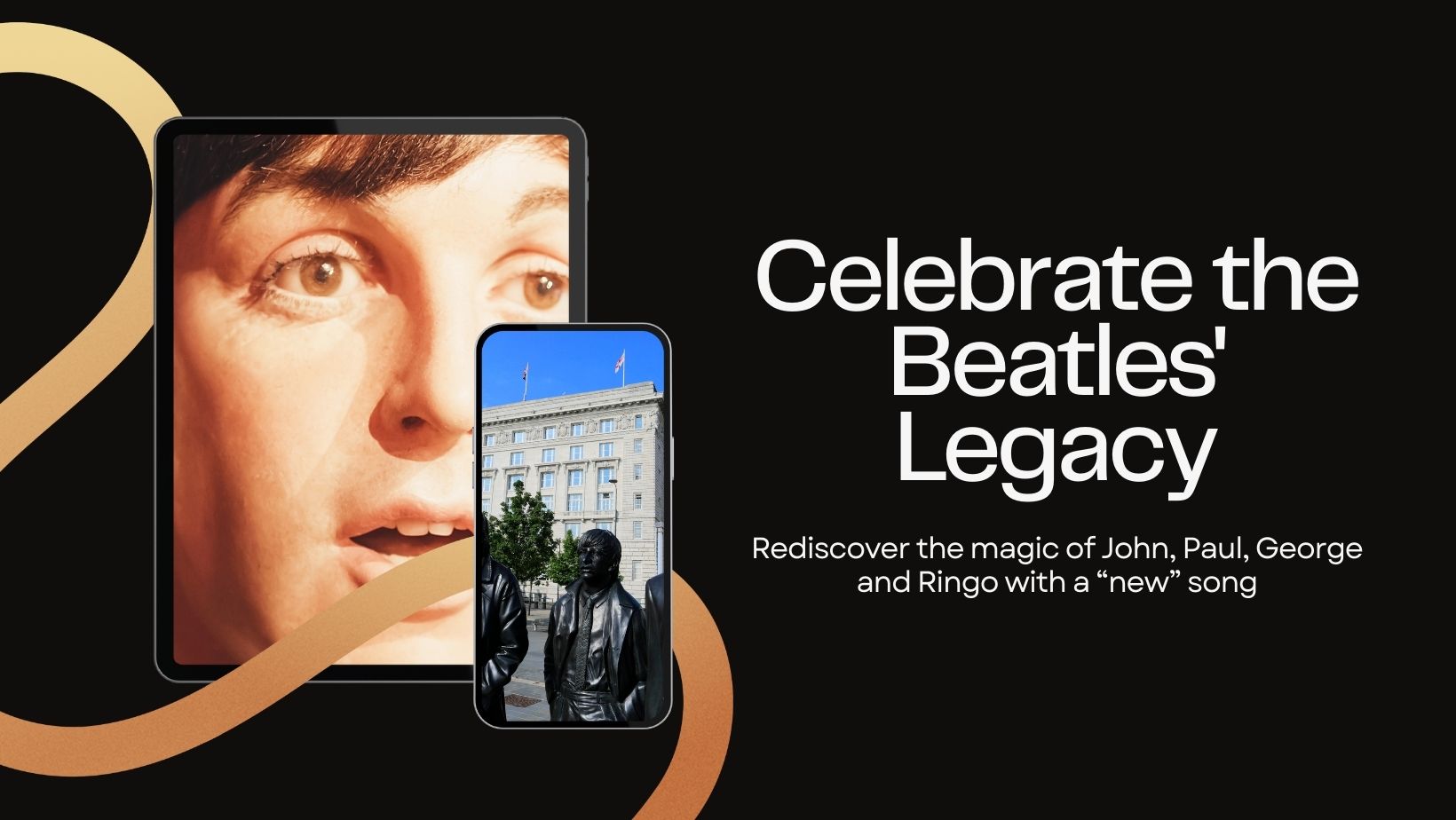
I love the new song, Now and Then, but I’m not sure of the implications of manipulating the voices of dead people. It could change history and what we know – or think we know – about people.
In the mid-’70s, long after The Beatles had officially parted ways, John Lennon recorded a series of demos straight to cassette tape in his home in New York City. After his death in 1980, his wife, Yoko Ono, passed the tapes to the remaining Beatles, and in 1995, Paul McCartney, Ringo Starr, and George Harrison began work on a trio of new Beatles songs born from Lennon’s sketches. You’ve heard a couple of them before—“Real Love” and “Free as a Bird”—but one of them never came to fruition during those sessions. “When we started ‘Now and Then,’ it was very difficult because John was sort of hidden in a way,” said Starr in a documentary about how The Beatles’ final song came together. “In John’s demo tape, the piano was a little hard to hear,” said McCartney. They put together some of the song’s building blocks, including having Harrison record guitar parts for the song. But they couldn’t properly isolate Lennon’s vocals from his piano. So “‘Now and Then’ just kind of languished in a cupboard,” McCartney said.
Fast-forward to 2022. Using machine-learning technology that director Peter Jackson’s team had developed for the 2021 Beatles documentary Get Back, engineers were able to separate Lennon’s voice from his original demo of “Now and Then,” finally allowing the remaining Beatles to finish the track. “It’s like John’s there,” said Ringo of the now-crystalline vocal track. “It’s far out.” Paul and producer Giles Martin (son of Beatles producer George Martin) were then able to assemble John’s 1970s vocals with George’s 1995 guitar lines and Paul and Ringo’s new vocal and instrumental parts, as well as a string arrangement, to complete the song.
Bearing the signatures of all four Beatles, it’s a doleful ballad and a poignant good-bye, with lyrics—“And if you go away, I’ll know you’re there”—that resonate far beyond their initial intentions. Hear The Beatles’ last song alongside their very first—1962’s “Love Me Do”—and watch the trailer for the documentary about how “Now and Then” was made.
Now and Then’s eventful journey to fruition took place over five decades and is the product of conversations and collaborations between the four Beatles that go on to this day.
The long mythologised John Lennon demo was first worked on in February 1995 by Paul, George and Ringo as part of The Beatles Anthology project but it remained unfinished, partly because of the impossible technological challenges involved in working with the vocal John had recorded on tape in the 1970s. For years it looked like the song could never be completed.
But in 2022 there was a stroke of serendipity. A software system developed by Peter Jackson and his team, used throughout the production of the documentary series Get Back, finally opened the way for the uncoupling of John’s vocal from his piano part. As a result, the original recording could be brought to life and worked on anew with contributions from all four Beatles.
This remarkable story of musical archaeology reflects The Beatles’ endless creative curiosity and shared fascination with technology. It marks the completion of the last recording that John, Paul and George and Ringo will get to make together and celebrates the legacy of the foremost and most influential band in popular music history.
• 1842 ~ (Victor) Alphonse Duvernoy, French pianist and composer. His works include operas, various pieces for piano and orchestra, chamber music, songs and piano music (including a set of 100 studies).
• 1853 ~ Percy Goetschius, American music teacher and critic
• 1919 ~ Kitty Wells (Muriel Ellen Deason),‘The Queen of Country Music’, Country Music Hall of Fame, married to Johnny Wright
• 1922 ~ Regina Resnik, American mezzo-soprano
• 1922 ~ The New Orleans Rhythm Kings recorded Tiger Rag, one of the most familiar ragtime jazz tunes ever. It was released on the General record label.
• 1935 ~ John Phillips, Singer with The Mamas & The Papas, actress MacKenzie Phillips’ father
• 1941 ~ John McNally, Singer, guitarist with The Searchers
• 1945 ~ Van Morrison, Irish blues-rock singer, songwriter and instrumentalist
• 1968 ~ The Beatles recorded their first songs for their own Apple label. The initial session included the big hits Revolution and Hey Jude.
• 1968 ~ The stars came out for charity as John and Yoko Lennon hosted the One on One concert in New York’s Madison Square Garden. Among the music greats appearing were Stevie Wonder and Roberta Flack. Over $250,000 was raised to aid mentally retarded children.
• 1984 ~ Beatles fans paid $271,180 dollars for memorabilia at an auction in London, England. An unpublished manuscript by John Lennon brought the largest amount – $23,056. A snare drum belonging to Ringo Starr brought $1,440.
Joseph Lamb (1887 to 1960) was an extraordinarily gifted ragtime pianist and composer along with Scott Joplin and James Scott. He differed from them, though, because the art of improvisation completely baffled him. In response to this, Lamb viewed ragtime as an art form written on paper, instead of a spontaneous one. Though his style and approach were markedly different from his peers, he still left behind a rich legacy and remained one of the most influential ragtime composers.
Lehar
Franz Lehar, 1870 to 1948 was the son of a bandmaster serving principally in Hungary. He followed his father’s profession, before winning, in 1902, success in the theatre in Vienna, where he succeeded in the following years in reviving the operetta, providing music of greater distinction, with tenor arias written specifically for Richard Tauber.
The reputation of Franz Lehar as a composer of operetta is assured as he wrote nearly forty of them. Of these by the far the best known is Die lustige Witwe (The Merry Widow), first staged in Vienna in 1905, the favourite operetta of Adolf Hitler.
Lennon
John Lennon, 1940 to 1980,was a pop star, composer, songwriter, and recording artist. He was born in Liverpool, Merseyside, NW England, UK. and was The Beatles rhythm guitarist, keyboard player, and vocalist, and a partner in the Lennon–McCartney song-writing team. He married Japanese artist Yoko Ono in 1969. On the birth of his son, Sean (born in 1975), he retired from music to become a house-husband. Five years later he recorded (Just Like) Starting Over, but he was shot and killed by a deranged fan just before its release. His death affected millions of people, record sales soared, and he continues to be admired by new generations of fans.
Lerner and Lowe
Alan Jay Lerner,
Playwright, born August 31, 1918, New York, New York; died June 14, 1986
Frederick Loewe,
Composer, born June 10, 1904, Vienna, Austria; died February 14, 1988
Frederick Loewe, an unheralded Vienna-born composer, and Alan Jay Lerner, the lyricist-playwright son of the proprietors of an American chain of women’s clothing shops, with sketches and lyrics for two Harvard Hasty Pudding shows among his major credits, met by chance at New York’s Lambs Club in 1942. Had they not, Brigadoon would never have emerged from the mists of the Scottish Highlands to make the world feel “Almost Like Being in Love” . . . no one would have been there to “Paint Your Wagon” . . . My Fair Lady would still be a less than lyrical English girl from George Bernard Shaw’s Pygmalion who couldn’t sing a note. . . we might never have thought to “Thank Heaven for Little Girls” like “Gigi” . . . and Camelot would most likely have stayed within the pages of Arthurian legend.
When the two, who were destined to enrich the American musical theater with some of its most poignant, rousing, and memorable lyrics, engaging books and powerful musical scores, had that chance meeting more than 50 years ago, neither was widely known. Loewe’s Great Lady had had a brief run on Broadway in 1938. Lerner had added radio scripts to his Hasty Pudding Club show credits. But later collaborations after one brief failure, What’s Up? (1943), and the moderately successful The Day Before Spring (1945), which ran five months on Broadway, made musical history.
Alan Jay Lerner was one of three sons of Joseph J. Lerner, who founded Lerner Stores, Inc. He was educated in England and at the Choate School in Wallingford, Connecticut, before entering Harvard. He studied at the Juilliard School of Music during vacations from Harvard. After graduating in 1940 with a B.S. degree, he wrote advertising copy and radio scripts for such programs as the “Philco Hall of Fame.”
Frederick “Fritz” Loewe was the son of Edmund Loewe, an eminent operetta tenor. When he was two, Frederick accompanied his father on a tour of the United States. The youngster played piano at four and, at nine, composed the tunes for a music hall sketch in which his father toured Europe. At 15, he wrote “Katrina,” a popular song that sold 3,000,000 copies in Europe. He had begun his own concert career as soloist with some of Europe’s leading symphony orchestras at the age of 13 after having studied with the noted European musician Ferruccio Busoni and Eugene d’Albert. In 1923, young Loewe was awarded the Hollander Medal in Berlin and studied composition and orchestration with Nickolaus von Reznicek.
The following year, the younger Loewe accompanied his father to America. Since neither a concert he gave at New York’s Town Hall, nor a subsequent week’s engagement at the Rivoli Theater led to further concert engagements, he tried teaching music and playing at Greenwich Village night clubs. When music failed to earn him a living, he worked as a busboy in a cafeteria and as a riding instructor at a New Hampshire resort. He took up flyweight boxing and failed, then went West, cowpunching, gold mining, and carrying mail on horseback over the Montana mountains before returning to New York where he found work as a piano player. In 1935, Loewe’s song “Love tiptoes Through My Heart” was accepted for the musical Petticoat Fever. His own musical, Salute to Spring, was presented in St. Louis in 1937. The next year, his Great Lady reached Broadway, but ran for only 20 performances.
The first Lerner-Loewe collaboration was a musical adaptation of Barry Connor’s farce The Patsy for a Detroit stock company in 1942. They called it Life of the Party and it enjoyed a nine-week hit that encouraged them to continue with the musical comedy What’s Up? which opened on Broadway in 1943. Lerner wrote the book and lyrics with Arthur Pierson, and Loewe composed the music. It ran for 63 performances and was followed in 1945 by their The Day Before Spring.
It was when the curtain went up to the haunted strains of bagpipes on the night of March 13, 1947, and the mist-shrouded Scottish Highland village of Brigadoon first appeared, that the team of Lerner and Loewe also emerged as potentially legendary. The musical, which after its original 581 performances on Broadway, toured extensively and has been revived frequently, won the “best musical”award from the New York Drama Critics Circle the year it opened and was hailed as having “evoked magic on Broadway.”
Between Brigadoon and Paint Your Wagon, the next team effort by Lerner and Loewe, Lerner wrote Love Life, with music by Kurt Weill, which was selected as one of the best plays of the 1948-49 Broadway season, plus the story, screenplay and lyrics for the films Royal Wedding and Brigadoon and the story and screenplay for An American in Paris, for which he won an Oscar in 1951.
Paint Your Wagon rolled in in 1951, and then, five years later, on March 15, 1956, My Fair Lady opened and became one of the most spectacular successes–artistic and financial–in the history of the American theater. Playing a record 2,717 performances on Broadway alone, it went on to break all other existing world records. This musicalization of Shaw’s classic Pygmalion was named “outstanding musical of the year” by the New York Drama Critics Circle–and by millions of theater goers.
Lerner and Loewe’s next collaboration was on the film adaptation of the Colette novel Gigi, another success filled with songs destined to become standard.
There was more collaborating to come–the film version of the Antoine de Saint-Exupery fable The Little Prince in 1972, but the 1960 Broadway hit Camelot which brought Arthurian England to life for its most shining hour, rang the curtain down on the phenomenon of Lerner and Loewe. Loewe, who had suffered a heart attack in 1958, went into retirement.
In tribute to his long time former partner, Lerner wrote, “There will never be another Fritz. . . . Writing will never again be as much fun . A collaboration as intense as ours inescapably had to be complex. But I loved him more than I understood or misunderstood him, and I know he loved me more than he understood or misunderstood me.”
Lewis
Jerry Lee Lewis (September 29, 1935 – October 28, 2022) was an American pianist, singer and songwriter. Nicknamed “The Killer”, he was described as “rock ‘n’ roll’s first great wild man”.
Liadov
Anatol Konstantinovich Liadov lived from 1855 until 1914. He was the son of a conductor at the Mariinsky Theatre in St Petersburg, and was trained at the Conservatory, where he was briefly a pupil of Rimsky-Korsakov and later a member of the teaching staff. He was associated with Balakirev and subsequently became a member of Belyayev’s circle, helping, in particular, in the establishment of the publishing-house that Belyayev established for Russian composers.
He was a thoroughly competent musician, conductor and composer, but did not apply himself constantly to work. His failure to supply music for the Dyagilev ballet in Paris in 1910 allowed Stravinsky his first chance with the Ballets russes. His compositions are characteristic of the period in Russian nationalism, when nationalism was joined with technical competence inculcated at the Conservatories.
The best known orchestral compositions by Liadov are the descriptive Russian fairy-tale pieces Kikimora, Baba-Yaga and Volshebnoye ozero (The Enchanted Lake). His last orchestral work was the symphonic poem Skorbnaya pesn. All are very much in the nationalist tradition exemplified by Rimsky-Korsakov.
Liadov wrote a number of shorter piano pieces, including Fugues and a set of Canons, testimony to his contrapuntal ability. Other pieces have characteristic titles, examples of pleasing and well crafted compositions for which there was a ready market.
Liadov wrote a setting of the final scene of Schiller’s Die Braut von Messina (The Bride from Messina) for his Conservatory graduation. Of some 26 songs, eighteen are Children’s Songs.
Liberace
(Walter) (Wladziu Valentino) Liberace, American pianist and showman. Lee, as he was known, was the master of Las Vegas. Hundreds of thousands flock to his museum there (operated by his brother, George) to see Liberace’s garish suits, trademark candelabra, and learn of the myths behind this hugely successful star of television, stage and concerts the world over.
Ligeti
György Ligeti, a composer, was born in 1923 in Transylvania. He studied and later taught at the Budapest Academy of Music. After leaving Hungary in 1956, he worked at the electronics studio in Cologne, then settled in Vienna, where he developed an experimental approach to composition. His first large orchestral work, Apparitions (1958–9), made his name widely known. In Aventures (1962) he uses his own invented language of speech sounds. He has also written a choral requiem, a cello concerto, and music for harpsichord, organ, and wind and string ensembles.
Lipatti
Dinu Lipatti was born in Bucharest and lived from 1917 until 1950. He was a pianist and composer who studied in Paris with Cortot and Boulanger, and after World War 2 established an international reputation as a gifted pianist, especially in the works of Chopin. His compositions include a Symphonie concertante for two pianos and strings, and a concertino for piano and orchestra. His career was cut short when he died of a rare form of cancer.
Liszt
Franz Liszt was born in Raiding, near Doborján, October 22, 1811 and died in Bayreuth, July 31, 1886. He was a Hungarian composer and pianist who was a major influence during the romantic period. Liszt was an outstanding pianist at seven, composed at eight and made concert appearances at nine. In addition to being a piano virtuoso, he was also a critic, conductor, city music director, literary writer and transcriber of the works of other composers. He transcribed Beethoven’s Symphonies for the piano.
Franz Liszt began his career as the outstanding concert pianist of the century, who, along with the prodigious violinist Niccolò Paganini (1782-1840), created the cult of the modern instrumental virtuoso. To show off his phenomenal and unprecedented technique, Liszt composed a great deal of music designed specifically for this purpose, resulting in a vast amount of piano literature laden with dazzling scales, trills, arpeggios, leaps, and other technical marvels. In this vein, Liszt composed a series of virtuosic rhapsodies on Hungarian gypsy melodies, the best-known being the all too familiar Hungarian Rhapsody no. 2. Liszt developed the rhapsody as a form of serious music. This kind of music is worlds apart from the generally more introspective, poetic music of pianist-composer Frédéric Chopin.
Liszt was wildly handsome and hugely talented. He was extremely popular in Paris during the 1830’s. It is said that women actually fainted at his piano recitals. He was the first to position the piano so that its lid reflected the sound and the audience could see his profile as he performed.
Liszt was the first to write a tone poem, which is an extended, single-movement work for orchestra, inspired by paintings, plays, poems or other literary or visual works, and attempting to convey the ideas expressed in those media through music. Such a work is Les Pruludes, based on a poem in which life is expressed as a series of struggles, passions, and mysteries, all serving as a mere prelude to . . .what? The Romantic genre of the symphonic poem, as well as its cousin the concert overture, became very attractive to many later composers, including Saint-Saëns, Tchaikovsky, Dvořák, Sibelius, and Richard Strauss.
Lloyd Webber
British composer Andrew Lloyd Webber is one of the most successful composers of this era with hugely successful commercial hits such as Jesus Christ Superstar, Sunset Boulevard, Cats, Phantom of the Opera and Evita. Cats, the longest-running production in Broadway history, closed after 7,397 performances on June 25, 2000.
Locatelli
Pietro Antonio Locatelli lived from 1695 until 1764. He was born in Bergamo, later moving to Rome, where he might have studied with Corelli, but more probably was a pupil of Valentini. He was an Italian composer of sonatas and concerti, but he was best known as a virtuoso violinist playing mostly in Amsterdam where he settled in 1721. He won a reputation as a virtuoso, performing in Italy, in Bavaria and in Berlin. In 1729 he settled in Amsterdam, where he taught and conducted an amateur orchestra and was able to pursue his wider cultural interests.
Locatelli wrote a number of concerti grossi, following the example of Corelli. The first set, published in Amsterdam in 1720, include twelve fugues. L’arte del violino (The Art of the Violin), published in 1733, contains twelve violin concertos and 24 Caprices, precursors of Paganini’s famous set for unaccompanied violin. A further set of six concertos was published two years later and a set of six, published in 1744, is scored for four violins, two violas and basso continuo. Locatelli combines the Roman style of Corelli with, in his solo concertos, the virtuosity of Vivaldi in Venice.
In his Concerti grossi, works for string orchestra with a smaller group of soloists, Locatelli at first follows the pattern of Corelli, with one or two violas added to Corelli’s solo group of two violins, cello and harpsichord. There is also a Concerto grosso that includes a group of solo wind instruments, in addition to solo violin concertos. Some of these works have programmatic titles. His L’arte del violino (The Art of the Violin) includes 24 Caprices for unaccompanied violin, challenging works that have been regarded by some as foreshadowing the Caprices of Paganini in the following century. Locatelli also published sets of trio sonatas and solo sonatas, including a set of the latter for flute and basso continuo.
Loewe
Frederick “Fritz” Loewe lived from 1904 until 1988. He was a composer, born in Vienna, Austria and at age 13 he was the youngest pianist to solo with the Berlin Symphony. At age 15 he composed Katrina (1919), which sold two million copies of sheet music in Europe. Although he had studied with great European masters of the piano, when he came to the U.S.A. in 1924 he failed as a piano virtuoso. He took up a series of odd jobs–prospecting for gold, professional boxing–but by the mid-1930s he had launched his career as a composer for the musical theater. Not until he teamed up with lyricist Alan Jay Lerner in 1942, however, did he find his true talent; their first big success was Brigadoon (1947) and this was followed by such classic stage and film musical scores as My Fair Lady (1956), Gigi (1958), and Camelot (1960). This last led to their falling-out and they did not collaborate again until in 1973 when they made a stage version of their film musical, Gigi. Their last collaboration was The Little Prince (1974), after which Loewe retired.
If ever I would leave you from Camelot won him a Grammy Award.
Lully
Jean Baptiste Lully lived from about 1632 until 1687 and was considered to be a baroque composer. He was an Italian-born French court composer who molded Italian opera music to suit the French text. He was the first to compose French overtures, which served as model for subsequent composers, especially J. S. Bach. He changed his name from the Italian Giovanni Battista Lulli when he became a French citizen.
Lully was conducting a Te Deum to celebrate Louis XIV’s recovery from illness. He was banging loudly on the floor with a staff when he struck his foot with such force that it developed an abscess, from which the unfortunate Lully died shortly after.
Lunceford
James Melvin Lunceford was born. June 6, 1902, Fulton, Miss., U.S. and died on July 12, 1947, Seaside, Ore. He was an American jazz dance-band leader whose rhythmically appealing, well-disciplined orchestra performed arrangements by trumpeter Sy Oliver and others to popular acclaim from 1934 to 1945 and influenced both swing and post-World War II dance bands.
Lunceford, during his youth, acquired proficiency on all reed instruments, but he seldom played with his band because he preferred to conduct. He taught and organized a student orchestra in a Memphis, Tenn., high school before beginning his professional career as a bandleader in 1929. Practiced showmanship, precise ensembles, and a medium two-beat swing tempo rather than exciting soloists were the Lunceford band’s trademarks. The band’s most popular songs included Organ Grinder’s Swing (1936) and For Dancers Only (1937). The Lunceford band was considered to be on a par with bands led by Duke Ellington, Count Basie, and Benny Goodman during the 1930s, and in 1940 the ensemble won a celebrated “battle of the bands” from a field of 28 groups, among them Basie’s, Goodman’s, and Glenn Miller‘s. Arranger Oliver left Lunceford in 1939, and by 1942 the band’s popularity had declined. Following Lunceford’s death while on tour, pianist Edwin Wilcox and saxophonist Joe Thomas led the band for several years.
Lutoslawski
Witold Lutoslawski lived from 1913 until 1994. He was born and studied in Warsaw, winning a distinguished international reputation particularly from the 1950s onwards, a leading composer among a group of creative artists of outstanding ability, remarkable in his handling of forms and textures of great originality.
The genius of Lutoslawski was early evident in his 1938 Symphonic Variations. The years after the war brought a return to more conventional national modes of composition, heard in his Little Suite and Concerto for Orchestra. Later works have allowed a more experimental approach on a broader palette, to be heard in his Funeral Music of 1958, his Second Symphony and the Prelude and Fugue for thirteen string instruments.
Characteristic works for voice and orchestra include Paroles tissées for tenor and chamber orchestra, and Three Poems by Henri Michaux for twenty voices and orchestra.
• 1842 ~ (Victor) Alphonse Duvernoy, French pianist and composer. His works include operas, various pieces for piano and orchestra, chamber music, songs and piano music (including a set of 100 studies).
• 1853 ~ Percy Goetschius, American music teacher and critic
• 1919 ~ Kitty Wells (Muriel Ellen Deason),‘The Queen of Country Music’, Country Music Hall of Fame, married to Johnny Wright
• 1922 ~ Regina Resnik, American mezzo-soprano
• 1922 ~ The New Orleans Rhythm Kings recorded Tiger Rag, one of the most familiar ragtime jazz tunes ever. It was released on the General record label.
• 1935 ~ John Phillips, Singer with The Mamas & The Papas, actress MacKenzie Phillips’ father
• 1941 ~ John McNally, Singer, guitarist with The Searchers
• 1945 ~ Van Morrison, Irish blues-rock singer, songwriter and instrumentalist
• 1968 ~ The Beatles recorded their first songs for their own Apple label. The initial session included the big hits Revolution and Hey Jude.
• 1968 ~ The stars came out for charity as John and Yoko Lennon hosted the One on One concert in New York’s Madison Square Garden. Among the music greats appearing were Stevie Wonder and Roberta Flack. Over $250,000 was raised to aid mentally retarded children.
• 1984 ~ Beatles fans paid $271,180 dollars for memorabilia at an auction in London, England. An unpublished manuscript by John Lennon brought the largest amount – $23,056. A snare drum belonging to Ringo Starr brought $1,440.



 MaryO'Studio