May 22 ~ Today in Music History

today

• 1722 ~ Johannes Schmidlin, Composer

• 1759 ~ Gervais-François Couperin, Composer

• 1780 ~ Jan Emmanuel Dulezalek, Composer

• 1783 ~ Thomas Forbes Walmisley, Composer

• 1813 ~ (Wilhelm) Richard Wagner, German composer
Read quotes by and about Wagner
More information about Wagner

• 1820 ~ Alexander Ernst Fesca, Composer

• 1850 ~ Johann Schrammel, Composer

• 1852 ~ Emile Sauret, Composer

• 1865 ~ Enrique Morera, Composer

• 1879 ~ Eastwood Lane, Composer

• 1879 ~ Jean Emile Paul Cras, Composer

• 1884 ~ Alceo Toni, Composer

• 1885 ~ Julio Fonseca, Composer

• 1900 ~ Edwin S. Votey of Detroit, MI patented his pianola, a pneumatic piano player. The device could be attached to any piano. Batteries not included.

• 1914 ~ Sun Ra (Herman Blount), American jazz composer and keyboard player who led a free jazz big band known for its innovative instrumentation and the theatricality of its performances. He passed away in 1993.

• 1916 ~ Gordon Binkerd, Composer

• 1924 ~ Charles Aznavour, French chanteur and composer

• 1924 ~ Claude Andre Francois Ballif, French composer

• 1926 ~ Elaine Leighton, Drummer, played with Billie Holiday

• 1928 ~ Jackie (Jacqueline) Cain, Singer

• 1930 ~ Kenny Ball, Musician, trumpeter, bandleader

• 1933 ~ John Browning, American pianist
More information about Browning

• 1934 ~ Peter Nero (Nierow), Pianist

• 1950 ~ Bernie Taupin, Elton John’s lyricist

• 1966 ~ Iva Davies (1955) Guitarist, singer with Icehouse

• 1958 ~ Wedding vows were taken by rock ’n’ roll star, Jerry Lee Lewis and his thirteen- year-old cousin, Myra.

• 1965 ~ The Beatles got their eighth consecutive number one hit as Ticket to Ride rode to the top of the singles list. The song topped the charts for one week and became their eighth consecutive number one hit.

• 1966 ~ Bruce Springsteen recorded his very first song at the age of 16, along with his band, The Castilles. It was titled, That’s What You’ll Get. The song was never released.

• 2003 ~ The final manuscript of Beethoven’s Ninth Symphony, which was annotated by the composer, sold at auction for $3.47 million.

May 21 ~ Today in Music History

today

• 1633 ~ Joseph de La Barre, Composer

• 1671 ~ Azzolino Bernardino Della Ciaia, Composer

• 1680 ~ Frederich Karl Erbach, Composer

• 1720 ~ Antonio Corbisiero, Composer

• 1722 ~ Wilhelm Gottfried Enderle, Composer

• 1841 ~ Joseph Parry, Composer

• 1867 ~ Marie Joseph Leon Desire Paque, Composer

• 1888 ~ May Aufderheide, Ragtime composer

• 1892 ~ The opera “I Pagliacci,” by Ruggiero Leoncavallo, was performed for the first time in Milan, Italy.

• 1895 ~ Franz von Suppe, Austrian composer of light operas, notably “Poet and Peasant,” died.
More information about von Suppe

• 1898 ~ Karel Haba, Composer

• 1901 ~ Horace Heidt, Bandleader: Horace Heidt and His Musical Knights

• 1904 ~ “Fats” Waller, American jazz pianist, organist, singer, bandleader and composer
Listen to Waller’s music
More information about Waller

• 1905 ~ Edward Lockspeiser, Composer

• 1917 ~ Dennis Day (Eugene Denis McNulty), Singer

• 1924 ~ Robert Parris, Composer

• 1926 ~ Joseph Horovitz, Composer

• 1929 ~ Charles Wadsworth, Pianist

• 1930 ~ Tommy Bryant, Jazz/studio musician: bassist

• 1932 ~ Robert Sherlaw Johnson, Composer

• 1933 ~ Maurice André, French trumpeter

• 1935 ~ Terry Lightfoot, Clarinetist, bandleader with the New Orleans Jazzmen

• 1939 ~ Heinz Holliger, Swiss oboist, composer and conductor

• 1940 ~ Will Bradley and his orchestra recorded one of the best of the Big Band era. Ray McKinley played drums and did the vocal for the boogie-woogie tune, Beat MeDaddy, Eight to the Bar. The song, on Columbia Records, was so long it took up both sides of the 78 rpm record.

• 1941 ~ Ronald Isley, Singer with The Isley Brothers

• 1944 ~ Marcie Blane, Singer

• 1948 ~ Leo (Gerard) Sayer, Pop-singer and songwriter. Some of his hits were YouMake Me Feel like Dancing and When I Need You

• 1959 ~ Gypsy opened. Ethel Merman played the lead role in the musical which opened at the Broadway Theatre in New York City. The popular show ran for 702 performances. It was based on the memoirs of Gypsy Rose Lee, the famous burlesque queen.

• 1973 ~ Vaughn Monroe passed away

• 1973 ~ The sensual Pillow Talk, by Sylvia (Sylvia Vanderpool), earned a gold record.

• 1985 ~ Marvin Gaye’s last album was released. Dream of a Lifetime featured songs that critics considered too offensive, such as the controversial, pop version of TheLord’s Prayer. Three of the songs from the album were completed after Gaye’s death. Marvin Gaye was inducted into the Rock and Roll Hall of Fame in 1987.

May 20 ~ Today in Music History

today

• 1547 ~ Melchior Bischoff, Composer

• 1554 ~ Paulo Bellasio, Composer

• 1650 ~ Francesco Sacrati, composer, died at the age of 44

• 1751 ~ Domingo Miguel Bernaube Terradellas, Composer, died at the age of 38

• 1754 ~ Hans Gram, Composer

• 1782 ~ Carlo Giovanni Testori, Composer, died at the age of 68

• 1782 ~ Christoph Gottlieb Schroter, Composer, died at the age of 82

• 1812 ~ Gustav Adolf Mankell, Composer

• 1850 ~ Eaton Faning, Composer

• 1876 ~ John Owen Jones, Composer

• 1889 ~ Felix Arndt, Composer

• 1890 ~ Beniamino Gigli, Italian tenor

• 1896 ~ Clara Josephine Wieck Schumann, Composer and pianist, died at the age of 76

• 1900 ~ Gustav Heinrich Graben-Hoffman, Composer, died at the age of 80

• 1903 ~ Jerzy Fitelberg, Polish composer

• 1910 ~ Jean-Baptiste Theodore Weckerlin, Composer, died at the age of 88

• 1913 ~ Ion Dumitrescu, Composer

• 1917 ~ Enyss Djemil, Composer

• 1920 ~ Hephzibah Menuhin, American pianist

• 1926 ~ Vic Ames (Urick), Singer with The Ames Brothers

• 1927 ~ David Frederick Barlow, Composer

• 1927 ~ Walter Aschaffenburg, Composer

• 1937 ~ Teddy Randazzo, Singer

• 1939 ~ Three Little Fishies, by Kay Kyser hits #1

• 1941 ~ Harry James and his orchestra recorded the classic You Made Me Love Youfor Columbia Records.

• 1943 ~ Tison Street, Composer

• 1944 ~ Cipa Dichter, Brazilian pianist, wife of Misha Dichter

• 1944 ~ Joe (John Robert) Cocker, British rock-blues singer and songwriter

• 1946 ~ Cher (Cherilyn Sarkisian LaPierre), Entertainer

• 1952 ~ Warren Cann, Drummer

• 1960 ~ Sue Cowsill, Singer with The Cowsills

• 1961 ~ Hans Werner Henze’s opera “Elegy for Young Lovers,” premiered in Schwetzingen

• 1967 ~ The BBC banned The Beatles’ “A Day in the Life” because of drug references

• 1970 ~ The Beatles’ “Let it Be” movie premiered in the United Kingdom

• 1975 ~ Jacques Stehman, Composer, died at the age of 62

• 1979 ~ The first western pop star to tour USSR was Elton John

• 1984 ~ “On Your Toes” closed at Virginia Theater NYC after 505 performances

• 1986 ~ Bernard Naylor, Composer, died at the age of 78

• 1991 ~ Julian Orbon De Soto, Composer, died at the age of 65

• 2000 ~ Jean-Pierre Rampal, who popularized the flute as a solo instrument and became one of classical music’s brightest stars, died in Paris. He was 78. The cause was a heart attack.
More information about Rampal

• 2002 ~ Sandor Konya, a tenor who spent much of his career at the Metropolitan Opera in New York, died. He was 78. Born in Sarkad, Hungary, in 1923, Konya studied in Hungary, Italy and Germany before making a name for himself as a Wagnerian tenor and giving hundreds of performances at the Met in the late 1960s and early 1970s. He moved to Ibiza in the 1980s and started Pro Arte, a local foundation to promote the operatic arts with productions throughout the season, said Echarte, who is vice president.

May 15 ~ Today in Music History

today


• 1567 ~ Claudio Monteverdi, Italian composer
More information about Monteverdi

• 1808 ~ Michael William Balfe, Irish composer

• 1918 ~ Eddie Arnold, Singer

• 1908 ~ Lars-Erik Larsson, Swedish composer

• 1923 ~ Ellis Larkins, Pianist, a favorite accompanist of singers from Mildred Bailey to Ella Fitzgerald

• 1936 ~ Anna Maria Alberghetti, Singer

• 1937 ~ Trini Lopez, Folk Singer and guitarist

• 1938 ~ Lenny Welch, Singer

• 1938 ~ Guy Lombardo and his orchestra recorded Ride, Tenderfoot, Ride, the group’s last side for Victor Records. Lombardo took disc number 25861 and moved the Royal Canadians over to Decca Records to make “the sweetest sound this side of heaven.”

• 1942 ~ Lainie Kazan, Singer

• 1947 ~ Graham Goble, Guitarist with Little River Band

• 1948 ~ Brian Eno, Musician, synthesizer, record producer, songwriter, co-founder of Roxy Music

• 1953 ~ Mike Oldfield, Composer, musician

• 1964 ~ The Smothers Brothers, Dick and Tom, gave their first concert in Carnegie Hall in New York City.

• 1970 ~ Close to You, the Carpenter’s second album and the one that launched them to meteoric fame, was released by A&M Records. The title song, (They Long to Be) Close to You, became a pop music standard and the first of six million-sellers in a row for Karen and Richard.

• 1972 ~ Glen Campbell earned a gold record for his Greatest Hits album on this day.

May 13 ~ Today in Music History

today


OCMS 1842 ~ Sir Arthur Seymour Sullivan, British composer, best known for his comic operettas
Read quotes by and about Sullivan
More information about Sullivan

• 1868 ~ Composer Gioacchino Rossini died. He was was very superstitious. He particularly feared Friday the thirteenth. And here’s an incredible fact: he died on Friday the thirteenth, 1868!

• 1911 ~ Maxine Sullivan (Marietta Williams), Singer

• 1912 ~ Gil Evans, Canadian jazz pianist, composer, arranger and bandleader

• 1914 ~ Johnny ‘Johnnie’ Wright, Country singer: duo: Johnnie and Jack, married to singer Kitty Wells since 1937

• 1938 ~ Louis Armstrong and his orchestra recorded the New Orleans jazz standard, When the Saints Go Marching In, on Decca Records.

• 1941 ~ Ritchie Valens (Richard Steven Valenzuela), Singer
More about Valens

• 1943 ~ Mary Wells, Singer

• 1946 ~ Danny Klein, Musician, bass with The J. Geils Band

• 1950 ~ Stevie Wonder, American rock singer, songwriter and instrumentalist
More information about Wonder

• 1954 – The Pajama Game made its debut on Broadway in New York City at the St. James Theatre. Harold Prince produced The Pajama Game, his first Broadway endeavor. The show ran for 1,063 performances. John Raitt and Janis Paige starred in the leading roles. Carol Haney came to national fame for her rendition of the song, Steam Heat. The movie version also starred Raitt — along with Doris Day.

• 1971 ~ Aretha Franklin, the ‘Queen of Soul’, received a gold record for her version of Bridge over Troubled Water, originally a Paul Simon and Art Garfunkel tune.

• 1984 ~ The Fantasticks, playing at the Sullivan Theatre in Greenwich Village in New York City, became the longest-running musical in theatre history with performance number 10,000 on this night. The Fantasticks opened on May 3, 1960.

May 9 ~ Today in Music History

today


• 1914 ~ Carlo Maria Guilini, Italian conductor

• 1914 ~ Hank Snow (Clarence Eugene), Canadian-born American country-music singer, guitarist and songwriter, Country Music Hall of Fame

• 1937 ~ Sonny Curtis, Guitarist with Buddy Holly & The Crickets, songwriter

• 1939 ~ Nokie Edwards, Guitarist with The Ventures

• 1939 ~ Ray Eberle recorded Stairway to the Stars with the Glenn Miller Orchestra for Bluebird records.

• 1941 ~ Pete Birrell, Guitarist with Freddie & The Dreamers

• 1942 ~ Tommy Roe, Singer, songwriter

• 1944 ~ Richie Furay, Musician with Poco and Buffalo Springfield

• 1945 ~ Steve Katz, Record producer; musician: guitar, harmonica, singer with Blood, Sweat and Tears

• 1949 ~ Billy Joel, Grammy Award-winning American rock singer, songwriter and pianist Inducted into the Rock and Roll Hall of Fame on 3/15/99
More information on Joel

• 1962 ~ The Beatles signed their first recording contract. George Martin was hired to be the group’s producer and the band would record for EMI Parlophone.

• 1964 ~ Hello Dolly! became the nation’s top pop record. The milestone put Louis Armstrong on the Billboard music chart in the top spot for the first time in his 41-year music career. Later, ‘Satchmo’ was cast in the movie version of Hello Dolly!

• 1965 ~ Vladimir Horowitz played his first public concert in 12 years at Carnegie Hall in New York City. The audience applauded the piano virtuoso with a standing ovation that lasted for 30 minutes.

• 1991 ~ Rudolph Serkin passed away.  He was a Bohemian-born pianist who was widely regarded as one of the greatest Beethoven interpreters of the twentieth century.

• 2001 ~ James Myers, whose two-minute, eight-second tune Rock Around the Clock is considered the granddaddy of all rock ‘n’ roll songs, died of leukemia. He was 81. The song was No. 1 for eight weeks and went on to sell 22 million copies worldwide. It has been recorded by more than 500 artists, from Mae West to the Sex Pistols, and has been used in more than 40 movies. Myers, who also wrote under the name Jimmy DeKnight, penned more than 300 songs and had bit parts in movies and TV shows, but Rock Around the Clock remained his most famous work.

Liszt is dead, long live the piano recital

On Monday, Google’s homepage ran a picture to celebrate the 360th birthday of Bartolomeo Cristofori, inventor of the piano and keeper of instruments for the Medicis in Florence. The instrument Cristofori invented was originally called a “harpsichord with soft and loud” even though the distinction between the two is large (the harpsichord produces sound by plucking strings, the piano by striking them with a hammer). Only three of the newfangled instruments he made – all of them dating from the 1720s – survive.

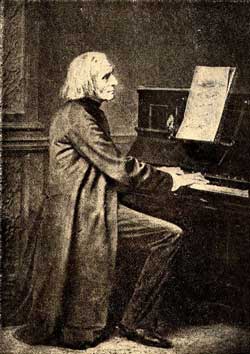
liszt-recitalMore than a century later the piano recital was devised. It was Liszt who first decided to have the whole stage to himself, and set the fashion for dispensing with the mixture of celebrities and supporting acts that had prevailed up to that time. As he wrote about his audacity to a friend: “Le concert, c’est moi!” And he called his appearance at the Hanover Square Rooms in London in June 1840 not a concert but a recital.

The composer-pianists of the day concentrated on their own works. Liszt set a marker in this regard, too, choosing music that ranged from Bach through Beethoven and up to Chopin. He set the pattern for playing from memory, and cemented the platform layout we know today by turning the then-conventional position of the instrument on the stage through 90 degrees. He was what we would now call a sex symbol as well as a star musician, and the new arrangement allowed the audience to see his impressive profile as well as to hear the instrument more clearly. The standards he set have survived without significant alteration right up to the present.

via Liszt is dead, long live the piano recital.

May 8 ~ Today in Music History

today


OCMS  1829 ~ Louis Moreau Gottschalk, American pianist and composer
Listen to Gottschalk’s music
More information on Gottschalk

• 1948 ~ Oscar Hammerstein I, Playwright, producer

• 1910 ~ Mary Lou Williams, American jazz pianist, composer and arranger

• 1911 ~ Robert Johnson, Blues Hall of Fame, singer, songwriter, guitarist, inducted into Rock and Roll Hall of Fame in 1986

• 1941 ~ Anita O’Day recorded Let Me Off Uptown on Okeh Records with Gene Krupa and his band.

• 1943 ~ Toni Tennille, Singer

• 1944 ~ Gary Glitter (Paul Gadd), Singer

• 1945 ~ Keith Jarrett, American jazz pianist and composer

May 6 ~ Today in Music History

today


•  1896 ~ Puccini’s opera La Bohème made it’s world premiere in Venice

• 1913 ~ Carmen Cavallaro, Pianist: Chopin’s Polonaise, films: The Eddy Duchin Story, Hollywood Canteen, Out of this World, Diamond Horseshoe

• 1915 ~ George Perle, American composer and theorist

• 1918 ~ Godfrey Ridout, Canadian composer

• 1926 ~ Marguerite Piazza (Luft), Soprano and regular on TV’s Your Show of Shows

• 1942 ~ Richard Stilwell, American baritone

• 1945 ~ Bob Seger, Singer

• 1963 ~ Ted Weems passed away.  He was an American bandleader and musician.

• 1983 ~ Kai Winding passed away.  He was a Danish-born American trombonist and jazz composer.

May 3 ~ Today in Music History

today


• 1844 ~ Richard D’Oyly Carte, British impresario; producer of Gilbert and Sullivan operettas. He also founded the Savoy Theater in London.

• 1912 ~ Virgil Fox, Organ virtuoso: credited for bringing the organ “to the forefront among classical concert instruments”

• 1919 ~ Betty Comden, Composer

• 1919 ~ Pete Seeger, American folk singer, banjo player, guitarist and songwriter

• 1924 ~ Joe Ames, Singer with The Ames Brothers

• 1926 ~ Jimmy Cleveland, Composer, musician, trombone

• 1928 ~ Dave Dudley (Pedruska), Country singer

• 1933 ~ James Brown, American rhythm-and-blues singer songwriter, dancer and instrumentalist, The Godfather of Soul, Rock and Roll Hall of Fame in 1986

• 1937 ~ Frankie Valli (Francis Castellucio), Falsetto singer with The Four Seasons

• 1939 ~ Beer Barrel Polka, one of the standards of American music, was recorded by The Andrews Sisters for Decca Records. Patti, Maxine and LaVerne turned this song into a giant hit.

• 1951 ~ In Britain, the King and Queen inaugurated the Festival of Britain on London’s South Bank and also opened the Festival Hall.

• 1956 ~ Most Happy Fella, a musical by Frank Loesser, opened at the Imperial Theatre in New York City. The show, an adaptation of They Knew What They Wanted by Sidney Howard, ran for 676 performances on Broadway.

• 1960 ~ The play, The Fantasticks, opened at the Sullivan Playhouse in New York City. It would later become the longest-running off-Broadway play.

• 1971 ~ NPR, National Public Radio, the U.S. national, non-commercial radio network, was born.

• 1997 ~ Narciso Yepes, famous Spanish classical guitarist, died.

• 2001 ~ Legendary jazz drummer Billy Higgins died at the age of 64. Higgins was one of the most recorded figures in the history of jazz, performing with John Coltrane, Dexter Gordon, Herbie Hancock, Milt Jackson, Charles Lloyd, Pat Metheny, Lee Morgan, Art Pepper and Joshua Redman, among others. He played with pianist Cedar Walton and was involved with the first edition of bassist Charlie Haden’s innovative Quartet West. Higgins came to prominence in the 1950s with saxophonist Ornette Coleman’s free jazz group, which included Haden and trumpeter Don Cherry. Higgins’ drumming laid the foundation for the group’s free jazz flights of fancy. That group sparked a decade of innovation in jazz that was carried on by the Coleman Quartet, Coltrane, George Russell, Charles Mingus and Albert Ayler, among others. Higgins’ ability to adapt his sense of swing to any genre made him one of the most in-demand drummers of the past four decades. Higgins helped found World Stage, a storefront performance space and teaching venue in Los Angeles’ Leimert Park. He was also on the jazz faculty at the University of California, Los Angeles. Higgins was awarded a National Endowment for the Arts Jazz Master’s Fellowship in 1997.

• 2002 ~ Yevgeny Svetlanov, a renowned Russian pianist, composer and former chief conductor of the Bolshoi Theater, died. He was 73. He was born in Moscow in 1928. He graduated from the Gnesinykh Musical- Pedagogical Institute and from the Moscow Conservatory. For several years he was conductor and chief conductor of the Bolshoi Theatre. From 1965 on he was artistic director and chief conductor of the State Symphonic Orchestra of USSR. He composed several symphonies, symphonic poems, chamber music works, and vocal-instrumental works. Svetlanov was the chief conductor of the Bolshoi Theater from 1963 to 1965, when he was named artistic director and chief conductor of the Soviet State Symphony. He was named a People’s Artist of the Soviet Union in 1968 and was awarded the Lenin prize in 1972 and the Order of Lenin 1978. He was given the Soviet State prize for creative achievement in 1983. Svetlanov was born in the Soviet Union in 1928. In 1951, he graduated from the Gnesin Institute of Music. Svetlanov graduated from the Moscow Conservatory in 1955 as a pianist, composer and conductor.