1894 ~ Anton Rubinstein, Russian composer and pianist, died at the age of 64
More information about Rubinstein
• 1925 ~ June Christy (Shirley Luster), Singer, sang with Stan Kenton band
• 1929 ~ Leo Reisman and his orchestra recorded Happy Days are Here Again for Victor Records. The classic was recorded just three weeks after the stock market crash that plunged the nation into the Great Depression.
• 1937 ~ Ruth Laredo, American pianist
• 1940 ~ Tony Butala, Singer with The Lettermen
• 1942 ~ Norman Greenbaum, Singer
• 1943 ~ Meredith Monk, American composer, dancer, choreographer and singer
• 1946 ~ Duane Allman, Guitarist with The Allman Brothers Band
• 1946 ~ Ray Stiles, Bass, singer with Mud
• 1947 ~ George Grantham, Drummer, singer with Poco
• 1947 ~ Joe Walsh, Guitarist, singer with the Eagles; James Gang
• 1948 ~ Barbara Hendricks, American soprano
• 1957 ~ Jimmy Brown, Drummer with UB40
• 1959 ~ One of America’s great rock jocks was fired from WABC radio in New York. The ‘Moondoggy’ himself, Alan Freed, was axed in the midst of the payola music scandal.
• 1966 ~ Cabaret opened on Broadway for the first of 1,166 stellar performances. Joel Gray starred in the hugely successful musical that is an adaptation of both the play, “I Am a Camera”, and the novel, “Goodbye to Berlin”.
• 1971 ~ Isaac Hayes of Memphis, TN got his first #1 hit as the Theme from Shaft began a two-week stay at the top of the charts.
• 1973 ~ Allan Sherman, American parody singer and songwriter (Hello Muddah, Hello Faddah), died from emphysema at the age of 48
• 1984 ~ The largest crowd to see the unveiling of a Hollywood Walk-of-Fame star turned out as Michael Jackson got his piece of the sidewalk right in front of Mann’s Chinese Theatre in Los Angeles. ‘The Gloved One’ became star number 1,793 on the famed walk.
• 2003 ~ Katherine Bidwell, who supported performing arts programs and held positions at the Metropolitan Opera Guild and Lincoln Center, died. She was 66. A musician herself, Bidwell joined the St. Louis Municipal Opera when she was 18. She became a trustee at Sarah Lawrence College, her alma mater, and sponsored performing arts programs there. In 1966, Bidwell joined the board of the Metropolitan Opera Guild. She was its president and chief executive from 1979 to 1986, and for the next 10 years, she was director of special projects for Lincoln Center. Bidwell founded the Katherine Bidwell Foundation for Young Singers and the patrons’ program of the Chamber Music Society of Lincoln Center. She was a trustee of several other organizations, including Westminster Choir College and the London School of Music and Dramatic Arts.
• 1724 ~ First Performance of J. S. Bach’s Sacred Cantata No. 26 Ach wie flüchtig, ach wie nichtig performed on the 24th Sunday following Trinity. A portion of Bach’s second annual Sacred Cantata cycle in Leipzig, 1724-25.
• 1736 ~ J. S. Bach named court composer by Poland’s King Agustus III.
• 1826 ~ Composer Felix Mendelssohn and his sister Fanny performed his overture to “A Midsummer Night’s Dream” for the first time.
• 1828 ~ Death of Austrian composer Franz Schubert in Vienna, at the age of 31 from typhus. He is buried near Beethoven.
• 1859 ~ Mikhail Ippolitov-Ivanov, Russian composer and conductor
More information about Ippolitov-Ivanov
• 1874 ~ Birth of composer Karl Adrian Wohlfahrt.
• 1875 ~ First Performance of Tchaikovsky‘s Third Symphony, in Moscow.
• 1888 ~ Piano Debut in Boston of composer Edward MacDowell with the Kneisel Quartet.
• 1905 ~ Tommy Dorsey, American trombonist and bandleader
• 1923 ~ First Performances of Béla Bartók‘sFive Dances and Zoltán Kodály‘sPsalums Hungaricus in Budapest, marking the 50th anniversary of the union of cities Buda and Pest.
• 1936 ~ Birth of classical music commentator (Detroit Symphony broadcasts) Dick Cavett, in Kearney, Nebraska. ABC-TV talk show host (Dick Cavett Show).
• 1936 ~ First concert recorded on magnetic tape with the London Philharmonic orchestra conducted by Sir Thomas Beecham at BASF’s own concert hall in Ludwigshaven, Germany.
• 1937 ~ Ray Collins, Songwriter
• 1938 ~ Hank Medress, Singer with The Tokens, record producer
• 1943 ~ Fred Lipsius, Piano, sax with Blood Sweat & Tears
• 1943 ~ Stan Kenton and his orchestra recorded Artistry in Rhythm, the song that later become the Kenton theme. It was Capitol record number 159. The other side of the disk was titled, Eager Beaver.
• 1944 ~ Agnes Baltsa, Greek mezzo-soprano
• 1954 ~ Sammy Davis, Jr. was involved in a serious auto accident in San Bernardino, CA. Three days later, Davis lost the sight in his left eye. He later referred to the accident as the turning point of his career.
• 1957 ~ American conductor Leonard Bernstein named Music Director of the New York Philharmonic. First American-born and educated conductor named to head an important American Orchestra.
• 1961 ~ A year after Chubby Checker reached the #1 spot with The Twist, the singer appeared on The Ed Sullivan Show to sing the song again. The Twist became the first record to reach #1 a second time around, on January 13, 1962.
• 1962 ~ For the first time, a jazz concert was presented at the White House. Jazz had previously been served as background music only.
• 2000 ~ First Performance of Philip Glass‘ Double Concerto for Timpani and Orchestra, by the American Composers Orchestra. Lincoln Center in New York.
• 2017 ~ Della Reese [Delloreese Patricia Early], American singer and actress (Della Reese Show, Royal Family), died at the age of 86
• 2017 ~ Mel Tillis [Lonnie Melvin Tillis], American country singer (Who’s Julie, M-M-Mel), died of respiratory failure at the age of 85
• 1307 ~ The story of William Tell shooting the apple off of his young son’s head is said to have taken place on this day. Gioachino Rossini made this story into an opera.
• 1680 ~ Birth of French-Belgian composer and flutist Jean Baptiste Loeillet in Gent.
• 1736 ~ Birth of German composer Carl Friedrich Christian Fasch in Zerbst
• 1741 ~ George Frideric Handel arrived in Dublin at the invitation of the country of Ireland to attend current concert season. Presented numerous concerts in the Irish capital, including the first performance of his oratorio Messiah early in 1742.
• 1763 ~ Leopold Mozart and his two children, Wolfgang and Maria, arrive in Paris on their European concert tour.
• 1786 ~ Carl Maria von Weber, German composer, conductor and pianist, began the era of German romantic music
More information about von Weber
• 1838 ~ Sir William Schwenck Gilbert, British playright and librettist, best known for his comic operettas with Arthur Sullivan
• 1889 ~ Amelita Galli-Curci, Opera soprano, “If not the greatest coloratura soprano of all time, she must surely be recognized as among the world’s finest examples of true operatic artistry.”
• 1891 ~ First Performance of Tchaikovsky‘s symphonic work The Voyevode in Moscow.
• 1892 ~ First concert at Carnegie Hall by the New York Philharmonic.
• 1909 ~ Johnny (John Herndon) Mercer, Academy Award-winning composer, lyricist, wrote or co-wrote over a thousand songs
• 1926 ~ Dorothy Collins (Marjorie Chandler), Singer on Your Hit Parade, sang with Benny Goodman band
• 1936 ~ Hank Ballard, Singer, songwriter with The Midniters, wrote and recorded The Twist
• 1950 ~ Graham Parker, Singer with Graham Parker and The Rumour
• 1953 ~ Herman Rarebell, Drummer with Scorpions
• 1960 ~ Kim Wilde, Singer
• 1967 ~ Lulu’s To Sir with Love, from the movie of the same name, started its fifth and final week at number one.
• 1974 ~ Frank Sinatra emerged from retirement to do a TV special with dancer Gene Kelly. The show was a smash hit and revived Sinatra’s career.
• 1975 ~ John Denver received a gold record for I’m Sorry.
• 1986 ~ The Roseland Ballroom reopened in New York City. The 67-year-old home for those wanting to dance cheek to cheek featured America’s dean of society music, Lester Lanin. He played for patrons who wanted to cut a rug on the 112-by-55-foot, maple wood dance floor.
• 1994 ~ Cab[ell] Calloway, US band leader/actor (Missourians), died at the age of 86
• 1999 ~ Doug Sahm, American country singer, passed away
• 2003 ~ First Performance of John Corigliano‘s Snapshot: Circa 1909. Elements String Quartet at Merkin Concert Hall, NYC.
• 2003 ~ Oscar-nominated composer, conductor and arranger Michael Kamen, one of Hollywood’s most sought-after musicians, died at age 55 after suffering from multiple sclerosis for several years. The native New Yorker and Juilliard School of Music Graduate was one of Hollywood’s most successful composers who worked on music for the “Lethal Weapon” series and scored “Die Hard” among many other films. In the late 1960s, he helped found the New York Rock ‘n’ Roll Ensemble, a critically acclaimed group that fused classical with pop and recorded five albums before dissolving. In the 1970s, Kamen scored ballets, served as musical director for David Bowie’s “Diamond Dogs” tour and began writing scores for film. Although he began in Hollywood working on offbeat films like “Polyester” and “Brazil,” he turned more mainstream in the 1980s, working on the “Lethal Weapon” series, “Robin Hood: Prince of Thieves,” “Mr. Holland’s Opus” and “X-Men,” plus the HBO series “Band of Brothers.” In 1991, Kamen earned his first Academy Award nomination for “(Everything I Do) I Do It for You,” the Bryan Adams pop hit from the movie, “Robin Hood: Prince of Thieves.” Co-written with Adams and Robert John “Mutt” Lange, the song received two Grammys. The three united in 1993 for “All for Love.” In 1999, Kamen conducted the orchestra which backed Metallica on their S&M project.
• 2004 ~ Cy Coleman, American composer, songwriter and pianist, died
• 1569 ~ Paul Sartorius, German organist and composer
• 1615 ~ Guillaume Dumanoir, II, French violinist and composer who composed dance music enjoyed by Louis XIV
• 1667 ~ Nathaniel Schnittelbach, composer, died at the age of 34
• 1715 ~ Girolamo Abos, composer of Italian opera and church music.
• 1720 ~ Carlo Antonio Campioni, Italian composer.
• 1757 ~ Daniel Read, American composer of the First New England School, and one of the primary figures in early American classical music.
• 1775 ~ Karl Marian Paradeiser, German composer, died at the age of 28.
• 1780 ~ Robert Archibald Smith, English composer.
• 1829 ~ Anton G Rubinstein, Russian pianist/conductor/composer
• 1840 ~ Frederick Scotson Clark, composer.
• 1848 ~ Frédéric Chopin played his final piano concert at a Polish benefit ball at Guildhall in London.
• 1850 ~ Giuseppe Verdi‘s opera Stifellio was first performed at the Teatro Grande in Trieste despite difficulties with the censors which resulted in cuts and changes.
• 1852 ~ Minnie Hauk, American soprano
• 1854 ~ First Performance of Anton Rubinstein‘s Ocean Symphony in Leipzig.
• 1860 ~ Edmund Scheucker, Viennese harpist.
• 1861 ~ Vaclav Suk, Czech-born Russian composer and violinist.
• 1861 ~ First Performance of Johannes Brahms‘ Piano Quintet No. 1 in g, Op. 25, at a rehearsal in Hamburg, with pianist Clara Schumann.
• 1862 ~ The work noted above received its official premiere with members of the Hellmesberger Quartet; Brahms at the piano, in Vienna.
• 1870 ~ Alfred Hill, Australian composer
• 1873 ~ David Karl Björling, Swedish tenor
• 1873 ~ W.C. Handy, American blues composer and bandleader
More information about Handy
• 1889 ~ George S. (Simon) Kaufman, Playwright: The Cocoanuts, A Night at the Opera, with Moss Hart, The Man Who Came to Dinner, You Can’t Take It with You
• 1893 ~ George Alexander Osborne, Irish pianist and composer (La Pluie de perles), died of natural causes at the age of 87
• 1894 ~ Debut of opera star Enrico Caruso in Mario Morelli’s L’Amico Francesco at Naples Teatro Nuovo.
• 1895 ~ Paul Hindemith, German-born American composer and conductor
Read quotes by and about Hindemith
More information about Hindemith
• 1896 ~ Lawrence Mervil Tibbett, American baritone
• 1905 ~ Eddie (Albert) Condon, Guitarist, bandleader, promoter of Dixieland Jazz
• 1908 ~ Conductor Arturo Toscanini made his debut in the United States this day. He appeared at the Metropolitan Opera House in New York, conducting Aida.
• 1931 ~ Bob Gibson, Singer, songwriter, leader of folk music movement in late ’50s, duo of Gibson and (Bob) Camp
• 1932 ~ The Palace in New York City closed its doors. It was the most famous vaudeville theater in America. Later, it became a movie house with live performances preceding the flicks; most notably: the team of Dean Martin and Jerry Lewis in their heyday.
• 1935 ~ The Rodgers and Hart musical, Jumbo, opened in New York City for a run of 233 performances.
• 1937 ~ Bob Crosby and his orchestra recorded South Rampart Street Parade on Decca Records.
• 1945 ~ Martine Van Hammel, Ballet, American Ballet Theatre
• 1955 ~ ‘Tennessee’ Ernie Ford drove to the top spot on the record charts on this day. Sixteen Tons, where he owed his “soul to the company store…”, became the fastest-selling record in history, jumping to #1 in just 3 weeks. The tune, on Capitol Records, stayed at #1 for eight weeks.
• 1964 ~ Albert Hay Malotte, composer, died at the age of 69
• 1964 ~ Diana Krall, Canadian Jazz pianist and singer
• 1970 ~ Anne Murray received a gold record for Snowbird. She was the first Canadian recording artist to receive a gold record.
• 2000 ~ Russ Conway, a British pianist known as the “Prince Charming of Pop” who sold
More than 30 million records in the 1950s and ’60s, died at age 75. He had 17 consecutive hits in the late 1950s and early 1960s, and won a silver disc when his record Roulette topped 250,000 sales – a total rapidly equaled by three other hits, Sidesaddle, China Tea and Snow Coach. Conway’s formal piano education consisted of one lesson at age 4. He left school at 14 and got work in a lawyer’s office. But he was sent to juvenile detention for three years for taking money he found in a package. In a detention center, he found a piano to play. While doing a stint as a pianist in a club, he was discovered by choreographer Irving Davies. He went on to provide piano accompaniment to a string of singers. Soon he was composing the songs that made him famous and won him the nicknames “Prince Charming of Pop” and the “Sheik of the Keyboard.”
• 2001 ~ Blue guitarist and singer Isaac Scott, a major figure in the city’s music scene for more than a quarter century, died of complications from diabetes. He was 56. A stream of musicians paid their respects to Scott, said his ex-wife, Eloise DePoe. He was found in his apartment Nov. 4 and never regained consciousness. Scott recorded several albums, including “The Isaac Scott Band,” “Big Time Blues Man” and “High Class Woman.” He also appeared on the compilation albums “Live at the San Francisco Jazz Festival” and “Live at the Roadhouse.” Primarily a “cover artist,” Scott did not write his own songs, which hindered national recognition. But he received several local honors, including the Washington Blues Society’s Hall of Fame (1991) and lifetime-achievement (2000) awards. He also performed at last year’s opening of the Experience Music Project. Scott taught himself piano and guitar, and started out playing gospel music, once touring the West Coast with the Five Blind Boys of Mississippi. In 1974, he turned his attention to blues, with a sound flavored by his love of Seattle-born guitar legend Jimi Hendrix. Like Albert Collins, an early influence, Scott played electric guitar with his thumb instead of a pick, which contributed to his distinctive sound. He also was known for his stamina, often playing two- and three-hour sets.
• 2001 ~ Tommy Flanagan, a jazz pianist who worked with such artists as Ella Fitzgerald, died of an arterial aneurysm. He was 71. Flanagan, part of his own classic jazz trio, accompanied Fitzgerald for 20 years, also acting as her musical director. He also worked for Tony Bennett. He became a celebrated figure in jazz with such trio albums as “Jazz Poet” (1989) and “Let’s” (1993). Flanagan’s trio included bassists George Mraz and Peter Washington, and drummers Kenny Washington, Lewis Nash and Albert Heath. Flanagan won the distinguished Danish Jazzpar Prize in 1993. Born in Detroit, Flanagan was the youngest of six children. He recorded “Sunset and the Mockingbird: The Birthday Concert,” live at the Vanguard in 1998. He was to appear at Iridium this holiday season.
.1778 ~ Johann Nepomuk Hummel, German pianist and composer
.1805 ~ Fanny Cacilia Mendelssohn Hensel, German pianist and composer. She composed over 460 pieces of music. Her compositions include a piano trio and several books of solo piano pieces and songs. A number of her songs were originally published under her brother, Felix Mendelssohn’s, name in his opus 8 and 9 collections. Her piano works are often in the manner of songs, and many carry the name Lieder für das Pianoforte (Songs for the piano, a parallel to Felix’s Songs without Words).
.1831 ~ Ignaz Joseph Pleyel, Austrian composer/piano builder, died at the age of 74
1900 ~ Aaron Copland, American composer and conductor
Read quotes by and about Copland
More information about Copland
.1904 ~ Art Hodes, Russian-born American jazz pianist
.1915 ~ Martha Tilton, Singer, actress in The Benny Goodman Story, Sunny
.1915 ~ Theodor Leschetizky, composer, died at the age of 85
.1920 ~ Johnny Desmond (Giovanni DeSimone), Singer with the Bob-O-Links, the Bob Crosby Band, Glenn Miller AAF band, Don McNeill’s Breakfast Club, Your Hit Parade, Face the Music and an actor
.1921 ~ KYW radio, Chicago, IL broadcast the first opera by a professional company. Listeners heard Samson Et Dalila as it was being performed at the Chicago Auditorium.
.1940 ~ Freddie Garrity, Singer with Freddie and the Dreamers
.1944 ~ An outstanding array of musicians gathered in Hollywood to record a classic. Tommy Dorsey and orchestra made Opus No. 1, Victor record number 20-1608. Buddy Rich was the drummer in the session, Al Klink and Buddy DeFranco blew sax and Nelson Riddle played trombone on the Sy Oliver arrangement.
.1946 ~ Manuel de Falla, Spanish composer died at the age of 70. Along with Isaac Albéniz and Enrique Granados, he was one of Spain’s most important musicians of the first half of the 20th century.
.1948 ~ James Young, Guitarist with Styx
.1951 ~ Stephen Bishop, Singer, guitarist, songwriter
.1953 ~ Alexander O’Neal, Songwriter, singer
.1954 ~ Yanni (Chrysomallis), Pianist, music used on broadcasts of Tour de France, Olympic Games, World Series; swimmer on the Greek National Swim Team
.1955 ~ Frankie Banali, Musician with Quiet Riot
.1956 ~ Alec Such, Bass with Bon Jovi
.1967 ~ The Monkees received a gold record for Daydream Believer.
.1975 ~ They Just Can’t Stop It (The Games People Play) became a gold record for the Spinners. Their other hits include Then Came You (with Dionne Warwick), Could It Be I’m Falling in Love, The Rubberband Man, Working My Way Back to You, Cupid, It’s a Shame and I’ll Be Around, for Motown.
.1977 ~ Richard Addinsell, English composer (Alice in Wonderland), died at the age of 73
.1981 ~ For the second week in a row, Daryl Hall and John Oates owned the top spot on the pop music charts with Private Eyes.
.2000 ~ David Wilson, drummer and backup vocalist for The Cascades, died at the age of 63. The Cascades were best known for their No. 1 1963 hit Rhythm of the Rain, as well as Second Chance and Shy Girl. Wilson was born in 1936 in Scotland and moved to the United States with his family six years later. After he joined the Navy, Wilson formed a band with songwriter John Gummoe and some friends in San Diego. They first called themselves the Thunder Notes, but later took the name The Cascades when they recorded Rhythm of the Rain. The single earned the group a gold record.
1833 ~ Alexander Borodin, Russian composer. His busy life teaching at the Medico-Surgical Academy (& introducing medical courses for women) left him with little time to compose. Henry Hadow said of him: “no musician has ever claimed immortality with so slender an offering”!
More information about Borodin
.1920 ~ Jo Stafford, Singer
.1925 ~ Louis Armstrong recorded “My Heart”, starting a career that brought him worldwide fame.
.1939 ~ Lucia Popp, Czech soprano
.1940 ~ Walt Disney released “Fantasia”. One critic called the film “As terrific as anything that has ever happened on the screen.”
.1941 ~ Hot Lips Page performed the vocal for Artie Shaw’s very long and very slow version of St. James Infirmary on RCA Victor.
.1943 ~ Brian Hyland, Singer
.1943 ~ John Maus, Bass, singer with the trio, The Walker Brothers
.1944 ~ Booker T. Jones, Musician with Booker T and the MG’s
.1945 ~ Neil Young, Canadian folk-rock singer, songwriter and guitarist, with Crosby, Stills, Nash & Young
.1948 ~ Errol Brown, Songwriter with Tony Wilson singer with Hot Chocolate
.1950 ~ Barbara Fairchild, Singer
.1955 ~ Leslie McKeown, Singer with The Bay City Rollers
.1967 ~ Pearl Bailey took over the lead in the Broadway musical, “Hello Dolly”. ‘Pearlie Mae’ was a smash hit in the role.
.1970 ~ After a successful London run, Anthony Quayle starred in the Broadway opening of “Sleuth”.
.1980 ~ John Lennon’s “Starting Over” was released. John and Yoko were seen kissing on the record cover.
.1983 ~ Lionel Richie began the first of four consecutive weeks at the top of the music charts as All Night Long (All Night) became the most popular song in the U.S.
.2001 ~ Broadway composer Albert Hague, who won a Tony for his work on Redhead and who played the part of cranky music teacher Benjamin Shorofsky in the Fame movie and television series, died of cancer. He was 81. Hague composed the music for many Broadway shows, including The Fig Leaves Are Falling, Plain and Fancy, Cafe Crown and Miss Moffat, which starred Bette Davis. He won his Tony in 1959. He also wrote the music for the animated TV classic How the Grinch Stole Christmas and appeared in a number of movies, including the Michael Jordan- Bugs Bunny comedy Space Jam, in which he played a psychiatrist. It was his long-running role as white-bearded, German-accented teacher Shorofsky that brought him to Los Angeles. He played the part for five years on TV. Other TV acting credits included guest appearances on such shows as Hotel, Beauty and the Beast and Tales From the Dark Side. Born Albert Marcuse in Berlin, Hague fled his native Germany for Rome with his mother in 1937 after the Nazis came to power. He eventually settled in the United States, where he studied music at the University of Cincinnati and was adopted by Dr. Elliott B. Hague, an eye surgeon. In recent years, he and his late wife, actress Renee Orin Hague, had a successful cabaret act, appearing at Carnegie Hall two years ago.
.2003 ~ Guy Livingston, a theater maven and journalist who reviewed stage performances for Variety, died. He was 92. After serving in World War II, Livingston became a drama critic for Variety, traveling between Boston and New York reviewing musicals. Later, he became a press agent for many musicals, as well as for musical artists, among them Judy Garland, Nat ‘King’ Cole and Ray Charles.
.2003 ~ Tony Thompson, the driving force behind such groups as Chic and the Power Station, and a drummer whose effortless ability to move from jazz to rock to funk made him a prized session man, died of renal cell cancer. He was 48. The drummer was noted not only for keeping perfect time but also for subtle cymbal syncopation and raw power, talents that kept him in demand as a session player for such stars as Madonna, David Bowie, Diana Ross, Patti LaBelle and Sister Sledge. By the late 1970s, Chic was one of the most popular groups of the disco era. The group sold millions of records beginning with the hit single Dance, Dance, Dance in 1977. Other hits included the singles Le Freak and Good Times and the albums C’est Chic and Risque. After the group disbanded in 1983, Thompson kept busy as a session player, appearing on Sister Sledge’s We Are Family album in 1979, Bowie’s Let’s Dance in 1983 and Madonna’s Like a Virgin in 1984. He also appeared on Mick Jagger’s solo album She’s The Boss in 1985. That same year, Thompson and others formed Power Station. The group’s hits included Some Like it Hot.
2013 ~ John Tavener, British composer, dies from complications from Marfan syndrome at the age of 69
2017 ~ Eric Salzman, American composer (New Musical Theater), died at the age of 84
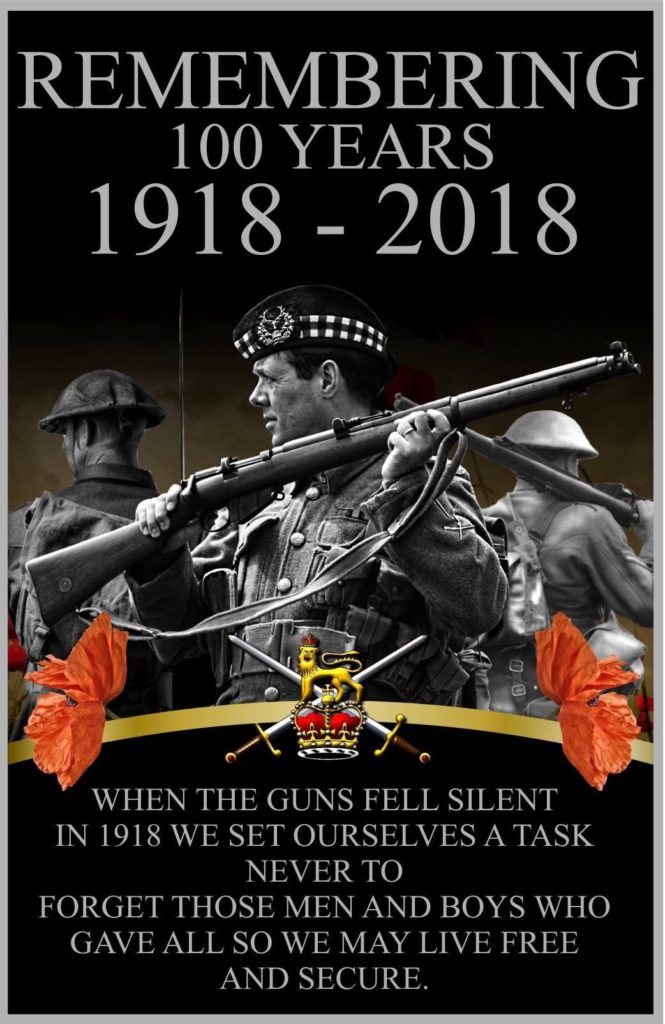
.1918 ~ This is Armistice Day or Remembrance Day or Veterans Day or Victory Day or World War I Memorial Day. The name of this special day may be different in different places throughout many nations; but its significance is the same. It was on this day, at 11 a.m., that World War I ceased. The Allied and Central Powers signed an armistice agreement at 5 a.m. in Marshal Foch’s railway car in the Forest of Compiegne, France. Even today, many still bow their heads in remembrance at the 11th hour of this the 11th day of the 11th month.
The Armistice of 11 November 1918 was the armistice that ended fighting on land, sea and air in World War I between the Allies and their opponent, Germany. Previous armistices had eliminated Bulgaria, the Ottoman Empire and the Austro-Hungarian Empire from the war.
Also known as the Armistice of Compiègne from the place where it was signed, it came into force at 11 a.m. Paris time on 11 November 1918 (“the eleventh hour of the eleventh day of the eleventh month”) and marked a victory for the Allies and a complete defeat for Germany, although not formally a surrender.
.1883 ~ Ernst Ansermet, Swiss conductor
.1927 ~ Mose Allison, American jazz pianist, trumpeter and singer
.1929 ~ Dick Clark, TV producer, host of American Bandstand, former Philadelphia DJ
.1929 ~ Andy Kirk and his orchestra recorded “Froggy Bottom” in Kansas City.
.1931 ~ Leslie Parnas, American cellist
.1932 ~ The National Broadcasting Company opened its new studios at Radio City in New York City. They celebrated with a gala program at Radio City Music Hall.
.1938 ~ Kate Smith sang God Bless America for the very first time. It would later become her signature song. Irving Berlin penned the tune in 1917 but never released it until Miss Smith sang it for the first time on her radio broadcast. Actually, the song was then 20 years old, but it had never been publicly performed before.
.1944 ~ Frank Sinatra began a long and successful career with Columbia Records.
.1964 ~ Edward Steuermann, composer, died at the age of 72. Howard Lebow, one of Mrs. O’Connor’s teachers studied under Steuermann
.1974 ~ Leonardo DiCaprio, American actor
.1979 ~ Dimitri Tiomkin passed away. He was a Russian-American film score composer and conductor.
.1992 ~ Erskine Hawkins passed away. He was an American trumpet player and big band leader.
.2000 ~ Isadore Granoff, a Ukrainian immigrant who started teaching violin lessons as a teenager and built a famed music school in Philadelphia, died in his sleep at the age of 99. Granoff taught Dizzy Gillespie, John Coltrane and others during more than a half-century at the Granoff School of Music. Granoff taught amateurs and professionals. Some of his students went on to become prominent players of classical music, jazz, swing, big band and Latin sounds. Granoff sold the school in 1970 and later stepped down from the board of directors, renouncing the new owner’s promotional tactics.
.2015 ~ Dr. Maurice Hinson died. He was one of America’s most respected authorities on piano literature. Many of the books in the OCMS library were edited by Dr. Hinson. Mrs. O’Connor took a piano pedagogy class with him several years ago and learned so much from him.
Among his outstanding achievements, he received the Lifetime Achievement Award from the Music Teachers National Association at it Washington, D.C. convention in the spring of 1994, the Outstanding Alumni Award from the University of Florida in 1990, and the Outstanding Alumni Award from the University of Michigan in the fall of 1995. Dr. Hinson has performed, lectured and given master classes worldwide. His books and editions have become classic standards in the studios of serious piano teachers and students the world over. He was awarded the Franz Liszt Medal by the Hungarian Government in 1986. Hailed as a specialist in American piano music, some of his most recent articles appear in the New Grove Dictionary of American Music in the United States.
. 1483 ~ Martin Luther, German religious reformer, composer of hymns and flutist
1668 ~ François Couperin, French composer and organist
Read more about Couperin
.1888 ~ Fritz Kreisler, a 13-year-old violinist from Vienna, made his American debut in New York City.
.1900 ~ “Floradora” opened in New York City this day. The play was received by cheering audiences.
.1928 ~ Ennio Morricone, Italian composer/musician
.1939 ~ Muggsy Spanier and his band recorded Dipper Mouth Blues on Bluebird Records.
1944 ~ Tim Rice, British author and librettist
Read more about Rice
.1956 ~ Billie Holiday returned to the New York City stage at Carnegie Hall after a three-year absence. The concert was called a high point in jazz history.
.1969 ~ “Can you tell me how to get … how to get to Sesame Street?” The classic, “Sesame Street” debuted on 170 Public Broadcasting stations and 20 commercial outlets. Created by the Children’s Television Workshop, the show starred endearing characters including Gordon, Susan, Bob, Bert, Ernie, the Cookie Monster, Oscar the Grouch and, of course, Big Bird!
.1986 ~ “Bruce Springsteen & The E Street Band Live/1975-85”, the long-anticipated album by ‘The Boss’, hit record stores this day. Fans made the LP a one~day sellout, buying over a million copies and generating more first-day dollars than any record in 30 years. It’s a five-disc, 40-song set.
.1993 ~ “Joseph and the Amazing Technicolor Dreamcoat” opened at Minskoff Theater in New York for 223 performances
.1994 ~ Carmen McRae passed away
.2014 ~ “Uptown Funk” single released by Bruno Mars (Billboard Song of the Year 2015, Grammy Record Of The Year, Grammy Song of the Year 2016)
.2015 ~ Allen Toussaint passed away. He was a New Orleans-based pianist, songwriter and Rock and Roll Hall of Famer.
.2015 ~ Robert Lawson Craft died. He was an American orchestral conductor, scholar and writer. Mr. Craft spent nearly a quarter-century as Stravinsky’s amanuensis, rehearsal conductor, musical adviser, globe-trotting traveling companion and surrogate son. After Stravinsky’s death in 1971, at 88, he was a writer, lecturer, conductor, public intellectual and keeper of the Stravinskian flame.
1881 ~ Johannes Brahms gave the first performance of his Piano Concerto No.2 in Budapest.
.1899 ~ “Mezz” Mezzrow, American jazz clarinetist and saxophonist
.1929 ~ Piero Cappuccili, Italian baritone
.1930 ~ Ivan Moravec, Czech pianist
.1938 ~ 24-year-old Mary Martin made her Broadway stage debut in the musical comedy “Leave It to Me”. She brought down the house as she sang My HeartBelongs to Daddy. And the critics raved about New York’s bright new star. The following year brought Martin a top-ten hit with the same song. Martin suddenly found herself singing duets with Bing Crosby; starring on “Broadway in One Touch of Venus” in 1943; “Lute Song” in 1946; touring in “Annie Get Your Gun”; and then taking on what would become her immortal role, that of Nellie in “South Pacific”. South Pacific was one of Broadway’s biggest hits and the cast album was one of the first of its kind, also a big seller. Then came Mary’s stage and TV performances as Peter Pan. This would become her signature role, a memorable moment as the petite actress flew through the air with Tinkerbell and fought the dangerous Captain Hook. Broadway called to Mary Martin again in 1959 for “The Sound of Music” and once more in 1966 for “I Do, I Do”. Back in 1951, Mary Martin recorded a duet with a young man who was also destined for instant and long-term stardom. The song they sang together was Get Out Those Old Records. The twenty-year-old was her son, Larry Hagman, who later played J.R. Ewing. This is one man that Mary Martin didn’t want to wash out of her hair!
.1955 ~ Harry Belafonte recorded Jamaica Farewell and Come Back Liza for RCA Victor. The two tunes completed the Calypso album which led to Belafonte’s nickname, ‘Calypso King’.
.1967 ~ The first issue of Rolling Stone was published. John Lennon was on the cover. The magazine said it was not simply a music magazine but was also about “…the things and attitudes that music embraces.”
.1969 ~ Simon and Garfunkel recorded what would become their signature tune, ‘Bridge Over Troubled Water’ with a future member of Bread, Larry Knechtel on piano. Art wanted Paul to sing the song, but Paul insisted that Art’s voice was better suited for it. It was a decision that Paul would later say he regretted. The song won five awards at the 13th Annual Grammy Awards in 1971, including Grammy Award for Record of the Year and Song of the Year.
.1974 ~ Bachman Turner Overdrive went to No.1 on the US singles chart with ‘You Ain’t Seen Nothin’ Yet’. Randy Bachman stuttered through the lyrics of the demo recording as a private joke about his brother Gary, who had a speech impediment. The record company liked that take better than the non-stammering version and released it.
.2003 ~ Saxophonist Buddy Arnold, who performed with such jazz greats as Stan Kenton, Buddy Rich and Tommy Dorsey and co-founded a program to help musicians suffering from drug and alcohol abuse, died at the age of age 77. Born Arnold Buddy Grishaver, he began playing the saxophone at age 9. And by the time he was 16, he was touring as a professional sideman and performing at the Apollo Theater in Harlem with bandleader George Auld. After serving in the Army during World War II, Arnold joined the band of super-drummer Buddy Rich on a West Coast tour. Arnold earned his first recording credits in 1949 on the Mercury Records release of Gene Williams and the Junior Thornhill Band, and he toured with clarinetist Buddy DeFranco’s orchestra in 1951. But he soon descended into a decades-long struggle with drug addiction. Although he landed a recording contract with ABC Paramount in 1956 following an 18-month hospitalization, he was sentenced to prison in 1958 on an attempted burglary conviction. Pardoned two years later, he played with the Dorsey Band and toured with Stan Kenton. He later settled in Los Angeles and recorded four albums for Capitol Records. Arnold took a job in a drug treatment program after his early release from prison and went on to establish the Musician’s Assistance Program with his wife, Carole Fields, in 1992. The organization, dedicated to helping needy musicians obtain treatment for drug and alcohol addiction, has served more than 1,500 individuals during the past decade.
.1880 ~ Sarah Bernhardt made her American stage debut. Bernhardt appeared in Adrienne Lecouvreur in New York City.
.1890 ~ Caesar-Auguste Franck, Belgian organist/composer died in Paris
.1921 ~ Jerome Hines, American bass
.1924 ~ Sergei Mikhailovich Lyapunov, Russian pianist and composer
.1927 ~ Patti Page, American singer of popular music
.1927 ~ Chris Conner, Singer
.1932 ~ The team of Jerome Kern and Oscar Hammerstein II debuted with their show, Make Mine Music. The Broadway production continued for 342 performances.
.1939 ~ This day marked Frank Sinatra’s last recording session with the Harry James Band. Sides recorded were Every Day of My Life and Ciribiribin.
.1939 ~ “Life With Father” premiered on Broadway in New York City. Eight years later, the show broke the existing record for longest-running stage production.
.1941 ~ Rodney Slater, Saxophone, trumpet with The Bonzo Dog Doo-Dah Band
.1944 ~ Bonnie Bramlett, Songwriter, singer with Delaney and Bonnie and Friends
.1946 ~ Roy Wood (Ulysses Adrian Wood), Singer, songwriter, formed Electric Light Orchestra
.1947 ~ Minnie (Julia) Riperton, Singer
.1949 ~ Alan Berger, Bass with Southside Johnny & The Asbury Jukes
.1949 ~ Bonnie Raitt, American blues-rock singer and guitarist, won the Grammy Award in 1990, daughter of actor, John Raitt
.1954 ~ Ricki Lee Jones, Singer
.1958 ~ Terry Lee Miall, Drummer with Adam & The Ants
.1964 ~ Judy Garland and her daughter, Liza Minnelli, appeared together at the London Palladium. The program was shown on U.S. TV; and the LP, Live at the London Palladium became a classic on Capitol Records.
.1967 ~ The first solo movie by a Beatle opened in the U.S. It was John Lennon’s How I Won the War.
.2003 ~ Henry Phace Roberts, a tap dancer who performed with the Copasetics, the Five Blazers and the Three Rockets, died. He was 92. Roberts performed on television on “The Tonight Show” and “The Ed Sullivan S Show” and was in the films “Cabin in the Sky,” “Stormy Weather” and “The Cotton Club.” Born in Savannah, Ga., he was trained to tap dance on the streets as a child. Roberts began dancing professionally at 14, and performed for the last time at 87 with the Copasetics on a European tour.


 1894 ~ Anton Rubinstein, Russian composer and pianist, died at the age of 64