• 1926 ~ Benny Goodman played a clarinet solo. This was not unusual for Benny except that it was his first time playing solo within a group recording session. Goodman was featured with Ben Pollack and His Californians on He’s the Last Word.
• 1930 ~ Peter Warlock [Philip Heseltine], British composer and music critic, died of a probable suicide at the age of 36
• 1936 ~ Tommy Steele (Hicks), Singer, actor
• 1937 ~ Art Neville, Keyboards, percussion, singer with The Neville Brothers
• 1937 ~ Nat Stuckey, Country singer, songwriter
• 1939 ~ Eddie Kendricks, Singer with The Temptations
• 1942 ~ Paul Butterfield, American blues singer and harmonica player with Paul Butterfield Blues Band
• 1943 ~ Dave Dee (Harmon), Tambourine, singer, record promoter
• 1955 ~ Carl Perkins wrote Blue Suede Shoes. Less than 48 hours later, he recorded it at the Sun Studios in Memphis. The tune became one of the first records to be popular simultaneously on rock, country and rhythm & blues charts.
• 1958 ~ Mike Mills, Bass with R.E.M
• 1961 ~ Sarah Dallin, Singer with Bananarama
• 1969 ~ Tiny Tim (Herbert Buchingham Khaury) married Miss Vickie (Victoria Budinger) on The Tonight Show starring Johnny Carson. This is the Tiny Tim of the falsetto version of Tiptoe Through the Tulips fame. The NBC-TV program earned the second-highest, all-time audience rating; second only to Neil Armstrong’s walking on the moon. Mr. Tiny Tim and Miss Vickie had a daughter, Tulip. Then in 1977 they stopped tiptoeing together.
• 1969 ~ Chicago Transit Authority became a gold record for the group of the same name (they later changed their name to Chicago). When the album was released by Columbia Records, it marked the first time an artist’s debut LP was a double record.
• 1970 ~ The Beach Boys played to royalty at Royal Albert Hall in London. Princess Margaret was in attendance and shook the royal jewelry to such classics as Good Vibrations, I Get Around and Help Me, Rhonda.
• 1977 ~ Elvis Costello, making a rare TV appearance, agreed to perform on NBC’s Saturday Night Live.
• 1978 ~ Don Ellis passed away
• 1999 ~ Rex Allen passed away
• 2004 ~ Johnnie Carl, Crystal Cathedral Orchestra conductor, took his life. Mr. Carl has been in the employment of the Crystal Cathedral for nearly 30 years and was internationally renowned as a conductor and as a composer and arranger of over 3,500 musical pieces. He was 57 years old.
• 2018 ~ Galt MacDermot, Canadian musician and composer (Hair), died at the age of 89
• 2018 ~ Raven Wilkinson, American ballerina, first African American woman to dance with a major ballet company, died at the age of 83
• 1911 ~ “Spike” (Lindley Armstrong) Jones, American drummer, bandleader of satiric music
• 1913 ~ Dan Dailey, Singer, dancer, actor
• 1914 ~ Rosalyn Tureck, American pianist and harpsichordist
• 1920 ~ Clark Terry, Trumpet, flugelhorn with Lionel Hampton, Count Basie, Duke Ellington, Quincy Jones
• 1928 ~ America’s original Funny Girl, Fanny Brice, recorded If You Want the Rainbow, a song from the play, My Man, on Victor Records.
• 1932 ~ Abbe Lane (Lassman), Singer, glamour actress, photographed in a bathtub filled with coffee, bandleader Xavier Cugat’s ex-wife
• 1936 ~ You Can’t Take It with You opened at the Booth Theatre in New York City.
• 1946 ~ Patty Duke, US film actress
• 1947 ~ Christopher Parkening, American guitarist
• 1953 ~ Fred Allen returned from semi-retirement to narrate Prokofiev’s classic, Peter and the Wolf, on the Bell Telephone Hour on NBC radio.
• 1963 ~ Singer Dinah Washington died in Detroit.
• 1970 ~ George Harrison received a gold record for his single, My Sweet Lord.
• 1983 ~ The musical biography of Peggy Lee opened at the Lunt-Fontanne Theatre in New York City. The show was titled Peg.
• 1984 ~ The Cotton Club opened around the U.S. There were nine classic songs by Duke Ellington on the soundtrack of the movie.
• 1990 ~ Opera lovers were turned into couch potatoes. For four evenings, starting on this day, they watched and listened to an unabridged telecast of Richard Wagner’s marathon-length opera The Ring.
• 2001 ~ Conte Candoli, a Trumpet player and staple of The Tonight Show band during Johnny Carson’s era, died of cancer. He was 74. Candoli was recognized for developing a musical style based on Dizzy Gillespie’s bebop playing, with a touch of Miles Davis and Clifford Brown. The Indiana-born Candoli, grew up surrounded by musical instruments and influences. His father, a factory worker, played the trumpet and wanted Candoli and his brother Pete to become musicians. At 16, he worked in Woody Herman’s orchestra during summer vacations. While playing in California, Candoli began his association with the then New York-based Tonight Show. In 1972, when Carson moved the show to Burbank, Candoli joined the band. He left when Carson retired in 1992.
• 1791 ~ Peter Joseph Von Lindpaintnerr, German composer,
• 1837 ~ Charles-Emile Waldteufel, French pianist, conductor and composer of dance music
• 1882 ~ Joaquín Turina, Spanish pianist and composer
• 1906 ~ Freddy Martin ‘Mr. Silvertone’, Tenor sax, bandleader
• 1915 ~ Elisabeth Schwarzkopf, German soprano
• 1926 ~ Benny Goodman’s first recording session was this day. He played clarinet with the Ben Pollack Orchestra on a tune titled Downtown Shuffle on Victor Records. Goodman, incidentally, was all of 17 years old.
• 1938 ~ Tatiana Troyanos, American mezzo-soprano
• 1938 ~ David Houston, Grammy Award-winning singer, actor
• 1944 ~ Neil Innes, Keyboard, singer, songwriter with The Bonzo Dog Doo-Dah Band
• 1950 ~ Joan Armatrading, British rock singer and songwriter
• 1953 ~ Frank Sinatra recorded Young At Heart. The song was turned down by Nat ‘King’ Cole and other artists, believe it or not. It became a top hit in the U.S. in March of 1954.
• 1954 ~ Jack Hues, Singer with Wang Chung
• 1956 ~ Sylvia (Sylvia Allen), Singer
• 1956 ~ The Million Dollar Session was held at Sun Records in Memphis, TN. Elvis Presley, Johnny Cash, Carl Perkins and Jerry Lee Lewis gathered for an impromptu jam session. Six songs by the artists were recorded at this session. None of the songs was released for nearly three decades.
• 1957 ~ Donny Osmond, Singer with the Osmond Brothers, TV host of Donny and Marie, actor
• 1973 ~ Keith Moon, Rod Stewart and Roger Daltrey opened the rock opera Tommy in London. The show featuring Tommy, Pinball Wizard and other tunes, was so hot that tickets sold for $50 and up.
• 1984 ~ The Jackson’s Victory Tour came to a close at Dodger Stadium in Los Angeles after 55 performances in 19 cities. The production was reported to be the world’s greatest rock extravaganza and one of the most problematic. The Jackson brothers received about $50 million during the five-month tour of the U.S., with some 2.5 million fans in attendance.
• 2000 ~ Marina Koshetz, who followed her famous Russian diva mother Nina to the opera and concert stage and into the movies, died at the age of 88.
• 2004 ~ Country and Western singer Jerry Scoggins, whose baritone rendition of the theme song of “The Beverly Hillbillies” became one of television’s favorite tunes, died at age 93.
• 1918 ~ Milton DeLugg, Bandleader on The Tonight Show Starring Johnny Carson; Milton DeLugg and His Orchestra: Abe Burrows’ Almanac, The Chuck Barris Rah Rah Show, Dagmar’s Canteen, Doodles Weaver, The Gong Show, Judge for Yourself, Your Hit Parade; played accordion in The Milton DeLugg Quartet and songwriter
• 1928 ~ Jörg Demus, Austrian pianist
• 1934 ~ Billy Paul (Paul Williams), Singer
• 1941 ~ Tom McGuinness, Bass, guitar with Manfred Mann; McGuinness Flint; and Blues Band
• 1942 ~ Ted Bluechel, Jr., Singer, drummer with The Association
• 1944 ~ Eric Bloom, Singer, guitarist
• 1945 ~ John Densmore, Musician with The Doors
• 1950 ~ Dino Lipatti, classical pianist and composer whose career was cut short from causes related to Hodgkin’s disease, died at the age of 33
• 1952 ~ Michael McDonald, Singer, songwriter, keyboard with The Doobie Brothers
• 1960 ~ Rick Savage, Bass with Def Leppard
• 1972 ~ Motown’s Temptations reached the #1 spot on the top 40 charts with Papa Was a Rollin’ Stone. It was the fourth #1 hit for the Temptations, joining My Girl, I Can’t Get Next to You and Just My Imagination.
• 1981 Hershy Kay, composer, died at the age of 62. Union Jack is a ballet made by New York City Ballet co-founder and founding choreographer George Balanchine to traditional British tunes, hornpipe melodies and music-hall songs, ca. 1890–1914, adapted by Hershy Kay. The premiere took place on 13 May 1976, at the New York State Theater, Lincoln Center, to honor British heritage in the United States its bicentennial with costumes by Rouben Ter-Arutunian, original lighting by Ronald Bates and current lighting by Mark Stanley. At the finale, the ensemble spells out “God Save the Queen” in semaphore code and the Union Jack unfurls. Principal dancer Jock Soto included an excerpt from Union Jack in his farewell performance in June 2005.
. 1710 ~ Wilhelm Friedemann Bach, composer, son of J.S. Bach
. 1880 ~ Lillian Russell made her vaudeville debut, in New York City.
. 1899 ~ Hoagy (Hoagland Howard) Carmichael, American jazz pianist and songwriter, singer, bandleader, attorney
. 1909 ~ Helen Hayes appeared for the first time on the New York stage. She was a member of the cast of In Old Dutch, which opened at the Herald Square Theatre.
1913 ~ Lord Benjamin Britten, British composer
Read quotes by and about Britten
More information about Britten Grammy winner
. 1925 ~ Gunther Schuller, American composer, conductor, French-horn player and educator
. 1938 ~ Bunny Berigan and his orchestra recorded Jelly Roll Blues on Victor Records. The tune became a standard for the band.
. 1943 ~ Floyd Sneed, Drummer with Three Dog Night
. 1946 ~ Aston Barrett, Musician with ‘Family Man’, bass with Bob Marley & The Wailers
. 1949 ~ Steve ‘Miami’ Van Zandt, Singer, songwriter, guitar
. 1950 ~ Tina (Martina) Weymouth, Bass with Talking Heads
. 1953 ~ Craig Hundley, Pianist with the Craig Hundley Trio
. 1955 ~ RCA paid the unheard of sum of $25,000 to Sam Phillips of Memphis, TN for the rights to the music of a truck driver from Tupelo, Mississippi: Elvis Presley. Thanks to negotiations with Elvis’ manager, Colonel Tom Parker, RCA tossed in a $5,000 bonus as well, for a pink Cadillac for Elvis’ mother.
. 1957 ~ The Miles Davis Quintet debuted with a jazz concert at Carnegie Hall in New York.
. 1965 ~ The production of Man of LaMancha, including the classic The Impossible Dream, opened in New York City for the first of 2,328 performances.
. 1975 ~ Dr. Zhivago appeared on TV for the first time. The production, including Somewhere My Love, had earned $93 million from theater tickets over ten years. NBC paid $4 million for the broadcast rights.
. 1977 ~ Tony Orlando returned to the concert stage after a self-imposed, three-month retirement following the suicide death of his good friend, Freddie Prinze. Orlando appeared in concert in San Carlos, California.
. 2001 ~ Norman Granz, the impresario who helped make jazz more accessible to the public while making the music business fairer to black performers, died in Geneva, Switzerland, of complications from cancer. He was 83. Granz owned four labels – Clef, Norgran, Verve and Pablo – and at one time or another recorded most of the major names in jazz, including Louis Armstrong, Count Basie, Duke Ellington, Ella Fitzgerald, Dizzy Gillespie, Billie Holiday, Charlie Parker and Oscar Peterson. Many historians credit him with bringing top jazz performers in integrated bands into venues across the country through a series called Jazz at the Philharmonic. Granz’s efforts also helped end a system in which white performers generally earned far more than blacks. He insisted on equality in pay, dining and accommodations for his musicians. In 1947, he told Down Beat magazine that he lost $100,000, then a sizable sum, by turning down bookings in segregated concert halls.
• 1569 ~ Paul Sartorius, German organist and composer
• 1615 ~ Guillaume Dumanoir, II, French violinist and composer who composed dance music enjoyed by Louis XIV
• 1667 ~ Nathaniel Schnittelbach, composer, died at the age of 34
• 1715 ~ Girolamo Abos, composer of Italian opera and church music.
• 1720 ~ Carlo Antonio Campioni, Italian composer.
• 1757 ~ Daniel Read, American composer of the First New England School, and one of the primary figures in early American classical music.
• 1775 ~ Karl Marian Paradeiser, German composer, died at the age of 28.
• 1780 ~ Robert Archibald Smith, English composer.
• 1829 ~ Anton G Rubinstein, Russian pianist/conductor/composer
• 1840 ~ Frederick Scotson Clark, composer.
• 1848 ~ Frédéric Chopin played his final piano concert at a Polish benefit ball at Guildhall in London.
• 1850 ~ Giuseppe Verdi‘s opera Stifellio was first performed at the Teatro Grande in Trieste despite difficulties with the censors which resulted in cuts and changes.
• 1852 ~ Minnie Hauk, American soprano
• 1854 ~ First Performance of Anton Rubinstein‘s Ocean Symphony in Leipzig.
• 1860 ~ Edmund Scheucker, Viennese harpist.
• 1861 ~ Vaclav Suk, Czech-born Russian composer and violinist.
• 1861 ~ First Performance of Johannes Brahms‘ Piano Quintet No. 1 in g, Op. 25, at a rehearsal in Hamburg, with pianist Clara Schumann.
• 1862 ~ The work noted above received its official premiere with members of the Hellmesberger Quartet; Brahms at the piano, in Vienna.
• 1870 ~ Alfred Hill, Australian composer
• 1873 ~ David Karl Björling, Swedish tenor
• 1873 ~ W.C. Handy, American blues composer and bandleader
More information about Handy
• 1889 ~ George S. (Simon) Kaufman, Playwright: The Cocoanuts, A Night at the Opera, with Moss Hart, The Man Who Came to Dinner, You Can’t Take It with You
• 1893 ~ George Alexander Osborne, Irish pianist and composer (La Pluie de perles), died of natural causes at the age of 87
• 1894 ~ Debut of opera star Enrico Caruso in Mario Morelli’s L’Amico Francesco at Naples Teatro Nuovo.
• 1895 ~ Paul Hindemith, German-born American composer and conductor
Read quotes by and about Hindemith
More information about Hindemith
• 1896 ~ Lawrence Mervil Tibbett, American baritone
• 1905 ~ Eddie (Albert) Condon, Guitarist, bandleader, promoter of Dixieland Jazz
• 1908 ~ Conductor Arturo Toscanini made his debut in the United States this day. He appeared at the Metropolitan Opera House in New York, conducting Aida.
• 1931 ~ Bob Gibson, Singer, songwriter, leader of folk music movement in late ’50s, duo of Gibson and (Bob) Camp
• 1932 ~ The Palace in New York City closed its doors. It was the most famous vaudeville theater in America. Later, it became a movie house with live performances preceding the flicks; most notably: the team of Dean Martin and Jerry Lewis in their heyday.
• 1935 ~ The Rodgers and Hart musical, Jumbo, opened in New York City for a run of 233 performances.
• 1937 ~ Bob Crosby and his orchestra recorded South Rampart Street Parade on Decca Records.
• 1945 ~ Martine Van Hammel, Ballet, American Ballet Theatre
• 1955 ~ ‘Tennessee’ Ernie Ford drove to the top spot on the record charts on this day. Sixteen Tons, where he owed his “soul to the company store…”, became the fastest-selling record in history, jumping to #1 in just 3 weeks. The tune, on Capitol Records, stayed at #1 for eight weeks.
• 1964 ~ Albert Hay Malotte, composer, died at the age of 69
• 1964 ~ Diana Krall, Canadian Jazz pianist and singer
• 1970 ~ Anne Murray received a gold record for Snowbird. She was the first Canadian recording artist to receive a gold record.
• 2000 ~ Russ Conway, a British pianist known as the “Prince Charming of Pop” who sold
More than 30 million records in the 1950s and ’60s, died at age 75. He had 17 consecutive hits in the late 1950s and early 1960s, and won a silver disc when his record Roulette topped 250,000 sales – a total rapidly equaled by three other hits, Sidesaddle, China Tea and Snow Coach. Conway’s formal piano education consisted of one lesson at age 4. He left school at 14 and got work in a lawyer’s office. But he was sent to juvenile detention for three years for taking money he found in a package. In a detention center, he found a piano to play. While doing a stint as a pianist in a club, he was discovered by choreographer Irving Davies. He went on to provide piano accompaniment to a string of singers. Soon he was composing the songs that made him famous and won him the nicknames “Prince Charming of Pop” and the “Sheik of the Keyboard.”
• 2001 ~ Blue guitarist and singer Isaac Scott, a major figure in the city’s music scene for more than a quarter century, died of complications from diabetes. He was 56. A stream of musicians paid their respects to Scott, said his ex-wife, Eloise DePoe. He was found in his apartment Nov. 4 and never regained consciousness. Scott recorded several albums, including “The Isaac Scott Band,” “Big Time Blues Man” and “High Class Woman.” He also appeared on the compilation albums “Live at the San Francisco Jazz Festival” and “Live at the Roadhouse.” Primarily a “cover artist,” Scott did not write his own songs, which hindered national recognition. But he received several local honors, including the Washington Blues Society’s Hall of Fame (1991) and lifetime-achievement (2000) awards. He also performed at last year’s opening of the Experience Music Project. Scott taught himself piano and guitar, and started out playing gospel music, once touring the West Coast with the Five Blind Boys of Mississippi. In 1974, he turned his attention to blues, with a sound flavored by his love of Seattle-born guitar legend Jimi Hendrix. Like Albert Collins, an early influence, Scott played electric guitar with his thumb instead of a pick, which contributed to his distinctive sound. He also was known for his stamina, often playing two- and three-hour sets.
• 2001 ~ Tommy Flanagan, a jazz pianist who worked with such artists as Ella Fitzgerald, died of an arterial aneurysm. He was 71. Flanagan, part of his own classic jazz trio, accompanied Fitzgerald for 20 years, also acting as her musical director. He also worked for Tony Bennett. He became a celebrated figure in jazz with such trio albums as “Jazz Poet” (1989) and “Let’s” (1993). Flanagan’s trio included bassists George Mraz and Peter Washington, and drummers Kenny Washington, Lewis Nash and Albert Heath. Flanagan won the distinguished Danish Jazzpar Prize in 1993. Born in Detroit, Flanagan was the youngest of six children. He recorded “Sunset and the Mockingbird: The Birthday Concert,” live at the Vanguard in 1998. He was to appear at Iridium this holiday season.
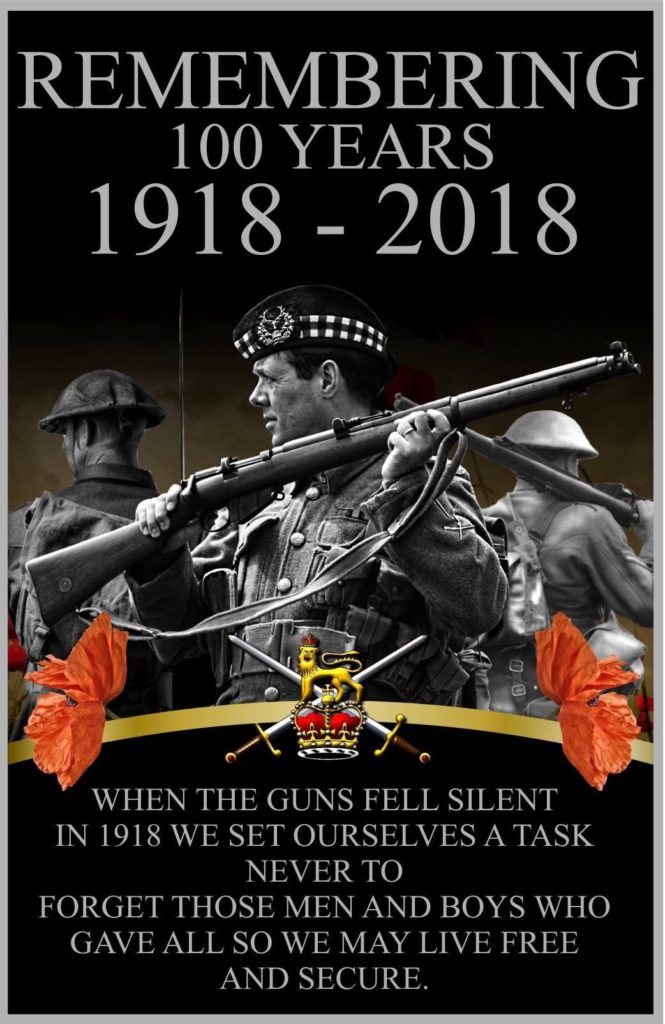
.1918 ~ This is Armistice Day or Remembrance Day or Veterans Day or Victory Day or World War I Memorial Day. The name of this special day may be different in different places throughout many nations; but its significance is the same. It was on this day, at 11 a.m., that World War I ceased. The Allied and Central Powers signed an armistice agreement at 5 a.m. in Marshal Foch’s railway car in the Forest of Compiegne, France. Even today, many still bow their heads in remembrance at the 11th hour of this the 11th day of the 11th month.
The Armistice of 11 November 1918 was the armistice that ended fighting on land, sea and air in World War I between the Allies and their opponent, Germany. Previous armistices had eliminated Bulgaria, the Ottoman Empire and the Austro-Hungarian Empire from the war.
Also known as the Armistice of Compiègne from the place where it was signed, it came into force at 11 a.m. Paris time on 11 November 1918 (“the eleventh hour of the eleventh day of the eleventh month”) and marked a victory for the Allies and a complete defeat for Germany, although not formally a surrender.
.1883 ~ Ernst Ansermet, Swiss conductor
.1927 ~ Mose Allison, American jazz pianist, trumpeter and singer
.1929 ~ Dick Clark, TV producer, host of American Bandstand, former Philadelphia DJ
.1929 ~ Andy Kirk and his orchestra recorded “Froggy Bottom” in Kansas City.
.1931 ~ Leslie Parnas, American cellist
.1932 ~ The National Broadcasting Company opened its new studios at Radio City in New York City. They celebrated with a gala program at Radio City Music Hall.
.1938 ~ Kate Smith sang God Bless America for the very first time. It would later become her signature song. Irving Berlin penned the tune in 1917 but never released it until Miss Smith sang it for the first time on her radio broadcast. Actually, the song was then 20 years old, but it had never been publicly performed before.
.1944 ~ Frank Sinatra began a long and successful career with Columbia Records.
.1964 ~ Edward Steuermann, composer, died at the age of 72. Howard Lebow, one of Mrs. O’Connor’s teachers studied under Steuermann
.1974 ~ Leonardo DiCaprio, American actor
.1979 ~ Dimitri Tiomkin passed away. He was a Russian-American film score composer and conductor.
.1992 ~ Erskine Hawkins passed away. He was an American trumpet player and big band leader.
.2000 ~ Isadore Granoff, a Ukrainian immigrant who started teaching violin lessons as a teenager and built a famed music school in Philadelphia, died in his sleep at the age of 99. Granoff taught Dizzy Gillespie, John Coltrane and others during more than a half-century at the Granoff School of Music. Granoff taught amateurs and professionals. Some of his students went on to become prominent players of classical music, jazz, swing, big band and Latin sounds. Granoff sold the school in 1970 and later stepped down from the board of directors, renouncing the new owner’s promotional tactics.
.2015 ~ Dr. Maurice Hinson died. He was one of America’s most respected authorities on piano literature. Many of the books in the OCMS library were edited by Dr. Hinson. Mrs. O’Connor took a piano pedagogy class with him several years ago and learned so much from him.
Among his outstanding achievements, he received the Lifetime Achievement Award from the Music Teachers National Association at it Washington, D.C. convention in the spring of 1994, the Outstanding Alumni Award from the University of Florida in 1990, and the Outstanding Alumni Award from the University of Michigan in the fall of 1995. Dr. Hinson has performed, lectured and given master classes worldwide. His books and editions have become classic standards in the studios of serious piano teachers and students the world over. He was awarded the Franz Liszt Medal by the Hungarian Government in 1986. Hailed as a specialist in American piano music, some of his most recent articles appear in the New Grove Dictionary of American Music in the United States.
• 1894 ~ Albert Stoessel, American conductor and composer
• 1918 ~ Jerome Robbins (Rabinowitz), Academy Award-winning director of “West Side Story” in 1961, Tony Award-winning choreographer of “Fiddler on the Roof” in 1965, West Side Story in 1958, “High Button Shoes” in 1948, Tony Award-winning director of “Fiddler on the Roof” in 1965, Jerome Robbins’ Broadway in 1989.
• 1919 ~ Art Blakely, American jazz drummer, bandleader, composer
• 1932 ~ Dottie West (Dorothy Marie Marsh), Grammy Award-winning singer
• 1939 ~ One of the classics was recorded this day. Body and Soul, by jazz great Coleman Hawkins, was waxed on Bluebird Records. It’s still around on CD compilations.
• 1940 ~ Glenn Miller recorded Make Believe Ballroom Time for Bluebird Records at the Victor studios in New York City. It would become the theme song for Make Believe Ballroom on WNEW, New York, with host Martin Block. Block created the aura of doing a ‘live’ radio program, complete with performers (on records) like Harry James or Frank Sinatra, from the ‘Crystal Studios’ at WNEW. His daily program was known to everyone who grew up in the NYC/NJ/Philadelphia area in the 1940s and 1950s. Miller had been so taken with the show’s concept that he actually paid for the Make Believe Ballroom Time recording session himself and hired the Modernaires to join in.
• 1943 ~ Gene Watson, Singer
• 1946 ~ Viktor Tretyakov, Russian violinist
• 1948 ~ Starting this night and for 792 performances, the musical, “Where’s Charley?”, played on Broadway. It included the show-stopping hit song: Once in Love with Amy.
• 1949 ~ Daryl Hall (Hohl), Singer
• 1950 ~ Andre Woolfolk, Reeds with Earth, Wind and Fire
• 1955 ~ Lindy (Linda) Boone, Singer with The Boone Family, singer Pat Boone’s daughter
• 1967 ~ The Doors appeared at Danbury High School, Danbury, Connecticut. Before the group came on stage an announcer told the audience not to leave their seats during the performance or they would be escorted out of the venue. There was also a beauty pageant just prior to The Doors coming on stage.
• 1969 ~ One hit wonders Jane Birkin and Serge Gainsbourg were at No.1 on the UK singles chart with ‘Je t’aime… Moi non plus.’ Banned by many radio stations for its sexual content and sounds and for first time in the history of the show, the BBC’s Top Of The Pops producers refused to air the No. 1 song.
• 1996 ~ Johnny Costa, jazz pianist (Mr. Rogers), died at the age of 74
• 2001 ~ Beni Montresor, a Tony award-winning set and costume designer who was also known for his plays and children’s books, died at age 75. Montresor worked as a set designer at Rome’s Cinecitta Studios. In 1960, he moved to New York, where he designed sets and costumes for both Italian and New York theatrical and operatic productions and began to write and illustrate children’s books. In 1986, he won a Tony, Broadway’s highest award, for scenic design in The Marriage of Figaro.
• 1898 ~ Alfred Wallenstein, American cellist and conductor
• 1911 ~ Jo (Jonathan) Jones, Drummer, piano, reeds, trumpet. The first to minimize use of bass drum, keeping time on top cymbal. He played with Count Basie, Benny Goodman sextet.
• 1911 ~ Vaughn Monroe, Bandleader, singer
• 1922 ~ Martha Stewart (Haworth), Singer
• 1927 ~ Al Martino (Cini), Singer
• 1936 ~ Charles Dutoit, Symphony orchestra conductor
• 1940 ~ Artie Shaw’s orchestra recorded Hoagy Carmichael’s standard, Stardust, for Victor Records.
• 1942 ~ TIME magazine described Command Performance, which debuted this day, as “…the best wartime program in radio.” The show was originally produced by the U.S. War Department in cooperation with Armed Forces Radio Services specifically for those in the military overseas. It continued until 1949 and was reprised for more than three decades in syndication. Command Performance was hosted by Bob Hope, Bing Crosby, Don Wilson and Harry Von Zell and featured just about every major Hollywood and Broadway star.
• 1945 ~ Kevin Godley, Drummer, singer with 10cc
• 1949 ~ David Hope, Bass with Kansas
• 1950 ~ The Frank Sinatra Show debuted. It was the crooner’s first plunge into TV, the beginning of a $250,000 per year, five-year contract. Ben Blue, The Blue Family, the Whippoorwills and Axel Stordahl’s orchestra were regulars on the show.
• 1951 ~ John Cougar Mellencamp, Singer
• 1953 ~ Tico Torres, Drummer with Bon Jovi
• 1955 ~ Yo-Yo Ma, Chinese-born American cello virtuoso
• 1969 ~ Put on your headband, love beads, surfer’s cross and give the peace sign. It was on this day that The Youngbloods hit, Get Together, passed the million-selling mark to achieve gold record status.
• 1982 ~ “Cats”, another musical hit by Andrew Lloyd Webber, began a long Broadway run. It’s most memorable for its song, Memories. Cats ended on September 10, 2000.
• 1995 ~ Alanis Morissette went to No.1 on the US album chart with her third album Jagged Little Pill. The record produced six successful singles, including ‘You Oughta Know’, ‘Ironic’, ‘You Learn’, ‘Hand in My Pocket’, and ‘Head over Feet’ and went on to become the biggest selling album ever by a female artist with sales over 30m. Do you have a favorite track from the album?
• 2000 ~ Dennis Sandole, a jazz guitarist and mentor to John Coltrane, died at 87. Beginning in the early 1940s, Sandole played with some of the major swing-era bands of the time, including those led by Charlie Barnet, Boyd Raeburn, Tommy Dorsey and Ray McKinley. He also recorded film soundtracks and played at recording sessions for Frank Sinatra and Billie Holiday. Sandole was a mentor to jazz giantJohn Coltrane from 1946 to the early 1950s, teaching him music theory and exposing him to music from other cultures. He recorded some of his own music, including “Modern Music From Philadelphia” in 1956. In 1999 Cadence Jazz released “The Dennis Sandole Project,” which contained parts of a jazz ballet/opera he wrote in the 1960s and 70s called “Evenin’ Is Cryin'”. Sandole published a book, “Guitar Lore,” in 1981.
• 2003 ~ Arthur Berger, a composer, critic and teacher who was an influential analyst of contemporary music, died of heart failure. He was 91. In 1943, Berger began a decade as a music critic for the New York Herald Tribune. Later, he was one of the founders of the periodical Perspectives of New Music. In 1953, he published the first book-length study of composer Aaron Copland. Berger’s “Ideas of Order” premiered with the New York Philharmonic in 1952. His primary interest as a composer, however, was in chamber music and in music for the piano. His neoclassicalQuartet for Winds is probably his most performed work. Igor Stravinsky admired Berger’s music, and Copland wrote of its distinction, craftsmanship, individuality and idiosyncrasy. Over his career, Berger taught at Mills College in California, Brandeis University and the New England Conservatory of Music. Berger celebrated his 90th birthday last year by publishing a collection of essays, “Reflections of an American Composer.”
• 2003 ~ William Bennett, whose Manhattan music studio gave hope to those with aspirations of escaping the corporate world to become rock stars, Oct. 7 from injuries he received in a car accident. He was 49. Bennett bought Off Wall Street Jam in 1997. The TriBeCa studio became a place where he mentored other musicians and helped to arrange music engagements at city clubs. Bennett grew up on the Upper East Side in a show business family. He majored in music in college and played guitar in bands like the Immortal Primitives, which had opened for the Ramones. But he eventually wound up working at a photography agency and did not play guitar for years. A friend advised him to purchase the studio, which grew to more than 400 dues-paying members.
• 2003 ~ John Pagaard “Johnnie” Jessen, a former vaudeville saxophone player and University of Washington instructor who inspired pop musician Kenny G, died at the age of 94. At Jessen’s retirement from the university in 1989, Kenny Gorelick, who shortened his name to Kenny G for performing and recording, said 12 years of working with Jessen were crucial to his success. “I made a breakthrough after I started studying with Johnnie,” he said. “One morning I woke up and I could play twice as fast. He had this great tone on flute, and got me to the point where I was doubling on clarinet and flute.” The son of Danish immigrants, Jessen was playing the violin at parties by age 9 and soon afterward formed his first band, the Rinky Dinks. He went on to play on cruise ships crisscrossing the Pacific Ocean in the 1920s and on the RKO vaudeville circuit behind stars such as Betty Grable, Judy Garland and Sammy Davis, Jr. in the 1930s.
1865 ~ Paul Dukas, French composer and music critic Paul Dukas’ The Sorcerer’s Apprentice was featured in the Walt Disney movie Fantasia and Fantasia 2000. More information about Dukas
• 1880 ~ A new director of the United States Marine Corps Band was named. It was fitting that John Philip Sousa have that position. He composed the Marine Corps hymn, Semper Fidelis.
1904 ~ Vladimir Horowitz, Russian-born American concert pianist
More information about Horowitz
• 1926 ~ Max Morath, Ragtime pianist
• 1926 ~ Roger Williams (Louis Weertz), Pianist
• 1928 ~ Duke Ellington recorded The Mooche on the Okeh label.
• 1928 ~ Forever, by Ben Pollack and his band, was recorded on Victor Records. In Pollack’s band were two talented young musicians: Benny Goodman and Jack Teagarden.
• 1932 ~ Albert Collins, Grammy Award-winning musician, blues guitarist, songwriter, Blues Hall of Fame in 1989
• 1933 ~ Richard Harris, Actor, singer
• 1935 ~ Julie Andrews, British singer and actress.
• 1943 ~ Herb Fame (Feemster), Singer – Herb of Peaches & Herb
• 1944 ~ Scott McKenzie (Phillip Blondheim), Singer, songwriter
• 1945 ~ Donny Hathaway, Singer, sang with Roberta Flack
• 1966 ~ I Love My Dog was released by Cat Stevens. He was 19 years old. Five years later, he recorded such hits as Wild World, Morning Has Broken, Peace Train and Oh Very Young. By 1979, Cat Stevens (born Steven Demitri Georgiou), disenchanted with the music business, converted to the Islamic religion and changed his name to Yusef Islam. He may not have liked the music biz anymore but Cat still loves his dog.
• 2000 ~ Robert Allen, who composed songs performed by Tony Bennett, Johnny Mathis and Billie Holiday, died at the age of 73. Allen wrote his biggest hits with lyricist Al Stillman. The two collaborated on “Chances Are”, and “It’s Not for Me to Say”, which were major hits for Mathis, as well as a series of hits for the group The Four Lads in the mid-1950s. They also wrote “Home for the Holidays”, which has been recorded by dozens of performers, such as Garth Brooks and Andy Williams. On his own, Allen wrote the fight song for Auburn University and soundtrack music for the movies “Lizzie”, ” Enchanted Island”, and “Happy Anniversary.” In 1963, he wrote the music for and produced “Three Billion Millionaires”, a benefit album for the United Nations by Bing Crosby, Judy Garland, Danny Kaye, Sammy Davis, Jr., Jack Benny and Carol Burnett.
• 2018 ~ Charles Aznavour, French singing star, died at the age of 94

 1894 ~ Arthur Fiedler, American violinist and conductor
 Grammy winner


 MaryO'Studio