Carnegie Hall

carnegie-hall

You’ve all heard it before.  How do you get to Carnegie Hall?  Practice, practice, practice.

We took the easier route with the tour December 1, 2014.  Unfortunately, I wasn’t posting much in my travel blog yet so I don’t remember everything that happened.  I do highly recommend the tour if you’re in New York City.

If you want to go, other than  practicing, Carnegie Hall  is a concert venue in Midtown Manhattan located at 881 Seventh Avenue, occupying the east stretch of Seventh Avenue between West 56th Street and West 57th Street, two blocks south of Central Park.

carnegie-hall-map

The tour was very inexpensive, maybe $10 each.  We were taken by elevator up to the Main Hall (Isaac Stern Auditorium/Ronald O. Perelman Stage) first.  The stories that were told were fascinating!  I don’t remember most but I remember the guide telling us that after renovations audience members complained of a buzzing sound.  The floor had to be removed…

From 1995:

SOURCE OF CARNEGIE HALL COMPLAINTS DISCOVERED: CONCRETE UNDER STAGE
MARY CAMPBELL , Associated Press
Sep. 13, 1995 11:53 PM ET

NEW YORK (AP) _ For nine years, the people who run Carnegie Hall insisted there was nothing wrong with the acoustics at the famed concert hall.

Wednesday, they sang a different tune

This summer, a layer of concrete, apparently left over from a major renovation job in 1986, was discovered under the stage. The concrete was ripped out and a new floor was installed that administrators say should improve acoustics.
Since the renovation, musicians and critics have complained about the acoustics, saying the sound the hall was world famous for wasn’t the same, that the bass had become washed out and the higher instruments harsh.

Executive Director Judith Arron said Wednesday she had been assured there was no concrete under the stage since arriving at the hall in 1986.

But the tongue-in-groove maple stage floor, which usually lasts 20 years, had warped so badly after just nine years, it was difficult to push a piano across it.

The hall closed for repairs after three Frank Sinatra tribute concerts the last week in July. “As we tore the whole floor up,” Arron said, “we learned we had a lot more hard substance than we had anticipated.”

She speculated the concrete was added to reinforce the stage while scaffolding was on it during the 1986 renovation and then simply left there in workers’ haste to finish.

The concrete had been placed under two layers of plywood, on which the maple stage floor rests.

“Concrete retains moisture,” Arron said. “As the moisture collected in the concrete, it went into the plywood, which expands with moisture and pushed up the floor.”

Jim Nomikos, the hall’s director of operations, compared the removal of hundreds of pounds of concrete to “an archeological dig.”

Nomikos said the floor is now constructed the way it was from Carnegie Hall’s opening in 1891 until 1986.

“In my opinion we’re not reconstructing the floor. We just restored it,” he said. “I think what we have now is a floor that will have some resonance, as opposed to a floor that was dead.”

The project cost $180,000.

Aaron said there are no plans to sue anybody for the way the floor was laid in 1986. “We’ve been focused on doing the job right,” she said. “We think this is going to be great.”

The new floor will meet its first test Sept. 26, when the Philadelphia Orchestra plays. The hall’s official gala opening for its 105th season will be Oct. 5 by the Boston Symphony.

I remember the guide not being happy with us because I knew the answers to some of the questions she asked such as Tchaikovsky conducting at the opening.  When she mentioned that Ignacy Jan Paderewski had made his debut there,  Tom piped up that he had lived near Steinway Hall (and that Michael and I had just played there in the final concert in the old building).  She gave us the evil eye and we stopped talking so much 🙂

padereski-me

Plaque on Steinwall Hall (old building). This was just after Michael and I played there.

Paderewski

Plaque on Steinwall Hall (old building).

There were many, many pictures on the walls of people who had performed there.  All in all, a fantastic tour.  Take it if you’re in NYC!

1891 Andrew Carnegie’s new Music Hall opened

Andrew Carnegie’s new Music Hall opened with a five-day music festival beginning on May 5.

Guest of honor Pyotr Ilyich Tchaikovsky conducted his Marche Solennelle on Opening Night and his Piano Concerto No. 1 several days later.

William Tuthill’s design reflects Gilded Age architectural tastes and engineering.  Since the Hall was built shortly before the advent of structural steel construction, its walls are made of fairly heavy brick and masonry, to carry the full load of the structure without the lighter support that a steel framework soon made possible. The Italian Renaissance design of the exterior reflects the eclectic architectural tastes of the period, which look to European models of earlier centuries for inspiration.  Tuthill deliberately chose to keep the styling and decorative elements simple, elegant, and functional, focusing his energies on designing an excellent acoustic environment.

I came across this interesting 1947 movie about Carnegie Hall for my Music Studio Blog and I’m posting it here, as well.

Jascha Heifetz (violinist) Tchaikovsky – “Violin Concerto in D, First Movement” – New York Philharmonic, Fritz Reiner, conductor
Harry James (trumpeter)
Vaughn Monroe (band leader)
Jan Peerce (vocalist)
Gregor Piatigorsky (cellist)
Ezio Pinza (vocalist)
Lily Pons (vocalist)
Fritz Reiner (conductor)
Artur Rodzinski (conductor)
Arthur Rubinstein (pianist)
Rise Stevens (vocalist)
Leopold Stokowski (conductor)
Bruno Walter (conductor)
Walter Damrosch (conductor)
Olin Downes (music critic)
New York Philharmonic Quintette (John Corigliano Sr., William Lincer, Nadia Reisenberg, Leonard Rose, Michael Rosenker)
New York Philharmonic

Storyline:
A mother (Marsha Hunt) wants her son (William Prince) to grow up to be a pianist good enough to play at Carnegie Hall but, when grown, the son prefers to play with Vaughan Monroe’s orchestra. But Mama’s wishes prevail and the son appears at Carnegie Hall as the composer-conductor-pianist of a modern horn concerto, with Harry James as the soloist. Frank McHugh is along as a Carnegie Hall porter and doorman, and Martha O’Driscoll is a singer who provides the love interest for Prince. Meanwhile and between while a brigade of classical music names from the 1940’s (and earlier and later) appear; the conductors Walter Damrosch, Bruno Walter, Artur Rodzinski, Fritz Reiner and Leopold Stokowski; singers Rise Stevens, Lily Pons, Jan Peerce and Ezio Pinza, plus pianist Arthur Rubinstein, cellist Gregor Piatigorsky and violinist Jascha Heifetz.

December 29 ~ Today in Music History

today

• 1876 ~ Pablo Casals, Spanish cellist and conductor
More information about Casals

• 1912 ~ Peggy Glanville-Hicks, Australian composer and music critic

• 1922 ~ Rose Lee Maphis, Entertainer, half of the team: Mr. and Mrs. Country Music with husband Joe, Hee Haw regular

• 1942 ~ Ray Thomas, Flute, saxophone, harmonica, singer with The Moody Blues

• 1943 ~ San Fernando Valley was recorded by Bing Crosby. He chose the tune because he felt it would be a big hit. He was right. Within a week after its release, the song became a popular favorite everywhere, including the San Fernando Valley in California.

• 1945 ~ Sheb Wooley recorded the first commercial record made in Nashville, TN. The song was recorded on the Bullet label; but it was 13 years before Wooley would finally score with a big hit (The Purple People Eater was #1 for six weeks in June and July, 1958). Wooley (whose first name is Shelby) played the part of Pete Nolan on TV’s Rawhide, recorded novelty tunes under the name, Ben Colder, and acted in High Noon, Rocky Mountain, Giant and Hoosiers.The Country Music Association honored him with the title of Comedian of the Year in 1968. If you remember the TV show Hee Haw, with Buck Owens and Roy Clark, it was Sheb Wooley who wrote the theme song.

• 1951 ~ Yvonne Elliman, Actress, singer joined Eric Clapton in his 1974 comeback tour

• 1952 ~ Gelsey Kirkland, Dancer, ballerina, author of Dancing on My Grave: An Autobiography, Shape of Love

• 1957 ~ Steve Lawrence and Eydie Gorme were married. They became popular singers on the The Tonight Show with Steve Allen, and as Las Vegas showroom regulars and recording artists. They are still together in one of Hollywood’s most enduring marriages.

• 1961 ~ Mark Day, Guitarist with Happy Mondays

• 1963 ~ Much to the chagrin of the disc jockeys at 50,000-watt WABC in New York, the 5,000-watt blowtorch known as WMCA and its famed ‘Good Guys’ became the first New York radio station to play The Beatles’ I Want to Hold Your Hand. It didn’t take long for WABC to get revenge. It started calling itself the ‘official’ Beatles station (W-A-Beatle-C).

• 1967 ~ Orchestra leader Paul Whiteman passed away at the age of 76. Known as the King of Jazz, Whiteman had 28 #1 hits between 1920 and 1934 including Three O’Clock in the Morning, My Blue Heaven, All of Me and Smoke Gets in Your Eyes.

• 1980 ~ American singer, songwriter Tim Hardin died of a heroin overdose. Hardin wrote the songs ‘If I Were A Carpenter’ (covered by Bobby Darin, Johnny Cash and June Carter, The Four Tops, Leon Russell, Small Faces, Robert Plant and Bob Seger,) and ‘Reason To Believe’, (covered by Rod Stewart). Hardin appeared at the 1969 Woodstock Festival.

• 2001 ~ Cassia Eller, one of the most irreverent singers of Brazilian rock music, died at the age of 39. Eller’s fame peaked in 2001 with the sale of about 250,000 copies of her “MTV Unplugged” album and a performance in January’s Rock in Rio festival in front of hundreds of thousands of fans, singing along with one of her hits, I just ask God for a little indecency.

• 2001 ~ Jazz pianist Ralph Sutton, a leading practitioner of the stride piano, died at the age of 79. Born in St. Charles, Mo., in 1922, Sutton made his professional debut at age  11 with his father’s band. He later signed on with trombone great Jack Teagarden, and played at several clubs along New York’s famed 52nd Street. To create his eclectic style, Sutton drew from the jazz piano, from ragtime and the blues to stride, in the style made famous by James P. Johnson, Willie “The Lion” Smith, and Fats Waller. Critics hailed Sutton as one of the best contemporary jazz pianists with a mastery of his instrument. He was a founding member of the 1968 World’s Greatest Jazz Band, which performed at Elitch Gardens in Denver.

• 2003 ~ Manny Dworman, who owned a Greenwich Village nightspot where comedians including Jerry Seinfeld, Ray Romano and Jon Stewart performed, died. He was 73. Dworman, a musician who played the oud, guitar and mandolin, owned the Comedy Cellar and the Olive Tree Cafe upstairs. The club was previously the site of Cafe Feenjon, a Middle Eastern nightclub that originally opened as a coffeehouse in 1960. Dworman performed at Cafe Feenjon with his band, the Feenjon Group, which recorded five albums, performed at Carnegie Hall and inspired the radio show “Music From Around the World.” Comedy Cellar, which opened in 1980, also hosted performances by Chris Rock and Colin Quinn. Discussions at the club inspired the Comedy Central show “Tough Crowd with Colin Quinn.” Dworman was featured in the 2002 documentary “Comedian” by Jerry Seinfeld.

• 2004 ~ Jerry Orbach, American singer and actor for the musical theater and longtime star of the “Law & Order” television series, died at 69. Orbach, a lanky actor with a deep voice and a slicked mop of black hair, first made his name on Broadway, winning a Tony for “Promises, Promises.” He was also in the original cast of “Chicago” and “42nd Street.”

December 28 ~ Today in Music History

today


• 1812 ~ Julius Rietz, German composer, conductor and cellist

• 1896 ~ Roger Sessions, American composer

• 1905 ~ Earl “Fatha” Hines, American jazz pianist and bandleader, a classic duet with Louis Armstrong was Weather Bird, songwriter

• 1911 ~ San Francisco established its own symphony orchestra as part of its comeback from a disastrous earthquake.

• 1921 ~ Johnny Otis (Veliotes), ‘Inventor of R&B’, composer, song writer, drummer vibes with The Johnny Otis Show

• 1930 ~ Edmund Thigpen, Jazz Drummer

• 1932 ~ Dorsey Burnette, Singer, brother of singer Johnny Burnette

• 1938 ~ Charles Neville, Saxophone, flute, percussion with The Neville Brothers

• 1943 ~ Bobby Comstock, Singer

• 1944 ~ The musical, On the Town, opened in New York City for a run of 462 performances. It was Leonard Bernstein’s first big Broadway success. The show’s hit song, New York, New York, continues to be successful.

• 1946 ~ Edgar Winter, American rock vocalist, saxophonist, guitarist and keyboardist

• 1946 ~ Carrie Jacobs Bond passed away.  She was an American singer, pianist, and songwriter who composed some 175 pieces of popular music from the 1890s through the early 1940s

• 1947 ~ Dick Diamonde (Dingeman Van Der Sluys), Bass with The Easybeats

• 1950 ~ Alex Chilton, Guitarist, singer

• 1953 ~ Richard Clayderman, Pianist

• 1953 ~ Joe Diffie, Country Singer

• 1957 ~ At The Hop, by Danny and The Juniors, hit #1 on the music charts. It stayed at the top spot for seven weeks. The title of the tune was originally Do the Bop, but was changed at the suggestion of ‘America’s Oldest Living Teenager’ Dick Clark. Trivia: Danny and The Juniors filled in for a group that failed to appear on Clark’s American Bandstand show in Philadelphia. He called The Juniors to come into the studio immediately. They did and lip-synced At The Hop (written by Junior, Dave White and a friend, John Medora). It took off like a rocket to number one. (A few years later, Danny and The Juniors handed stardom to Chubby Checker when they failed to appear on Clark’s show.)

• 1963 ~ Paul Hindemith passed away
More information about Hindemith

• 1964 ~ Principal filming of the movie classic, Dr. Zhivago, began on location near Madrid, Spain. When completed, the film was 197 minutes long and so spectacular that it received ten Oscar nominations, winning five of the Academy Awards, including Best Original Score. Lara’s Theme was first heard in this movie.

• 1981 ~ WEA Records (Warner-Elektra-Atlantic) raised the price of its 45 rpm records from $1.68 to $1.98 this day. The company was the leader of the pack with other labels soon boosting their prices. Within a few years, the 45 rpm record was boosted right out of existence.

• 2001 ~ Frankie Gaye, whose combat experience during the Vietnam War was credited with influencing his older brother Marvin’s legendary Motown album “What’s Going On,” died of complications following a heart attack. He was 60. Gaye was a radio operator stationed in Vietnam in the 1960s when he wrote letters to his brother expressing his dissatisfaction with the war. His experiences influenced several songs on his brother’s 1971 album, including Save The Children, Inner City Blues and Mercy Mercy Me, according to Ralph Tee in the book “Soul Music Who’s Who.” Gaye, like his brother, had begun singing in church as a youngster. He went on to work with several Motown artists, including Mary Wells and Kim Weston and provided background vocals on many of his brother’s albums, including “What’s Going On” and 1977’s “Marvin Gaye, Live at the London Palladium.” On his own, Gaye composed the soundtrack to the 1972 film “Penitentiary 1” and toured extensively, both in the United States and England. He also released the singles Extraordinary Girl in 1989 and My Brother in 1990.

December 27 ~ Today in Music History

today
• 1879 ~ “Bunk” Johnson, American jazz trumpeter

• 1901 ~ Marlene Dietrich, German singer and actress

• 1903 ~ The barbershop quartet favorite, Sweet Adeline, was sung for the first time, in New York City. The song was composed by Henry Armstrong with the words of Richard Gerard. The title of the song came from a theatre marquee that promoted the great operatic soprano, Adelina Patti. Now female barbershop quartets call themselves Sweet Adelines.

• 1906 ~ Oscar Levant, American pianist, composer, writer and radio personality

• 1911 ~ Anna Russell, Operatic parodies

• 1927 ~ The Jerome Kern (music) and Oscar Hammerstein II (lyrics) musical, Show Boat, opened at the Ziegfeld Theatre in New York City. Its star, Helen Morgan, received excellent reviews from critics of the show; a musical about riverboat show people and their romances and disappointments.

• 1931 ~ Walter Norris, Pianist, composer

• 1932 ~ Radio City Music Hall, in New York City, opened. It was the largest indoor theatre in the world. The gala grand opening show was a six-hour extravaganza that lost half a million dollars within three weeks. The theatre has since been renovated to recapture its original decorative charm. An Art Deco cathedral of entertainment, it seats more than 6,200 people and is still a must-see for those visiting New York. During the holiday season, audiences continue to get a kick out of seeing the world- famous Rockettes perform in precision on Radio City Music Hall’s nearly 10,000-square-foot stage which is a combination movie palace and live theater. It remains a showcase for many exciting musical events. It has a seating capacity of 6,200 seats.

• 1939 ~ The Glenn Miller Show, also known as Music that Satisfies, started on CBS radio. The 15-minute, twice-a-week show was sponsored by Chesterfield cigarettes and was heard for nearly three years.

• 1940 ~ Singer Al Jolson and actress Ruby Keeler were divorced after 12 years of marriage. They had separated a year earlier; but Jolson talked Keeler into co-starring with him in the Broadway show, Hold on to Your Hats. She left the show before the opening and then left the marriage.

• 1941 ~ Leslie Maguire, Pianist with Gerry and The Pacemakers

• 1944 ~ Mick Jones, Guitarist with Foreigner

• 1952 ~ David Knopfler, Guitarist, singer with Dire Straits

• 1953 ~ Elliot Easton (Shapiro), Guitarist with The Cars

• 1975 ~ The Staple Singers reached the top spot on the pop music charts for the second time in their career. This time with Let’s Do It Again. The song, the theme from the movie soundtrack of the same name, was the last hit the group would have. I’ll Take You There was The Staple Singers’ first number one hit (June 3, 1972).

• 1980 ~ The John Lennon hit, (Just Like) Starting Over, began a five-week stay at #1 on the pop charts. The hit was from the album, Double Fantasy. Lennon was murdered on December 8th of that year, as the single and LP had started their climb up the charts.

• 2003 ~ Vestal Goodman, a pioneering gospel music singer who performed for half a century, including a stint on “The PTL Club” with Jim and Tammy Faye Bakker, died. She was 74. Goodman and her late husband Howard “Happy” Goodman were part of The Happy Goodman Family act, which recorded 15 No. 1 gospel music songs and performed more than 3,500 concerts. In the mid-1980s, the couple were regulars on “The PTL Club” television show starring the Bakkers. They left in 1988 after three years on the show, and were not linked to financial improprieties as others on the show were. The Happy Goodman Family was inducted into the Gospel Music Hall of Fame in 1998. They were original members of “The Gospel Singing Jubilee” syndicated TV program that was a pioneer in gospel music broadcasting, appearing on more than 100 U.S. stations. The Goodmans sang at the White House in 1979 for President Carter.

• 2003 ~ Bobbie Nell Brookshire Gordon, a singer who toured in the 1970s with jazz great Duke Ellington, died. She was 64. Gordon, a Dayton native, was discovered in 1961 while singing at a bar in her hometown. She performed with pianist Betty Greenwood and had come to the attention of Ellington, the noted bandleader. Gordon toured from 1970 to 1974 with Ellington. A newly released digital video disc of a 1971 performance, “Live at Tivoli Gardens,” includes Gordon singing “Love You Madly” and “One More Time.” Gordon was featured as “Nell Brookshire” with Ellington on the cover of Jet magazine in September 1971.

• 2003 ~ Dick St. John, half of the Dick & Dee Dee duo, whose 1961 hit, The Mountain’s High, made No. 2 on the Billboard pop singles chart, died. He was 63. Dick & Dee Dee’s biggest hit was The Mountain’s High, but they also cracked the Top 25 pop singles chart in 1963 with Young and In Love and 1965’s Thou Shalt Not Steal. St. John, born Richard Gosting, began performing with his friend Mary Sperling in junior high. With St. John as the chief songwriter, the two soon attracted the attention of Liberty Records in Los Angeles. St. John and Sperling, who was renamed Dee Dee by the label, combined elements of doo- wop, soul and R&B in their sound. They toured with the Beach Boys and the Rolling Stones. Dick & Dee Dee were semi-regulars on such musical shows as “American Bandstand.” St. John also wrote songs that were recorded by Lesley Gore, Jan and Dean, the Four Seasons and Quincy Jones, and he contributed music to many television shows.

December 26 ~ Today in Music History

boxing-day


Happy Boxing Day!  Boxing Day is a holiday traditionally celebrated the day following Christmas Day, when servants and tradesmen would receive gifts, known as a “Christmas box”, from their masters, employers or customers, in the United Kingdom,The Bahamas, Barbados, Canada, Hong Kong, Australia, Bermuda, New Zealand, Kenya, South Africa, Guyana, Trinidad and Tobago, Jamaica and other former British colonies. Today, Boxing Day is a public holiday usually falling on 26 December.

1678 ~ Johann Georg Pisendel

• 1762 ~ Franz Wilhelm Tausch

• 1921 ~ Steve Allen, Comedian, author, musician, composer, TV host of The Tonight Show, The Steve Allen Show; films: The Benny Goodman Story, married to Jayne Meadows

• 1926 ~ Earle Brown, American avant-garde composer
More about Brown

• 1931 ~ George Gershwin’s musical, Of Thee I Sing, opened at the Music Box Theatre in New York City. The show became the first American musical to be awarded a Pulitzer Prize.

• 1935 ~ Abdul ‘Duke’ Fakir, Singer with The Four Tops

• 1939 ~ W.C. Handy of Memphis, TN one of the legendary blues composers of all time, recorded the classic St. Louis Blues. W.C. and his band recorded in New York for Varsity Records. Handy was one of the first to use the flat third and seventh notes in his compositions, known in the music world as ‘blue’ notes. The music awards for blues artists’ are called the W.C. Handy National Blues Awards.

• 1940 ~ Phil Spector, ‘Tycoon of Teen’, record company executive, originator of Wall of Sound, sang with The Teddy Bears, songwriter

• 1942 ~ Adriana Maliponte, Italian soprano

• 1952 ~ André-Michel Schub, French-born American pianist

• 1963 ~ Capitol Records rushed to release its first single by the Fab Four, otherwise known as The Beatles. I Want to Hold Your Hand, backed with I Saw Her Standing There, reached #1 on February 1, 1964. The flood of music by John, Paul, George and Ringo had started the British Invasion; changing contemporary music forever.

• 1964 ~ More Beatles news: The Fab Four got their sixth #1 hit song since February

• 1, as I Feel Fine became the top tune this day. The first five #1 hits by The Beatles were: I Want to Hold Your Hand, She Loves You, Can’t Buy Me Love, Love Me Do and A Hard Day’s Night.

• 1967 ~ A sad day for jazz fans, as the Dave Brubeck Quartet formally disbanded after sax man Paul Desmond left the group. Desmond was a fixture with the quartet for 16 years and can be heard on all the immortal Brubeck standards, including Take Five.

• 1999 ~ Curtis Mayfield passed away

• 2001 ~ Edward Downes, a professor best known as host of the “Texaco Opera Quiz” heard during live Metropolitan Opera radio broadcasts, died at the age of 90. Opera experts answered questions from listeners in the opera quiz, held during opera intermissions from 1958 to 1996. Known for his wit and mellow baritone voice, Downes put his panelists at ease and offered teasing hints to the answers when experts were stumped. Born in Boston, Downes began attending operas at a young age with his father, Olin Downes, who later became chief music critic at The New York Times. Edward Downes, who never completed an undergraduate degree, received a Ph.D. in musicology from Harvard University at the age of 47. He later taught at Wellesley College, the Longy School of Music, the University of Minnesota and Queens College.

December 25 ~ Today in Music History


Merry Christmas!


Merry Christmas!
Christmas Family Fun
Christmas Music
Christmas Music Lyrics

Christmas Music, Part 25 – Hallelujah Chorus

OCMS 1583 ~ Orlando Gibbons Read quotes by and about Gibbons
More information about Gibbons

• 1896 ~ John Philip Sousa wrote the melody to a song that had haunted him for days. On Christmas Day, that melody was finally titled, The Stars and Stripes Forever.

• 1907 ~ Cab Calloway (Cabell Calloway III), American jazz singer and bandleader

• 1912 ~ Tony Martin (Alvin Morris), Singer, actor, married to dancer Cyd Charisse

• 1915 ~ Pete Rugolo, Bandleader, arranger, scored TV’s The Fugitive

• 1931 ~ Lawrence Tibbett was the featured vocalist as radio came to the Metropolitan Opera House in New York City. The first opera was Hansel und Gretel by Humperdinck, heard on the NBC network of stations. In between acts of the opera, moderator Olin Downes would conduct an opera quiz, asking celebrity guests opera-related questions. The program’s host and announcer was Milton Cross. He worked out of the Met’s Box 44.

• 1932 ~ Little Richard, American rock-and-roll singer, pianist and songwriter

• 1937 ~ O’Kelly Isley, Singer with the Grammy Award-winning group, The Isley Brothers

• 1937 ~ Arturo Toscanini conducted the first broadcast of Symphony of the Air over NBC radio.

• 1939 ~ The Charles Dickens classic, A Christmas Carol, was read by Lionel Barrymore on The Campbell Playhouse on CBS radio. The reading of the tale became an annual radio event for years to come.

• 1944 ~ Henry Vestine, Guitarist with Canned Heat, sideman for Frank Zappa

• 1945 ~ Noel Redding, Bass with Noel Redding Band and also The Jimi Hendrix Experience

• 1946 ~ Jimmy Buffett, Songwriter, singer

• 1948 ~ Barbara Mandrell, CMA Entertainer of the Year (1980, 1981), Female Vocalist of the Year in 1979

• 1954 ~ Robin Campbell, Guitar, singer with UB40

• 1954 ~ Annie Lennox, Singer with Eurythmics

• 1957 ~ Shane MacGowan, Songwriter, musician: guitar, singer with The Pogues


MaryOXmasCarolers

Christmas Music, Part 25 – Hallelujah Chorus

hallelujah


Messiah (HWV 56) is an English-language oratorio composed in 1741 by George Frideric Handel, with a scriptural text compiled by Charles Jennens from the King James Bible, and from the Psalms. It was first performed in Dublin on 13 April 1742, and received its London premiere nearly a year later. After an initially modest public reception, the oratorio gained in popularity, eventually becoming one of the best-known and most frequently performed choral works in Western music.

Hallelujah Chorus

Part II of the Messiah covers the Passion, death, resurrection, ascension, and the later spreading of the Gospel, concluded by the “Hallelujah Chorus”.

The Mormon Tabernacle Choir sings the classical and beloved Hallelujah Chorus from Handel’s Messiah.

And also on Nov.13 2010 unsuspecting shoppers got a big surprise while enjoying their lunch. Over 100 participants in this awesome Christmas Flash Mob.

Christmas Music, Part 24 – O Holy Night

o-holy-night

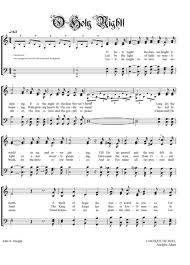
“O Holy Night” (“Cantique de Noël”) is a well-known Christmas carol composed by Adolphe Adam in 1847 to the French poem “Minuit, chrétiens” (Midnight, Christians) by Placide Cappeau (1808–1877).

Cappeau, a wine merchant and poet, had been asked by a parish priest to write a Christmas poem. Unitarian minister John Sullivan Dwight, editor of Dwight’s Journal of Music, created a singing edition based on Cappeau’s French text in 1855.

In both the French original and in the two familiar English versions of the carol, the text reflects on the birth of Jesus and of mankind’s redemption.
O Holy Night

O Holy Night sung by the Mormon Tabernacle Choir and the King’s Singers

December 24 ~ Today in Music History

today

OCMS Fairfax County Student Holiday

Christmas Music, Part 24 – O Holy Night

• 1719 ~ Johann Christoph Altnikol, German organist, bass singer, and composer. He was a son-in-law and copyist of Johann Sebastian Bach

• 1818 ~ Franz Gruber of Oberndorf, Germany, composed the music for “Silent Night” to words written by Josef Mohr. The traditional song was sung for the first time during Midnight Mass on this night.

• 1824 ~ Peter Cornelius, German composer and writer

• 1871 ~ Opera-goers in Cairo, Egypt were treated to Verdi’s Aida in its world premiere. The composer was commissioned to write the opera for festivities celebrating the opening of the Suez Canal

• 1887 ~ Lucrezia Bori, Spanish lyric composer

• 1893 ~ Harry Warren (Salvatore Guaragna), Composer, Song Writer’s Hall of Famer: Best Song Oscar

• 1906 ~ Professor Reginald A. Fessenden sent his first radio broadcast from Brant Rock, MA. The program included a little verse, some violin and a speech.

• 1918 ~ Zara Nelsova, Canadian-born American cellist

• 1914 ~ Ralph Marterie, ‘Caruso of the trumpet’: musician, bandleader

• 1924 ~ Carol Haney, Dancer, member of Jack Cole dance company, worked with Bob Fosse, in films

• 1928 ~ The first broadcast of The Voice of Firestone was heard. The program aired each Monday evening at 8:00. The Voice of Firestone became a hallmark in radio broadcasting. It kept its same night, time (in 1931 the start time changed to 8:30) and sponsor for its entire run. Beginning on September 5, 1949, the program of classical and semiclassical music was also seen on television.

• 1930 ~ Robert Joffrey (Khan), Choreographer with The Joffrey Ballet; died in 1988

• 1931 ~ Ray Bryant, Pianist, composer

• 1944 ~ Mike Curb, Music executive, producer, Oscar-winner

• 1944 ~ The Andrews Sisters starred in the debut of The Andrews Sisters’ Eight-To- The-Bar-Ranch on ABC radio. Patti, Maxine and LaVerne ran a fictional dude ranch. George ‘Gabby’ Hayes was a regular guest along with Vic Schoen’s orchestra. The ranch stayed in operation until 1946.

• 1945 ~ Lemmy (Ian Kilmister), Bass, singer with Motorhead

• 1946 ~ Jan Akkerman, Guitar, lute with bands: Friendship Sextet, Johnny and the Cellar Rockers

• 1951 ~ Menotti’s “Amahl and the Night Visitors”, the first opera composed for television, made its debut on NBC-TV. Amal and the Night Visitors became a Christmas classic.

• 1955 ~ The lovely Lennon Sisters debuted as featured vocalists on The Lawrence Welk Show on ABC-TV. They became regulars with Welk within a month and stayed on the show until 1968.

• 1957 ~ Ian Burden, Keyboards with Human League

• 1977 ~ The Bee Gees spent Christmas and New Year’s Eve at the top of the music charts. How Deep is Your Love became #1 this day and stayed that way for three weeks.

• 2000 ~ Felix Popper, a conductor and music administrator at the New York City Opera, died at the age of 92. Popper joined the New York City Opera in 1949 as an assistant conductor and vocal coach. By 1958 he was named music administrator, and he played an important role in guiding the opera through a period in which the house truly established itself. During this time, the company is credited with discovering important American singers such as Johanna Meier, Tatiana Troyanos, Gianna Rolandi, Faith Esham and Jane Shaulis. Popper retired from the opera in 1980 but continued to work as a consultant and vocal coach.

• 2000 ~ Longtime Detroit blues radio personality and promoter Famous Coachman died of an apparent heart attack. He was 75. Coachman was host of the weekend blues and gospel show on Detroit’s WDET for 21 years until 1997 and remained busy in the city’s music world until his death. “Everybody knew Coachman,” said JoAnn Korczynska, blues music director for WHFR at Henry Ford Community College in Dearborn. “He really did know B.B. King and John Lee Hooker. When I met John Lee Hooker, one of the first things he said to me was `How is Coachman doing?'” Coachman said he was named “Famous” because “my mother knew I would be.”

• 2000 ~ Nick Massi, an original member of the Four Seasons who handled bass vocals and vocal arrangements throughout the band’s glory days, died of cancer at the age of 73. Massi was born in Newark as Nicholas Macioci. The longtime West Orange resident performed with several bands before joining Frankie Valli in a group called the Four Lovers. By 1961, the group had evolved into the Four Seasons. Massi remained with the group until 1965, when he grew tired of touring, Valli said. Massi performed on hits such as Sherry, Big Girls Don’t Cry,Walk Like a Man and Rag Doll, which friends said was his favorite. During his tenure, the group made the Billboard Top 40 chart 17 times and toured throughout the United States and overseas, melding doo-wop vocals with a contemporary beat. They were inducted into the Rock and Roll Hall of Fame in 1990. Valli’s falsetto was the band’s trademark, but he said Massi was his musical mentor. “He could do four-part modern harmonies that would amaze musicians who had studied for years. And he did it all in his head without writing it down,” Valli said.