Wolfgang Amadeus Theophilus Mozart lived between 1756 and 1791. He is considered to be a classical composer. Mozart, born in Salzburg, Austria, began composing before most children go to kindergarten. By the time he was six he had played the piano and violin in public.
A Wunderkind, a prodigy of the first rank before the age of five, Mozart astounded the musical world with compositions of unsurpassed brilliance. His father Leopold had recognized his talent at the age of three and immediately set out to teach him to play the harpsichord, violin, and organ. Mozart and his sister made their debut in Munich when he was just six and traveled about Europe together, performing at courts and before royalty, always with success. While still a little child Mozart was inventing symphonies, sonatas, and his first opera. Legends abound about how Mozart could hear an entire work in his head and write everything down without making even one change.
As a child performer he was often treated as a freak. People would cover his hands as he played the piano, make him compose tunes on the spot and perform all sorts of other musical tricks.
In 1787 Mozart became court composer to Joseph II. He played for royalty, received commissions from aristocrats and in his short lifetime composed nearly a thousand masterpieces, including symphonies, operas, serenades, sonatas, concertos, masses, vocal works, and church works.
Mozart was a prolific composer writing masterpieces using every form of music, including his operas “The Marriage of Figaro” (based on a play by Pierre Beaumarchais), “Don Giovanni”, “Cosi fan tutte” and “The Magic Flute”. His mastery of instrumental and vocal forms, from symphony to concerto and opera, was unrivalled in his own time and perhaps in any other.
Composing the Requiem Mass commissioned for Count Walsegg, he felt he was writing his own requiem and he died before it was finished.
Wolfgang Amadeus Mozart, composer, died in Vienna Austria at the age of 35, penniless, on December 5th, 1791, of malignant typhus. Mozart, the precocious child prodigy, composed several pieces that are deemed central to the classical era. Though he ranked as one of the greatest musical genius, he did not live a life of affluence as none of his compositions earned him a decent commission but the world is forever enriched by such works as Eine Kleine Nachtmusik, the Symphonies No. 38 through 41 and the Coronation Mass.
. 1795 ~ Johann Christoph Friedrich Bach, harpsichordist and composer, the fifth son of Johann Sebastian Bach, died at the age of 62
. 1905 ~ Maria von Trapp, singer
. 1908 ~ Stéphane Grappelli, French jazz violinist
. 1913 ~ Jimmy Van Heusen (Edward Chester Babcock), American songwriter and Academy Award-winning composer. He wrote Swinging on a Star in 1944, All the Way in 1957, High Hopes in 1959 and Call Me Irresponsible in 1963. He also wrote the music to over 75 songs for Frank Sinatra with lyricists Johnny Burke and Sammy Cahn … My Kind of Town and Second Time Around
. 1934 ~ Huey “Piano” Smith, American rhythm and blues pianist (Rockin’ Pneumonia & Boogie Woogie Flu, Having a Good Time), born in New Orleans, Louisiana
. 1934 ~ The Apollo Theatre opened in New York City as a ‘Negro vaudeville theatre’. It became the showplace for many of the great black entertainers, singers, groups and instrumentalists in the country.
. 1945 ~ Jacqueline DuPré, British cellist
. 1956 ~ Buddy Holly had his first of three 1956 recording sessions for Decca Records and producer, Owen Bradley, in Nashville. Nothing much came out of those sessions. He formed the group, The Three Tunes (changed later to The Crickets), and went on to find fame and fortune when he hooked up with producer Norman Petty in New Mexico. Holly died in a plane crash near Mason City, IA, February 3, 1959 (“the day the music died”). He was 22. Holly was inducted into the Rock and Roll Hall of Fame in 1986.
. 1979 ~ The Gizmo guitar synthesizer was first demonstrated.
. 1988 ~ “Phantom of the Opera” by Andrew Lloyd Webber opened at Majestic Theater in New York City for 4,000+ performances. It is now the longest running Broadway show in history.
. 1992 ~ Jose Ferrer, Puerto Rican actor, theater, and film director, died.
. 1995 ~ Geoffrey Penwill Parsons, piano accompanist, died at the age of 65
. 1998 ~ Shinichi Suzuki, Japanese music teacher (Suzuki Method), died at the age of 99
. 2003 ~ John Browning, American pianist (Leventritt Award-1956), died at the age of 69
. 2019 ~ Michel Legrand, French composer, film arranger and jazz musician (Summer of ’42, Windmills of Your Mind), died at the age of 86
Died. Howard Lebow, 32, U.S. concert pianist; of injuries suffered in an automobile accident; in Amherst, Mass. One of the youngest and most promising of U.S. pianists, Lebow toured 15 countries after his 1963 Manhattan solo debut, played the works of such modern composers as Edward Levy and Erich Kahn with an adventurousness that sometimes startled the critics but more often won their applause.
Howard Lebow The University of Massachusetts Department of Music has established a trust fund for scholarships to assist both graduate and undergraduate music students in memory of the late Howard M. Lebow, professor of piano and concert artist whose untimely death in an automobile accident in January cut short a brilliant musical career. The scholarships will be awarded to students, selected by a special music committee, who demonstrate musical potential according to the ideals and standards of excellence that Lebow set for himself and for his students.
Lebow was graduated from the Juilliard School of Music in 1957, received his master’s degree in 1959, and was the winner of the school ‘ s highest pianistic honor, the Morris Loeb Memorial Prize. He studied at the State Academy of Music in Hamburg, Germany; the International Institute for New Music in Darmstadt, Germany; and the Mozarteum Summer Academy in Salzburg, Austria.
He studied under Edward Steuermann, a pupil of composer Ferruccio Busoni, and became well-known for his performances of Busoni ‘ s works. Lebow came to the University of Massachusetts in 1965 to assume his position as Assistant Professor of Piano. Internationally acclaimed as a remarkable pianist by music critics, Lebow was widely recognized as having a faultless technique, a richly varied touch, and a distinctive feeling for style. ” It is only Lebow, ” said the Darmstaedter Echo, ” who puts every fiber of his body and soul into the keys and truly performs with the utmost clarity, transparentness and plasticity. ” Dr. Philip Bezanson, head of the department said, ” The music department feels this memorial fund is a most fitting way to perpetuate the memory of Howard Lebow. He was actively interested in trying to develop scholarships for the music department. Because of his genuine interest in talented students it is most fitting that talented students should continue to receive help in his name. ”
~~~~~~~~
Howard Miles Lebow was an accomplished concert pianist and composer who was first celebrated during his tenure as a student at Julliard School of Music where he earned both his BA and MFA. While at Julliard, Lebow studied under Edward Steuermann, a pupil of composer Ferruccio Busoni, and was acclaimed for his performances of Busoni’s works. Lebow exceled as a pianist, performing in fifteen countries across Europe and the Americas. Appointed to the post of Assistant Professor of Piano at the University of Massachusetts in September 1965, Lebow lectured and performed until his untimely death in 1968 at age 32. Although known for his interpretations of contemporary music, Lebow was equally at home in the entire piano literature; one of his last and most memorable recitals was devoted to the music of Franz Liszt, another artist whom he had studied and whom he greatly admired. After his death, the Howard M. Lebow Scholarship Fund was established (1968).
The University of Massachusetts Department of
Music has established a trust fund for
scholarships to assist both graduate and
undergraduate music students in memory of
the late Howard M. Lebow, professor of piano
and concert artist whose untimely death in an
automobile accident in January cut short a
brilliant musical career. The scholarships
will be awarded to students, selected by a
special music committee, who demonstrate
musical potential according to the ideals
and standards of excellence that Lebow set
for himself and for his students.
Lebow was graduated from the Juilliard School
of Music in 1957, received his master’s
degree in 1959, and was the winner of the
school’s highest pianistic honor, the
Morris Loeb Memorial Prize. He studied at
the State Academy of Music in Hamburg,
Germany; the International Institute for New
Music in Darmstadt, Germany; and the
Mozarteum Summer Academy in Salzburg, Austria.
He studied under Edward Steuermann, a pupil
of composer Ferruccio Busoni, and became
well-known for his performances of Busoni’s
works.
Lebow came to the University of Massachusetts
in 1965 to assume his position as Assistant
Professor of Piano.
Internationally acclaimed as a remarkable
pianist by music critics, Lebow was widely
recognized as having a faultless technique,
a richly varied touch, and a distinctive
feeling for style. “It is only Lebow,” said
the Darmstaedter Echo, “who puts every fiber
of his body and soul into the keys and truly
performs with the utmost clarity,
transparentness and plasticity.”
Dr. Philip Bezanson, head of the department said, “The music department feels this memorial fund is a most fitting way to perpetuate the memory of Howard Lebow. He was actively interested in trying to develop scholarships for the music department. Because of his genuine interest in talented students it is most fitting that talented students should continue to receive help in his name.”
Howard Lebow was my piano teacher my freshman year at UMass. I was devastated over Christmas break to learn that he had died in a car crash. He had been walking on campus and was hit by a driver. 😦
. 1759 ~ Burns Night commemorates the life of the Scottish bard (poet) Robert Burns, who was born on January 25, 1759. Burns’ best-known work is “Auld Lang Syne”.
. 1858 ~ Felix Mendelssohn’s overture to “A Midsummer Night’s Dream” was first used as a wedding march. The bride was Queen Victoria’s daughter, the groom was the Crown Prince of Prussia.
. 1886 ~ Wilhelm Furtwängler, German conductor and composer
. 1905 ~ Julia Smith, American composer, pianist, and author on musicology
. 1913 ~ Witold Lutoslawski, Polish composer
More information about Lutoslawski
. 1940 ~ Mary Martin recorded My Heart Belongs to Daddy — for Decca Records. The song was her signature song until she starred in “South Pacific” in 1949. Then, Larry Hagman’s mother had a new trademark: “I’m gonna wash that man right out of my hair…”
. 1945 ~ Richard Tucker debuted at the Metropolitan OperaHouse in New York City in the production of “La Gioconda”.
. 1945 ~ Vaughn Moore made it to the top of the Billboard Pop Chart with his hit, “Let it Snow! Let it Snow! Let it Snow!” The song is still one of the most popular holiday songs to this day.
. 1964 ~ The Beatles reached the #1 spot on the music charts, as their hit single, I Want to Hold Your Hand, grabbed the top position in “Cash Box” magazine, as well as on the list of hits on scores of radio stations. It was the first #1 hit for The Beatles. “Billboard” listed the song as #1 on February 1. The group’s second #1 hit song, She Loves You, was also released this day – but not on Capitol Records. It was on Swan Records. Other songs by The Beatles were released on Vee Jay (Please, Please Me), M-G-M (My Bonnie with Tony Sheridan), Tollie (Twist and Shout), Atco (Ain’t She Sweet) and the group’s own label, Apple Records, as well as Capitol.
. 1981 ~ Alicia Keys is an American R&B and soul singer-songwriter, pianist and actress. She was born in one of the roughest areas on New York (Hell’s Kitchen) where it was known in earlier decades as the home of organized crime. Keys attended Professional Performing Arts School where a number of other notable artists have attended including Britney Spears, and graduated at sixteen. She has had a successful career as a solo artist winning eleven Grammy Awards, and 4 top selling albums Songs in A Minor, The Diary of Alicia Keys, Unplugged and As I Am . She has also had a number of singles that have not only topped the charts in the US but around the world including “Fallin'” and “No One”.
. 1999 ~ Robert Shaw passed away. Shaw was an American conductor most famous for his work with his namesake Chorale, with the Cleveland Orchestra and Chorus, and the Atlanta Symphony Orchestra and Chorus. Shaw received 14 Grammy awards, four ASCAP awards for service to contemporary music, the first Guggenheim Fellowship ever awarded to a conductor, the Alice M. Ditson Conductor’s Award for Service to American Music; the George Peabody Medal for outstanding contributions to music in America, the Gold Baton Award of the American Symphony Orchestra League for “distinguished service to music and the arts,” the American National Medal of Arts, France’s Officier des Arts et des Lettres, England’s Gramophone Award, and was a 1991 recipient of the Kennedy Center Honors.
. 2004 ~ Ronald Fredianelli, a co-founder of the 1950s pop vocal group the Gaylords, died in Las Vegas. He was 73. Fredianelli, who performed as Ronnie Gaylord teamed with Bonaldo Bonaldi and Don Rea in the early 1950s. Bonaldi performed as Burt Holiday. Their debut song, Tell Me You’re Mine, was a Top 10 hit in 1953. Other hits included From the Vine Came the Grape and The Little Shoemaker. Although the Gaylords formed in Detroit, Fredianelli and Bonaldi became a staple in Nevada showrooms, where they performed for decades as Gaylord and Holiday. Bonaldi and Rea live in Reno. One of Fredianelli’s sons, Anthony, is the guitarist for the rock group Third Eye Blind.
. 2015 ~ Artemios “Demis” Ventouris Roussos (June 15 1946-January 25, 2015) was a Greek singer and performer who had international hit records as a solo performer in the 1970s after having been a member of Aphrodite’s Child, a progressive rock group that also included Vangelis. He has sold over 60 million albums worldwide.
. 2018 ~ John Morris, American film and Broadway composer who commonly worked alongside Mel Gibson and Gene Wilder, died of a respiratory infection at the age of 91.
Lorin Maazel performed at the 1939 New York World’s Fair when he was only 9. He conducted two major symphonies before he was 13 and went on to a successful career as an adult conductor.
MacDowell
Edward MacDowell lived from 1860 until 1908. He was an American pianist and composer and was one of the first American composers to achieve any degree of international fame. He studied in Paris, eventually at the Conservatoire, before moving to study the piano with Carl Heymann at the Hoch Conservatory in Frankfurt, where he had composition lessons with Joachim Raff. There was encouragement from Liszt and further years spent in Europe until his return to the United States in 1888. There he succeeded in establishing himself as a teacher, pianist and composer, with appointment as the first Professor of Music at Columbia,a position he held until 1904. His last years were clouded by mental illness.
Piano music by MacDowell is effective if not innovative. It includes two piano concertos, four sonatas, the Tragica, Eroica, Norse and Keltic, studies and a quantity of genre pieces.
Machaut
Guillaume de Machaut was born sometime around 1300 in Rheims(?), France and died: April 13, 1377. Rheims, France He was a French poet and musician as well as a composer of monophonic and polyphonic music. He is also known as the leading representative of the Ars nova tradition.
Machaut lived his life in the higher ranks of service, first as secretary to John of Luxembourg, King of Bohemia, and then as a canon (a church official) at the Cathedral of Rheims. Like many in the fourteenth century, Machaut’s life and works reflect an equal measure of the sacred and secular. Most of his works were either secular (such as his many chansons) or a mix of sacred and ceremonial (including many of his motets and his hocket David, which was probably written for the coronation service of King Charles V in 1364). At the same time, he wrote what is probably the first full setting of the Mass Ordinary by a single composer (the Messe de Nostre Dame). He was a man of the cloth, having taken minor orders at an early age. Yet toward the end of his life he maintained a romantic/literary affair with a young woman named Perrone.
Much of Machaut’s polyphonic music reflects the interest that composers had in building complex structures based on the repetition and manipulation of borrowed melodies (a technique called isorhythm). In some of his works, these techniques are applied to all the voices. The harmonies found in Machaut’s pieces are built around the fifth and the octave, the primary consonances of the period. His secular music carries on the musical and textual traditions of the troubadours and trouv?res. Most are written in the fixed forms such as the virelei, rondeau and ballade.
Marchaut’s works include: Sacred/ceremonial music, including Messe de Nostre Dame, 23 motets, hocket “David” Secular music, including 42 ballades, 22 rondeaux, 33 virelais, 19 lais, 1 complainte, 1 chanson royale
Mahler
Gustav Mahler lived from 1860 until 1911. Like so many other musicians, Mahler started early, learning the piano at six and giving his first recital at the age of ten.
In 1909, he became conductor of the New York Philharmonic Orchestra and the Vienna Court Opera. Mahler, a Bohemian composer, used huge orchestras, the largest for his “Symphony for a Thousand”. He also completed nine symphonies and several song-cycles notably “Das Lied von der Erde.” Mahler’s music was used in the 1971 movie, Death in Venice.
Mancini
Henry Mancini (Enrico Nicola Mancini) lived from 1924 until 1994. He was an Academy Award-winning composer of movies such as Moon River in 1961, Days of Wine and Roses in 1962, Breakfast at Tiffany’s score in 1961, Victor/Victoria score in 1982. He also composed themes for The Pink Panther, Mr. Lucky, Peter Gunn, Charade, NBC Mystery Movie, NBC Nightly News, Love Theme from Romeo & Juliet and received 20 Grammy Awards.
Marriner
Sir Neville Marriner, born in 1924, is a British violinist and conductor. He was born in Lincoln, Lincolnshire, EC England, UK and he studied at the Royal College of Music and the Paris Conservatory. He first played violin with the London Philharmonia and the London Symphony Orchestra, then turned to conducting. He has held posts with the Los Angeles Chamber Orchestra from 1968 until 1977, the Minnesota Orchestra from 1979 until 1986, and the Stuttgart Radio Symphony Orchestra 1984 until 1989. Since 1956 he has been founder-director of the Academy of St Martin-in-the-Fields chamber ensemble. He was knighted in 1985.
Marsalis
The Marsalis clan of New Orleans is a large one. Ellis, the head of the family, plays piano, Jason plays drums. Wynton plays trumpet and Branford plays saxophone. Together and individually, this family has done quite a lot to inspire young musicians.
Massanet
Jules Emile Frederick Massenet lived from 1842 until 1912. He was a composer who was born in Montaud, France. He studied at the Paris Conservatoire, where he was professor from 1878 until 1896. He made his name with the comic opera Don Caesar de Bazan. Other operas followed, including Manon (1884), considered by many to be his masterpiece, Le Cid (1885), and Werther (1892). Among his other works are oratorios, orchestral suites, music for piano, and songs.
McCartney
Sir (James) Paul McCartney was born in 1942. He is a musician, songwriter, and composer who was born in Liverpool, Merseyside, NW England, UK. He was the Beatles’ bass guitarist, vocalist, and member of the Lennon-McCartney songwriting team, he made his debut as a soloist with the album McCartney (1970), heralding the break-up of the group. In 1971 he formed the band Wings (disbanded in 1981) with his wife Linda (1942–98). “Mull of Kintyre’ (1977) became the biggest-selling UK single (2.5 million). In 1979 he was declared the most successful composer of all time: by 1978 he had written or co-written 43 songs that sold over a million copies each.
His Liverpool Oratorio (written in association with Carl Davis) was performed by the Royal Liverpool Philharmonic Orchestra at Liverpool Cathedral in 1991, and he has since continued to develop his interests as a classical composer, notably in Standing Stone (1997). He collaborated with Harrison and Starr in the retrospective Beatles’ anthology in 1995.
He wrote the books All You Need Is Love (1968) and Paul McCartney In His Own Words (1976), and wrote, produced, and composed the music for a successful animated film, Rupert and the Frog Song in 1984.
He won a Grammy Award in 1990 and was inducted into the Rock and Roll Hall of Fame on March 15, 1999. He was knighted in 1997.
McPartland
Marian Turner McPartland was born in Windsor, England in 1920. She is a versatile pianist and jazz musician. She moved to America in 1945 and led a trio from 1951 and founded Halcyon Records. In 1973 she began an adjunct career as the host of jazz radio programs and National Public Radio show – Marian McPartand?s Piano Jazz.
Melba
Nellie Melba, whose birth name was Helen Porter Mitchell, was an Australian singer born in Melbourne, Australia in 1861. She was taught to sing by mother, educated at Presbyterian Ladies’ College, married 1881 and decided to sing professionally. She visited London and Paris in 1886 and debuted in Brussels as Gilda in Verdi’s “Rigoletto” in 1887.
First diva of the century as Nellie Melba (from her home town), she demanded a pound more than Caruso at his peak for her three-octave voice. Upset that Escoffier named a dessert Peach Melba without paying royalties, she patented her name in the US. For WWI fundraising concerts she was made a Dame Commander of the Order for the British Empire in 1918. Her career took her to London’s Covent Garden and New York’s Metropolitan opera houses. She gave her name to Melba Toast, Peach Melba and Melba Sauce. Melba died 1931 from and infection following an unsuccessful face lift.
Melchoir
Lauritz Lebrecht Hommel Melchior was a tenor who born in Copenhagen, Denmark in 1890. He died in 1973. Beginning as a baritone in 1913, he went on to become arguably the foremost Wagnerian tenor of the century. He sang in Bayreuth from 1924 until 1931 and regularly at the Metropolitan Opera from 1926 until 1950). In the late 1940s and early 1950s he appeared in several Hollywood movies.
Melchior was sometimes called ‘The Heroic Tenor’ or ‘The Premier Heldentenor of the 20th Century’.
Mendelssohn
Felix Bartholdy Mendelssohn lived between 1809 and 1847. He is considered to be a romantic composer and pianist best known for his symphonies and concert overtures. Mendelssohn played the piano in public by the age of nine, so he was often compared to Mozart.
He composed works for solo instruments and orchestra, and German songs. Some of his better known works are the “Wedding March”, “Elijah” and “Fingal’s Cave”. Felix Mendelssohn, along with Hector Berlioz was one of the first conductors of a large orchestra.
Mendelssohn harmonized the works of other composers, including Johann Cruger.
Menotti
Menotti’s “Amahl and the Night Visitors” was the first opera ever written for television and is the most frequently performed opera in the United States. He won a Pulitzer prize for his opera, The Consul, in 1950.
Menuhin
Yehudi Menuhin made his violin debut as a child prodigy by appearing with the San Francisco Orchestra at the age of 7 in 1923. He was wearing short pants, which were then fashionable for boys his age. He later became a music statesman by promoting music as a univeral peacemaker and as a means to realize greater global understanding. He was born in New York City in 1916 but became a British citizen in 1985.
Messiaen
Olivier (Eugène Prosper Charles) Messiaen lived from 1908 until 1992. He was a composer and organist, born in Avignon, France. He studied at the Paris Conservatoire, where his teachers included Paul Dukas.
His 20/21 earned him a Grammy
Meyerbeer
Giacomo Meyerbeer lived from 1791 until 1864. He was a German Grand opera composer. His most famous works are “Les Huguenots” and “L’Africaine”. His Hellish Waltz from Robert du Diable, transcribed by Liszt probably caused more public commotion than any other piano piece in history.
Midori
Midori (Mi Dori Goto) is a Japanese violin virtuoso who began lessons at age four.
Milhaud
arius Milhaud, 1892 to 1974, was born in the southern French city of Aix-en-Provence. Darius Milhaud was trained at the Paris Conservatoire, originally as a violinist, before turning to composition. He enjoyed a close association with the diplomat-poet Paul Claudel, whom he accompanied to Brazil as secretary, after Claudel’s appointment as Minister at the French delegation in Rio de Janeiro. On his return to Paris in 1918, after two years abroad, Milhaud was for a time in the circle of Jean Cocteau and a member of the diverse group of French composers known as Les Six. Extremely prolific as a composer in many genres, Milhaud spent the years of the 1939 war in the United States, where he taught, combining this position with a similar post at the Paris Conservatoire after 1947.
Two works in particular have proved attractive additions to repertoire. The first, Saudades do Brasil, a suite for piano, is based on music heard in Brazil during the composer’s stay there between 1916 and 1918. Scaramouche, arranged for two pianos from incidental music for Moli?re’s Le M?decin Volant, is a lively jeu d’esprit, in the spirit of the commedia dell’arte character of the title.
Darius Milhaud wrote a considerable amount of music for the theatre, operas, ballets and incidental music, as well as film and radio scores. Collaboration with Claudel brought the opera Christophe Colombe and a number of compositions of incidental music for plays ranging from those of Shakespeare to the work of contemporaries such as Brecht, Supervielle, Giraudoux and Anouilh. With Cocteau he wrote the ballets Le Boeuf sur le Toit (The Ox on the Roof) and the jazz La Cr?ation du Monde, for the Ballets n?gres. These represent only a small fraction of his dramatic work.
Milhaud was equally prolific as a composer of orchestral music of all kinds, including twelve symphonies and a variety of concertos, some of which reflect the influence of his native Provence.
Milhaud contributed widely also to the repertoire of French song both in choral settings and in songs for solo voice and piano, with texts chosen from a great variety of sources from Rabindranath Tagore and Andre Gide to the words of Pope John XXIII, the last in a choral symphony Pacem in terris.
In addition to eighteen string quartets and useful additions to duo sonata repertoire, not least for viola, an instrument used for the Quatre Visages of 1943, representations in music of four different kinds of girls, Milhaud provided for wind quintet the charming suite La cheminée du roi René and the attractive Pastorale of 1935 for oboe, clarinet and bassoon. He shows here, as elsewhere, a characteristically French adroitness in writing for woodwind instruments.
Miller
(Alton) Glenn Miller, lived from 1904 until 1944 and was born in Clarinda, Iowa. He was a trombonist who he attended the University of Colorado before joining Ben Pollack’s orchestra in Chicago in 1924. He moved to New York in 1928, where he free-lanced for the next nine years as a studio musician and worked as a sideman with a succession of bandleaders, including Red Nichols, the Dorsey Brothers, and Ray Noble. After his first band failed in 1937, he put together a second orchestra in 1938. For the next four years, with hits such as “Moonlight Serenade” and “In the Mood,” it was the most successful dance band of the period. In 1942, he joined the U.S. Air Force, for which he organized the Glenn Miller Army Air Force Band to entertain the troops. While stationed in Europe, he died on a flight from England to France in a plane that disappeared over the English Channel.
Minelli
Liza May Minnelli was born in 1946 in Los Angeles, California. She is a singer, dancer, stage and screen actress. Her parents are actress Judy Garland and director Vincente Minnelli and her half-sister is singer-actress Lorna Luft.
Minnelli was less than 3 years old when she made her screen debut in In the Good Old Summertime (1949), which co-starred her mother. She became the youngest-ever actress to win a Tony Award, for Flora, the Red Menace (1965), at age nineteen. She is the only singer in history to sell out Carnegie Hall for three weeks straight.
Monteverdi
Claudio Monteverdi lived from 1567 until 1643 and was considered to be a baroque composer. He was the first great composer of opera.
Monteverdi introduced the orchestral prelude, enlarged the orchestra, and improved its role by recognizing instrumental differences. His first opera “Orfeo” was performed in 1607.
Moog
Robert Moog was born in 1934. He invented the first music synthesizer in 1964.
Morley
Morton
Jelly Roll Morton, born Ferdinand Joseph La Menthe in 1885, was one of the most influential composers of the jazz era, bridging an important gap between ragtime, blues, and jazz. In a sense, he was the first great jazz composer.
His career began in New Orleans, where he began to experiment with a unique blend of blues, ragtime, Creole, and Spanish music in bordellows as a piano player. Along with being a musician, he also worked as a gambler, pool shark, vaudeville comedian, and was known for his flamboyant personality and diamond front tooth.
Morton became successful when he started making what would be some of the first jazz recordings in 1923 with “the New Orleans Rhythm Kings”. Whether he played on the West Coast, New Orleans, or in Chicago, his recordings were always very popular. He joined the group “the Red Hot Peppers” in 1924 and made several classic albums with the Victor label.
Nothing but success came to him until 1930, when “Hot Jazz” began to die out, and big bands began to take over. Morton died in 1941, claiming that a voodoo spell was the cause of his demise.
Moscheles
Ignaz Moscheles was a Bohemian composer and piano virtuoso.
Mouret
Jean Joseph Mouret’s Rondeau was the theme for many years of TV’s Masterpiece Theater Mouret wrote his music in Paris in the early 1700’s
Mozart
Wolfgang Amadeus Theophilus Mozart lived between 1756 and 1791. He is considered to be a classical composer. Mozart, born in Salzburg, Austria, began composing before most children go to kindergarten. By the time he was six he had played the piano and violin in public.
A Wunderkind, a prodigy of the first rank before the age of five, Mozart astounded the musical world with compositions of unsurpassed brilliance. His father Leopold had recognized his talent at the age of three and immediately set out to teach him to play the harpsichord, violin, and organ. Mozart and his sister made their debut in Munich when he was just six and traveled about Europe together, performing at courts and before royalty, always with success. While still a little child Mozart was inventing symphonies, sonatas, and his first opera. Legends abound about how Mozart could hear an entire work in his head and write everything down without making even one change.
As a child performer he was often treated as a freak. People would cover his hands as he played the piano, make him compose tunes on the spot and perform all sorts of other musical tricks.
In 1787 Mozart became court composer to Joseph II. He played for royalty, received commissions from aristocrats and in his short lifetime composed nearly a thousand masterpieces, including symphonies, operas, serenades, sonatas, concertos, masses, vocal works, and church works.
Mozart was a prolific composer writing masterpieces using every form of music, including his operas “The Marriage of Figaro” (based on a play by Pierre Beaumarchais), “Don Giovanni”, “Cosi fan tutte” and “The Magic Flute”. His mastery of instrumental and vocal forms, from symphony to concerto and opera, was unrivalled in his own time and perhaps in any other.
Composing the Requiem Mass commissioned for Count Walsegg, he felt he was writing his own requiem and he died before it was finished.
Wolfgang Amadeus Mozart, composer, died in Vienna Austria at the age of 35, penniless, on December 5th, 1791, of malignant typhus. Mozart, the precocious child prodigy, composed several pieces that are deemed central to the classical era. Though he ranked as one of the greatest musical genius, he did not live a life of affluence as none of his compositions earned him a decent commission but the world is forever enriched by such works as Eine Kleine Nachtmusik, the Symphonies No. 38 through 41 and the Coronation Mass. In the year 2000, there have been some new discoveries about Mozart’s death.
Munch
Charles Munch was a French composer who lived from 1891 until 1968. He was born in Strasbourg, France. After a long career as a violinist, he made his conducting debut in Paris in 1932 and three years later organized his own orchestra there. He became conductor of the Boston Symphony in 1949 and stayed until 1962. In the latter year he organized the Orchestre de Paris; he died on tour with that group in Virginia. Munch was known for allowing his players room to express themselves, producing warm and musical performances.
Mussorgsky
Modest Petrovich Mussorgsky lived from 1839 until 1881. This Russian composer, born in Karevo, Russia, was educated for the army, but resigned his commission in 1858 and began the serious study of music under Balakirev.
He is most known for his dramatic opera Boris Godunov, first performed in St Petersburg in 1874. In this opera, he emphasized that speech is made more poignant by the accompanying music.
His piano suite Pictures from an Exhibition (1874) has also kept a firm place in the concert repertoire. Other operas and large-scale works remained uncompleted as the composer sank into the chronic alcoholism which hastened his early death. His friend Rimsky-Korsakov undertook the task of musical executor, arranged or completed many of his unfinished works, and rearranged some of the finished ones.
Mussorgsky’s Night on Bald Mountain was featured in the Walt Disney movie Fantasia.
Mutter
Anne-Sophie Mutter’s remarkable career began at the age of 13 when she appeared as soloist with Herbert von Karajan and the Berlin Philharmonic at the 1977 Salzburg Whitsun Festival. Since then she has been in demand as both a soloist and chamber music partner in major music centers throughout Europe, the Americas and Asia.
Her long list of honors for recordings includes the Grand Prix du Disque, the Grammy Award in the United States, and Holland’s Edison Award. Her most recent releases have been “The Berlin Recital” with pianist Lambert Orkis and live recordings of Brahms’ Violin Concerto and Schumann’s “Fantasy” with the New York Philharmonic and Kurt Masur. Her recording of Penderecki’s Violin Concerto No. 2 with the London Symphony Orchestra conducted by the composer (coupled with Bartok’s Violin Sonata No. 2) was released in early 1998. All of Beethoven’s sonatas will be recorded live during her worldwide tour and released by the autumn of 1998.
An ardent champion of contemporary music, Miss Mutter has given premiere performances of several works written especially for her by composers such as Witold Lutoslawski, Norbert Moret, Krzysztof Penderecki, Wolfgang Rihm and Sebastian Currier. Over the next few years she will participate in premiere performances of works by contemporary composers whom she especially admires.
In 1987 Miss Mutter established the Rudolf Eberle Endowment which supports talented young string musicians throughout Europe. This endowment was recently incorporated into the Munich-based Anne-Sophie Mutter Foundation and Friends Circle which share the same objective.
Miss Mutter has a strong commitment to social and health problems of our time. She supports work in these fields through regular benefit concerts. The proceeds from one of her three Beethoven evenings in Munich will go to the Christiane-Herzog-Stiftung for sufferers of cystic fibrosis. In the same year she will perform a benefit concert for the German Red Cross with the proceeds going to an orphanage in Romania. In Philadelphia a concert for Temple University’s Esther Boyer College of Music will take place.
She is a holder of the Order of Merit of the Federal Republic of Germany.
National Compliment Day. Give an extra compliment on National Compliment Day which is observed annually on January 24. A compliment has a powerful effect. It can instill confidence in a child, or validate someone’s hard work.
The OCMS has sticker pages you can put in your student’s music or notebooks to remind him or her how well you think they’re doing.
Always find something to praise in your student’s practice and playing. You’ll see that it makes a world of difference.
. 1776 ~ Ernst Theodor Amadeus Hoffmann, composer
. 1883 ~ Friedrich von Flotow, German baron/composer, died at the age of 70 More information about Flotow
. 1913 ~ Norman Dello Joio, American composer
. 1919 ~ Leon Kirchner, American composer and pianist
. 1925 ~ Maria (Betty Marie) Tallchief, Prima ballerina: Ballet Russe de Monte Carlo, New York City Ballet; formed ballet troupe and school (1974) which became Chicago City Ballet in 1980, wife of choreographer George Balanchine
. 1936 ~ Jack Scott (Scafone), Singer
. 1936 ~ Benny Goodman and his orchestra recorded one of the all-time greats, Stompin’ at the Savoy, on Victor Records. The song became such a standard, that, literally, hundreds of artists have recorded it, including a vocal version by Barry Manilow. The ‘King of Swing’ recorded the song in a session at the Congress Hotel in Chicago.
. 1941 ~ Neil Diamond, American pop-rock singer and songwriter
. 1941 ~ Ray Stevens, Singer and entertainer
. 1942 ~ Abie’s Irish Rose was first heard on NBC radio this day as part of “Knickerbocker Playhouse”. The program was a takeoff on the smash play from Broadway that ran for nearly 2,000 performances. Sydney Smith played the part of Abie. Rosemary Murphy was played by Betty Winkler.
. 1973 ~ ‘Little’ Donny Osmond, of the famed Osmond Brothers/Family, received a gold record for his album, “Too Young”. When he played the gold-plated disc on his Mickey Mouse phonograph, all he heard was Ben by ‘little’ Michael Jackson, a competitor in the ‘Kids Who Sing Really High Awards’ battle.
. 2006 ~ Fayard Nicholas, American tap dancer, one-half of The Nicholas Brothers and actor (The Five Heartbeats), died of pneumonia and complications from a stroke at the age of 91.
Children: don’t try this at home – never, ever dance on a piano!
. 1941 ~ Artie Shaw and his orchestra recorded Moonglow on Victor Records. In the band were such sidemen as Johnny Guarnieri, Jack Jenney, Billy Butterfield and Ray Conniff on trombone.
. 1943 ~ Duke Ellington and the band played for a black-tie crowd at Carnegie Hall in New York City. It was the first of what was to become an annual series of concerts featuring the Duke.
. 1943 ~ Louis Jordan and His Tympany Five took the song “What’s the Use of Getting Sober” to the top chart spot. It only stayed there for one week.
. 1948 ~ Anita Pointer, Singer with The Pointer Sisters
. 1950 ~ Bill Cunningham, Bass, piano with The Box Tops
. 1950 ~ Patrick Simmons, Singer, guitarist with The Doobie Brothers
. 1974 ~ Mike Oldfield’sTubular Bells opened the credits of the movie, “The Exorcist”, based on the book by William Peter Blatty. The song received a gold record this day.
. 1977 ~ Carole King’s landmark album, “Tapestry”, became the longest-running album to hit the charts, as it reached its 302nd week on the album lists.
. 1978 ~ Vic Ames killed in car crash
. 1981 ~ Samuel Barber, American composer (School for Scandal), died of cancer at the age of 70
. 1986 ~The first ten musicians were inducted into Rock ‘n’ Roll Hall of Fame including James Brown, Elvis Presley, Ray Charles, Buddy Holly, Chuck Berry, Sam Cooke, Fats Domino, the Everly Brothers, Jerry Lee Lewis and Little Richard.
When Chuck Berry was inducted into the Rock and Roll Hall of Fame in 1986, an all-star band, including John Fogerty, Billy Joel, Jerry Lee Lewis, Keith Richards, Neil Young and Steve Winwood, charged through a raucous “Roll Over Beethoven” with de facto bandleader Chuck Berry guiding the show.
. 1993 ~Thomas Gorsey passed away on this day. He was considered to be the “Father of Gospel Music” and had written over a thousand gospel songs in his lifetime.
. 2002 ~ Alfred Glasser, a former director of education for the Lyric Opera of Chicago, died of cancer. He was 70. Glasser held the education post for 30 years before his retirement in 1996. Since 1997, Glasser served as chairman of the board and commentator for Chicago’s concert opera company, da Corneto Opera. For the past decade, he served on the board of Alliance Francaise of Chicago, a French cultural group. Glasser also founded the Lyric Opera Lecture Corps, a community service project.
. 2003 ~ Nell Carter, actress-singer, died at the age of 54. She was best known for her role as the housekeeper in the TV sitcom “Gimme a Break!”. Carter, who was born September 13, 1948, in Birmingham, Alabama, first rose to stardom on the New York stage. After a series of roles on- and off-Broadway — and a short-lived part in the soap opera “Ryan’s Hope” — in 1977 she starred in the show “Ain’t Misbehavin’!”, a revue of the works of composer Fats Waller. She was rewarded for her performance with an Obie Award, and later with a Tony Award when the show moved to Broadway. Several years later, she earned an Emmy for her performance on a television presentation of the musical. Despite her Broadway success, Carter would have preferred to sing opera. “When I was growing up, it was not something you aspired to,” she said in 1988. “I was a weirdo to want to be in show business. Most kids wanted to be teachers or nurses.” “Gimme a Break!” ran from 1981 to 1987. Carter was nominated for two Emmys for her role as housekeeper Nell Harper, who helped run the household of police chief Carl Kanisky, played by Dolph Sweet. She also garnered two Golden Globe nominations for the role.
. 2003 ~ For Sale: One of London’s most famous music venues, which in its heyday in the 1960s played host to The Who, David Bowie and the Rolling Stones, is for sale, its administrators said. The Marquee Club, which in the 1970s was the epicenter of the punk explosion, ran into financial difficulties after its high-profile relaunch last fall, said a spokeswoman for administrator BDO Stoy Hayward. “We’re looking for someone in the music business who can capitalize on the Marquee brand and keep running it as a live venue,” she said. The price tag is at least $200 million. The club opened in London’s Soho district in 1958 and was so cramped and sweaty that, according to legend, Bob Geldof of the Boomtown Rats blacked out on stage. In 1988, it moved to a new location in nearby Charing Cross, but within eight years it had closed down. A high-profile relaunch at a new venue in Islington, north London September 2002 was headlined by the controversial electro-rockers Primal Scream, but according to the club’s administrators, huge start-up costs quickly led to its downfall.
. 2017 ~ Bobby Freeman, American singer (Do You Want to Dance), died at the age of 76
. 2018 ~ Hugh Masekela, South African trumpeter, anti-apartheid activist (I Am Not Afraid), described as the “father of South African jazz,” died at the age of 78
Benny Goodman was essentially the pioneer of swing. The jazz clarinetist and bandleader re-wrote the book on jazz music by speeding up the tempo and placing accents and emphasis on notes between the beats, earning him the nickname “the King of Swing”. Not only was he a world-class clarinetist, responsible for reviving the popularity of the instrument, but also an excellent arranger and composer. He was one of the first bandleaders to break the color barrier by hiring black musicians.
Benny was born Benny David Goodman in 1909. He was raised in the poverty of a Jewish ghetto in Chicago, growing up with the sounds of New Orleans jazz greats like King Oliver, Freddie Keppard, and Louis Armstrong in his home. Benny began playing the clarinet at the age of twelve, and formed his first band at the age of sixteen, “The Benny Goodman Trio”, which became one of the very first interracial jazz ensembles. He went on to play with many groups, including “Doc Cook and His Dreamland Orchestra”.
However, by 1934, it was time for a change. That year, he put together his own big band. Using the compositions and arrangements of fellow swing pioneer Fletcher Henderson, he almost single-handedly gave birth to the “swing era” of the thirties and forties. He would go on to spread his music to all corners of the globe, travelling to places such as the Soviet Union, Europe, and the Far East, playing both jazz and classical music along the way.
Aside from his success in music, Goodman was also a superstar personality, if not to his co-workers, to the American public, receiving roles in films, and radio and television programs. He also made the clarinet one of the most popular instruments to play after it had been nearly absent in music since ragtime. Goodman died in 1986.
National Polka Dot Day celebrates polka dots, and since 2016 has also been used to celebrate Minnie Mouse, who is known for often wearing the dots. She usually is seen wearing a red dress with white polka dots, and often has a matching bow. Celebrants of the holiday don polka dots to celebrate the dot and Minnie Mouse.
In the nineteenth century, garments with dots began becoming popular. Dotted-Swiss was one such type of garment. In Germany, dots on garments were called Thalertupfen. Dotted clothing could be seen in some famous paintings of the time, such as Monet’s Luncheon on the Grass and Bazille’s Family Reunion.
In the middle of that century, polka dancing became popular in Europe. The name for the dot comes from the dance, although there doesn’t seem to be any real connection between the two. “Polka” is a Polish word for “Polish woman,” and the term polka dot was first printed in 1857, in an American women’s magazine called Godey’s Lady’s Book.
The popularity of polka dots increased in the 1920s and ’30s. Miss America wore a polka dot swimsuit in 1926 and Minnie appeared with polka dots in 1928. Polka dot dresses were common during the 1930s. Following World War II, Dior began putting out dresses with polka dots, and polka dot clothing was worn by stars such as Elizabeth Taylor and Marilyn Monroe. In the 1960s, Yayoi Kusama began using polka dots in her paintings. Some men have worn polka dots, such as Bob Dylan, and Marvel Comics even created Polka-Dot Man. Today, polka dots are often worn nostalgically and have gained in popularity with the revival of vintage wear from the 1950s and ’60s.
Because Minnie Mouse is often seen wearing polka dots, the day has been closely tied to her. Although she appeared with Mickey in Plane Crazy on May 15, 1928, this did not have a wide release, and it is Steamboat Willie, which was released on November 18, 1928, which is widely known as Minnie Mouse’s debut. Independent, feminine, and cheerful, she is known for bringing happiness to others and helping them with troubles they may be having. Walt Disney was the first voice of Minnie, just for a short while, and many people have voiced her since. Russi Taylor began voicing her in 1986 and did so for decades afterward.
After Minnie’s debut in 1928, she appeared in many more short films throughout the 1930s. Mickey and Minnie were redesigned in the late 1930s, but Minnie was used less starting in the 1940s. It was not until the 1980s when she once again began being used more prominently in cartoons. She was in Mickey’s Christmas Carol in 1983 and had her first starring role in a television special with Totally Minnie in 1988. She has since appeared in films such as Mickey’s Once Upon a Christmas, Mickey’s Twice Upon a Christmas, and Mickey, Donald, Goofy: The Three Musketeers, and in television shows such as Mickey Mouse Works, House of Mouse, Mickey Mouse Clubhouse, Mickey Mouse, and Mickey and the Roadster Racers.
Minnie has been featured in comics, video games, and has been a staple at Disney parks such as Disneyland Resort and Walt Disney World, where events have been held on the day. In 2016, an art and fashion show called “Rock the Dots” was held on Polka Dot Day in Los Angeles; it was followed by an exhibit that was open to the public. Disney began encouraging people to wear polka dots and use the hashtag #RocktheDots. Minnie received her star on the Hollywood Walk of Fame on National Polka Dot Day in 2018, during her 90th anniversary year.
How to Observe National Polka Dot Day
Celebrate the day by wearing polka dots. D23: The Official Disney Fan Club and Shop Disney have polka dotted Minnie Mouse clothes and accessories available. Let people know you are wearing polka dots by using the hashtag #RocktheDots. The day could be spent watching films starring Minnie Mouse, such as Plane Crazy and Steamboat Willie. Minnie was not wearing polka dots in those first films, but she was wearing a polka dot dress in their opening title sequences. You could also do some Minnie Mouse crafts, or plan a trip to Disneyland Resort or Walt Disney World.
. 1886 ~ John J. Becker, American composer
. 1889 ~ The Columbia Phonograph Company was formed in Washington, DC.
. 1901 ~ Hans Erich Apostel, German-born Austrian composer
. 1904 ~ George Balanchine (Georgi Balanchivadze), Choreographer of Apollo, Orpheus, Firebird, Swan Lake, The Nutcracker. He founded School of American Ballet and New York City Ballet. He was married to Tanaquil Le Clercq.
. 1907 ~ The Richard Strauss opera, “Salome”, was featured with the Dance of the Seven Veils. It was copied by vaudeville performers. Soon, performances of the opera were banned at the Metropolitan Opera House.
. 1916 ~ Henri Dutilleux, French composer
. 1920 ~ William Warfield, singer (Show Boat)
. 1924 ~ James Louis “J.J.” Johnson, Trombonist, composer and bandleader. He was one of first to use the trombone in modern jazz
. 1931 ~ Clyde McCoy and his orchestra recorded Sugar Blues. The tune became McCoy’s theme song, thanks to its popularity on Columbia Records, and later on Decca, selling over a million copies.
. 1935 ~ Sam Cooke, American rhythm-and-blues singer
. 1949 ~ Steve Perry, Drummer with Radio Stars
. 1953 ~ Myung-Whun Chung, Seoul South Korea, pianist/conductor (Chung Trio)
. 2002 ~ Pete Bardens, a keyboardist who played alongside such pop stars as Mick Fleetwood, Ray Davies, Rod Stewart and Van Morrison, died of lung cancer. He was 57. He was known for his progressive and New Age rock style on synthesizer, electric piano and organ. In the 1960s, the London-born Bardens played in the Blues Messengers with Davies, who later went on to form The Kinks; Shotgun Express with Stewart; Them with Morrison; and the group Cheynes with Fleetwood and Peter Green, who went on to form Fleetwood Mac. In 1972, Bardens formed the progressive rock band Camel and stayed with it through the late 1970s. In 1978, he began a successful solo career, releasing several well-received records, including “Speed of Light”, and also played on Morrison’s album “Wavelength” and accompanied him on a world tour. Barden continued to compose, produce and perform music through the 1990s, appearing in Europe with his group Mirage.
. 2004 ~ Milt Bernhart, a big band trombonist known for his solo on Frank Sinatra’s I’ve Got You Under My Skin, died. He was 77. During his three-decade career, Bernhart played in bands led by Benny Goodman, Henry Mancini and others. He was performing in Howard Rumsey’s Lighthouse All-Stars when Marlon Brando arranged for the band to play in the 1954 film The Wild One. Bernhart then became an in-studio musician for Columbia and other film and television studios, and in 1956 added a memorable solo to Sinatra’s I’ve Got You Under My Skin. Born in Valparaiso, Ind., Bernhart was drafted into the Army and was to be sent overseas during World War II before he was transferred to the service’s band. After his music career wound down in 1973, he bought Kelly Travel Service in Los Angeles. He created the Big Band Academy of America in 1986 and planned to retire as the organization’s founding president in March.
. 2004 ~ Ann Miller, a childhood dance prodigy who fast-tapped her way to movie stardom that peaked in 1940s musicals like “On the Town”, “Easter Parade” and“Kiss Me Kate”, died of lung cancer. She was 81. Miller’s film career peaked at MGM in the late 1940s and early ’50s, but she honed her chops into her 60s, earning millions for “Sugar Babies”, a razzmatazz tribute to the era of burlesque featuring Mickey Rooney. Miller’s legs, pretty face and fast tapping (she claimed the record of 500 taps a minute) earned her jobs in vaudeville and nightclubs when she first came to Hollywood. Her early film career included working as a child extra in films and as a chorus girl in a minor musical, “The Devil on Horseback”. An appearance at the popular Bal Tabarin in San Francisco won a contract at RKO studio, where her name was shortened to Ann. Her first film at RKO, “New Faces of 1937”, featured her dancing. She next played an acting hopeful in “Stage Door”, with Katharine Hepburn, Ginger Rogers, Lucille Ball and Eve Arden.
When Cyd Charisse broke a leg before starting “Easter Parade” at MGM with Fred Astaire, Miller replaced her. That led to an MGM contract and her most enduring work. She was teamed with Gene Kelly and Frank Sinatra in “On the Town”, Red Skelton in “Watch the Birdie”, and Bob Fosse in “Kiss Me Kate“. Other MGM films included: “Texas Carnival”, “Lovely to Look At”, “Small Town Girl”, “Deep in My Heart”, “Hit the Deck” and “The Opposite Sex.” The popularity of musicals declined in the 1950s, and her film career ended in 1956. Miller remained active in television and the theater, dancing and belting songs on Broadway in “Hello, Dolly” and “Mame”. In later years, she astounded audiences in New York, Las Vegas and on the road with her dynamic tapping in “Sugar Babies.” The show opened on Broadway in 1979 and toured for years. In 1990, she commented that “Sugar Babies” had made her financially independent. While her career in Hollywood prospered, Miller became a regular figure in the town’s nightlife, and she caught the eye of Louis B. Mayer, all-powerful head of MGM. After dating, she declined to marry him because her mother would not allow it. She later married and divorced steel heir Reese Milner and oilmen William Moss and Arthur Cameron.
. 2004 ~ Dick Rodgers, an insurance salesman known as the “Polka King” when he hosted a regional television show from the 1950s to the 1970s, died. He was 76. Rodgers’ television show was on the air from 1955-78, starting on WMBV in Marinette, which later moved to Green Bay and became WLUK-TV. The program was shown on 17 Midwestern stations at its height. Rodgers’ accomplishments included membership in the International Polka Music Hall of Fame (1976) and in the World Concertina Congress Hall of Fame (1996). He also was named Orchestra Leader of the Year by the Wisconsin Orchestra Leaders Association in 1967.
Hanns Eisler lived from 1898 until 1962. He was a composer, born in Leipzig, Germany. He studied under Schoenberg at the Vienna Conservatory (1919–23). A committed Marxist, he wrote political songs, choruses, and theatre music, often in collaboration with Brecht. From 1933 he worked in Paris, London, and Copenhagen, and moved to Hollywood in 1938, teaching and writing film music. Denounced in the McCarthy anti-Communist trials, he returned to Europe in 1948. He settled in East Germany in 1952, composing popular songs and organizing workers’ choirs. He wrote about 600 songs and choruses, and music for over 40 films and for nearly 40 plays.
Elgar
Edward Elgar lived from 1857 until 1934. He was a British composer whose works in the late 19th century orchestral style brought a Renaissance of English music.
His Pomp and Circumstance, usually heard at graduations, was featured in Fantasia 2000.
Ellington
Duke Ellington (1899 to 1974) was a composer, bandleader, and pianist. He was born Edward Kennedy Ellington in Washington, D.C.
From an early age, the handsome, sharply dressed teenager (that’s where he got the nickname, Duke) was headed for success. At first it was art. He won a poster-design contest and an art scholarship, left school and started a sign-painting business. But it was his natural piano-playing ability that attracted the young women, so Duke Ellington headed in that direction. He developed his keyboard skills by listening to local black ragtime pianists; he composed his first piece, Soda Fountain Rag, around 1915. A successful professional musician by the early 1920s, he left Washington in the spring of 1923 for New York, which was his home base for the rest of his life. Between December 1927 and 1931 his orchestra held forth at Harlem’s Cotton Club, where regular radio broadcasts, together with an active recording schedule, helped him establish a nationwide reputation. Take the “A” Train was his “signature song”.
In such compositions as Black and Tan Fantasy (1927), Mood Indigo (1930), Solitude (1934), and Echoes of Harlem (1935), Ellington emerged as a distinctive composer for his ensemble, employing the rhythms, harmonies, and tone colors of jazz to create pieces that vividly captured aspects of the African-American experience. At the same time, he sought to broaden jazz’s expressive range and formal boundaries in such extended works as Reminiscing in Tempo (1935), Black, Brown, and Beige (1943), and Harlem (1951).
An essential feature of Ellington’s composing method was to write with specific instrumentalists in mind, often drawing them into the creative process by building entire pieces out of their musical ideas.
He wrote scores for big band pieces, film scores, operas, ballets, Broadway shows, gospel music, musicals, films, television, and ballet and in the 1960s produced a series of sacred concerts combining his orchestra, choirs, vocalists, and dancers. He would work with each section of his orchestra as an entity unto its own and then bring them together to create the unique sounds such as, Mood Indigo. Over 1,000 musical pieces are credited to the great Duke Ellington. James Lincoln Collier studied the Duke and his Orchestra, comparing Duke Ellington to a “master chef who plans the menus, trains the assistants, supervises them, tastes everything, adjusts the spices … and in the end we credit him with the result.”
Ellington was successful, as few others have been, in reconciling the practical function of a popular entertainer with the artistic aspirations of a serious composer. His rich legacy consists of hundreds of recordings, his many pieces that have entered the standard repertory, and his musical materials now preserved in the Duke Ellington Collection at the Smithsonian Institution. There is a statue of Duke Ellington in New York.
Entwistle
John Entwistle, the bass player for veteran British rock band The Who, died in Las Vegas on Thursday, June 27, 2002, at age 57, just one day before the group was set to begin a North American tour in the city, officials said.
Entwistle, a bearded, taciturn musician affectionately known as “Ox” or “Thunderfingers,” died in his room at the Hard Rock Hotel and Casino, officials said, of an apparent heart attack.
The Who, known for such raw percussive hits as “My Generation,” “Pinball Wizard” and “Won’t Get Fooled Again,” were scheduled to begin their three-month tour at the Joint, a small club at the hotel. An MCA official said the show had been canceled, as well as two weekend concerts in Los Angeles. She referred questions about the rest of the tour to promoter Clear Channel, where a spokesman was not available for comment.
With Entwistle’s death, The Who are down to just two original members — singer Roger Daltrey and guitarist-songwriter Pete Townshend. Original drummer Keith Moon died of an accidental pill overdose in 1978.
A source close to the band told Reuters that a devastated Daltrey and Townshend spent several hours together in Los Angeles after hearing of Entwistle’s death. Entwistle had arrived in Las Vegas ahead of his bandmates to open a traveling exhibition of his artwork, said a statement from MCA Records.
In addition to his lightning finger work on the bass, Entwistle helped out on backing vocals, supplying an alto-tenor on “A Quick One While He’s Away” and “Summertime Blues.” His unique playing style mixed bass melodies with a more rhythmic role, producing a trebly sound that essentially became the band’s lead instrument.
On stage he rarely moved from his spot, allowing his colorful bandmates to vie for the spotlight.
His songwriting contributions were mostly limited to a few album tracks and B-sides. The first song he wrote for The Who, 1966’s creepy-crawly gem “Boris the Spider,” was resurrected on their 1989 reunion tour. Other songs he wrote for The Who included “My Wife” and “Whiskey Man.”
Entwistle released a half-dozen eclectic solo albums that revealed his wry sense of humor, and he also dabbled in art. He had spent the last dozen years writing a novel, although he noted in a recent interview that “at the current rate of writing they’re gonna have to engrave the end on my tombstone.”
ROOTS OF THE WHO
Born John Alec Entwistle in the London suburb of Chiswick on Oct. 9, 1944, he studied piano, trumpet and French horn as a youngster before moving on to a homemade bass. The formal music education proved helpful later on as he performed and arranged all the brass parts on The Who’s records.
At the age of 14, he formed a traditional jazz band at his grammar school, the Confederates, and invited schoolmate Townshend to join the short-lived combo. He then joined the Detours, a band formed by an older boy at their school, Roger Daltrey. At Entwistle’s suggestion, Daltrey brought in Townshend, and the early The Who started to take shape.
After leaving school, Entwistle worked as a tax clerk by day and played with the band by night. The group changed its name to The Who in 1964, and Moon joined later that year, replacing drummer Doug Sandom, who did not play aggressively enough for the other members of the band.
Influenced by the likes of bluesman Jimmy Reed, rocker Eddie Cochran and soul giants James Brown and Jackie Wilson, The Who made an immediate impression on the London “Mod” scene with its seemingly undisciplined garage rock, which it dubbed “Maximum R&B.”
The band trashed its equipment at the end of each show, and it was years before it made enough money to pay off its bills for new instruments.
After briefly flirting with a new name, the High Numbers, The Who released its first single in early 1965, “I Can’t Explain.” It followed up with “Anyway Anyhow Anywhere” and its signature anthem, “My Generation,” famed for Townshend’s nihilistic lyric “Hope I die before I get old.”
GOING SOLO
With Townshend and Daltrey often at loggerheads with each other, and Moon busy pioneering the lifestyle of a destructive rock star, Entwistle became the first member to release a solo album, 1971’s “Smash Your Head Against the Wall.”
“I never really wanted The Who to do more of my songs because I thought at the time they would mess them up,” Entwistle once said.
He released a succession of follow-up albums, and launched a money-losing tour of Britain and the United States with his own band, the Ox, in the mid-1970s.
The Who, meanwhile, became one of the biggest bands in the world, even earning a mention in the 1976 Guinness Book of Records for playing the loudest concert — 120 decibels, the same intensity as a jet engine.
Albums such as the 1969 rock opera “Tommy,” “Who’s Next” (1971) and “Quadrophenia” (1973) cemented its position as the third band in the great triumvirate of British rock, just below the Beatles and the Rolling Stones.
After Moon’s death in 1978, shortly following the release of “Who Are You,” the band recruited former Faces drummer Kenney Jones. But the group had lost its momentum and released its last studio album in 1982, “It’s Hard,” accompanied by a farewell tour. It regrouped in 1989 and toured sporadically.
Entwistle was married twice and has one son from his first marriage, Christopher.


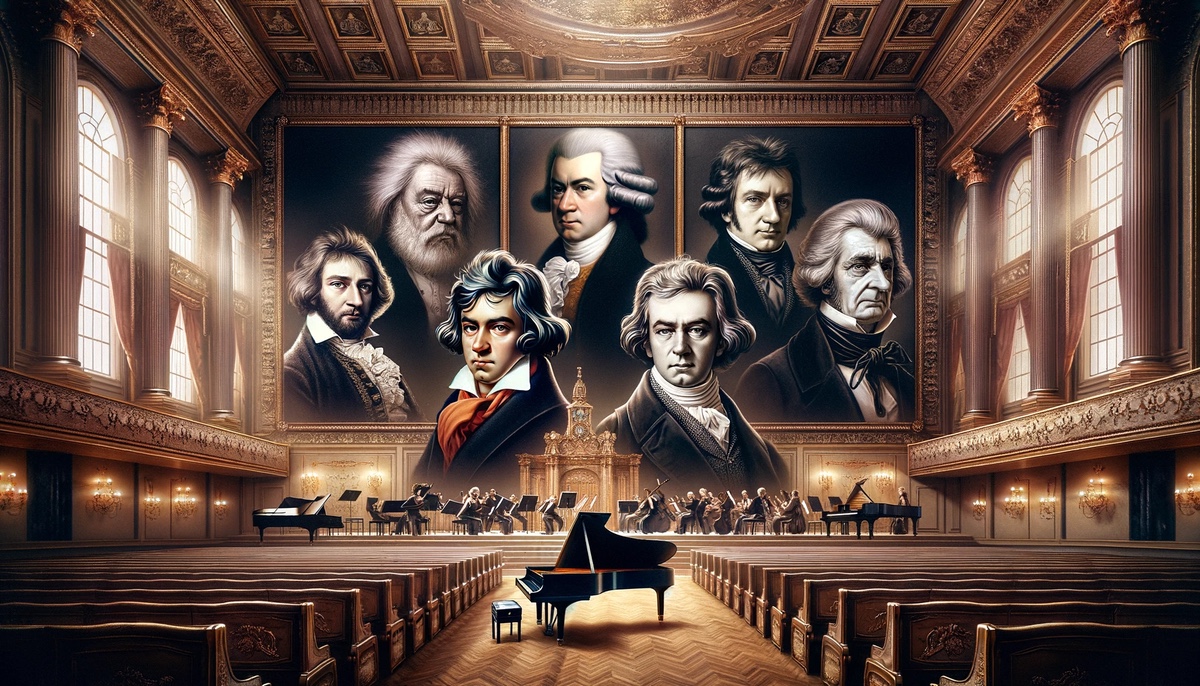
 Mozart’s birthday
 Read quotes by and about Mozart
 In Praise of Pianos and the Artists Who Play Them
 Mozart’s first public concert with his sister




 MaryO'Studio